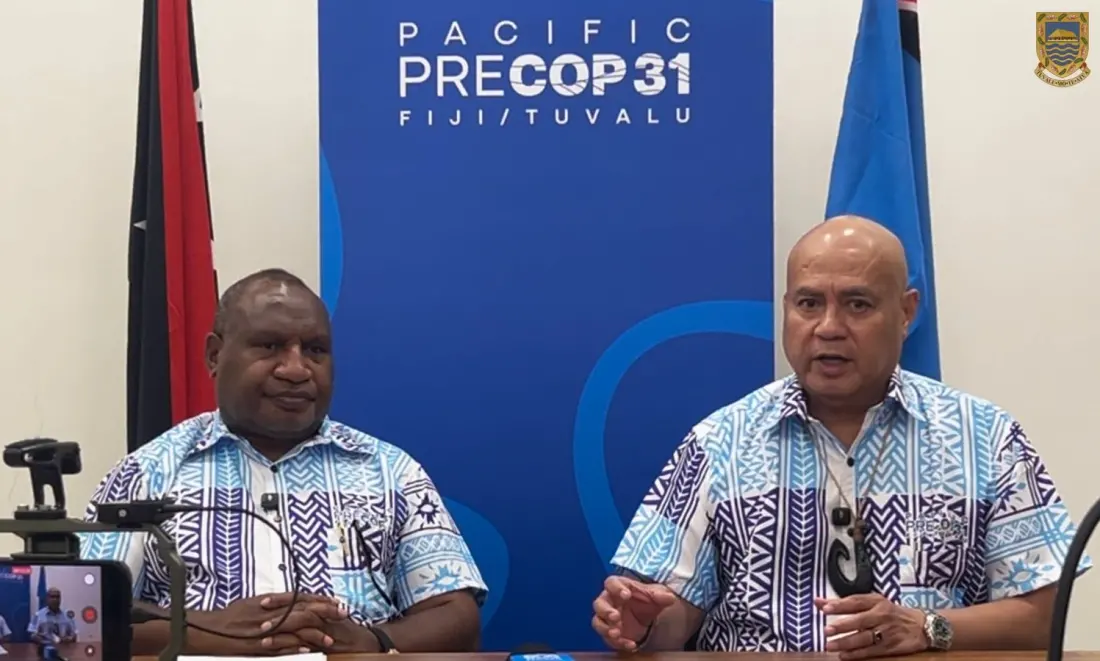
Papua New Guinea has committed PGK25 million — roughly AUD7.95 million — over five years to fund land reclamation in Tuvalu, one of the countries most exposed to rising sea levels. The money, about AUD1.59 million a year starting in 2025, was announced by PNG Prime Minister James Marape at a joint press conference with Tuvalu's Prime Minister Feleti Teo.
The pledge came as Marape arrived in Fiji as the first visiting leader for the Leaders' Segment of the Pre-COP31 meetings, the regional get-together ahead of the UN climate summit. Marape framed the funding as a matter of Pacific solidarity, even quoting Matthew 7:12 — do to others as you would have them do to you — to underline the point that Pacific nations should stand by their most vulnerable neighbours.
For Tuvalu, the cash has a very practical purpose: creating and reinforcing land. The low-lying atoll nation is investing in reclamation projects designed to expand and strengthen its habitable territory as the ocean creeps higher — work that is central to the country's long-term survival and, by extension, to whether it remains a place people can live in and visit at all.
Teo thanked the PNG government and people for the commitment. Beyond the dollars, the announcement signals growing cooperation among Pacific states on climate adaptation, with countries that are bigger geographically but also climate-exposed chipping in directly rather than leaving the burden to distant donors.
Why should travellers care? Tuvalu is one of the world's rarest and most fragile destinations — few flights, a tiny population, and a coastline under genuine threat. Stories like this shape its future: reclamation determines how much of the country remains above the tide line. And the broader Pre-COP31 conversations in Fiji will influence climate policy across the Pacific islands, the very region so many travellers dream about. If you've ever considered visiting Tuvalu, this is the context worth knowing — and going, responsibly, is one small way to support an economy on the front line of climate change.