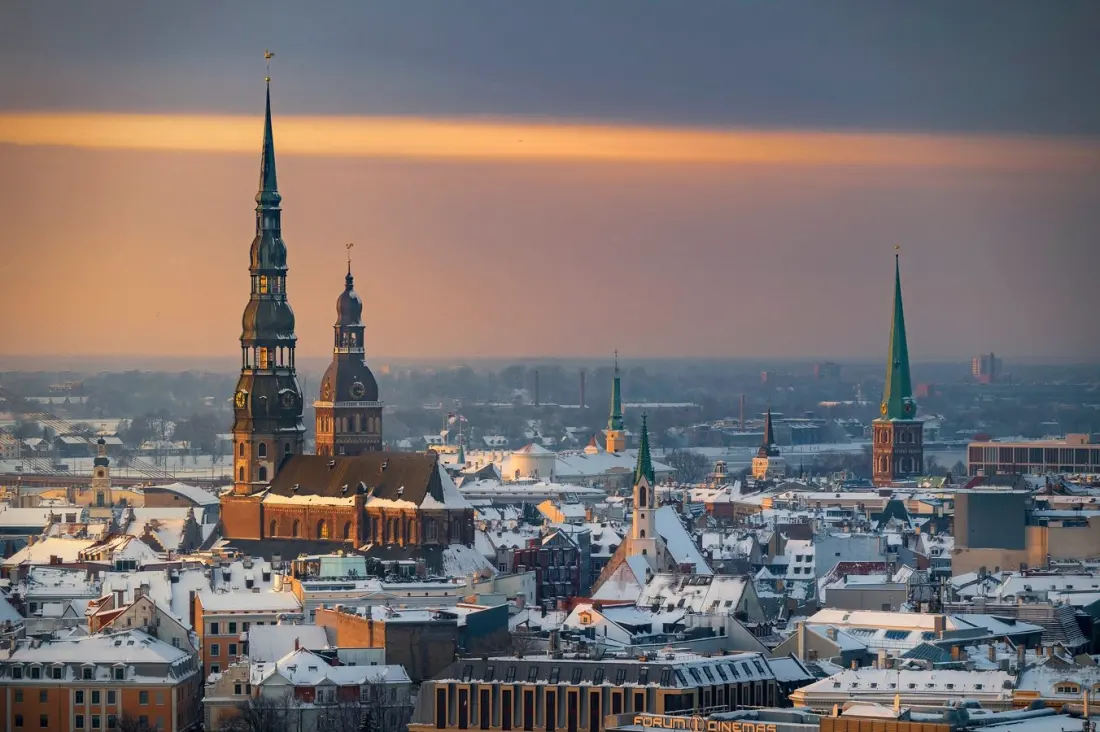
Picture Dome Square at dusk: Latvia's largest medieval cathedral looming above dozens of glowing market stalls, choral music drifting through the cold, and cups of Black Balsam liquor mixed with blackcurrant juice warming gloved hands. This is Riga in winter — and the Latvian capital makes a strong case as the Baltics' best cold-season city break.
What sets Riga apart is how seriously it takes the season. Long before Christmas, the city marks the solstice with pre-Christian rituals that survived because the Baltics converted to Christianity later than western Europe. The highlight is the bluķis: an oak log dragged through the Old Town by masked mummers (ķekatas) in an ancient folk-theatre tradition meant to drive out evil spirits and burn away the past year's hardships. The procession ends with the log ablaze on a big pyre in Dome Square. New Year's Eve continues outdoors, with light shows across the old town squares and fireworks along the Daugava riverbank.
Light is a running theme. The Staro Rīga festival in mid-November, timed to Latvian independence celebrations, turns buildings and squares into an open-air gallery of projections and interactive installations. The more traditional Christmas Lights Trail then picks up, with its most striking displays along the canal by the Latvian National Opera, Bastejkalns Park and Kronvalda Park.
The Old Town itself is compact and walkable — a UNESCO World Heritage site since 1997 — so freezing fingers aren't an excuse. The 13th-century Dome Cathedral, Swedish Gate, the Three Brothers houses and House of the Blackheads all sit within easy wandering distance, with plenty of taverns (krogs) en route for a warming beer.
Food is reason enough to visit. Riga Central Market, housed in vast First World War-era Zeppelin hangars, is the Baltic larder in action: barrels of sauerkraut, black pudding, smoked meats and fish, and dense dark rye bread. The national comfort dish is pelēkie zirņi — "grey peas" cooked with smoked bacon and caramelised onions, far tastier than they sound. On the modern end, young chefs who trained in London, Paris and Sydney have come home to reinterpret Latvian classics; the city now has Michelin-starred and Michelin-recommended restaurants serving things like mackerel tartare with cloudberries and sea buckthorn cheesecake.
If you still have energy, winter outdoors options are unusually good for a capital: cross-country ski trails in Victory Park, ice skating at the Esplanade Park rink, cold-water swimming spots at Ķīpsala and Lucavsala on the Daugava, and — the real initiation — a pirts. This traditional Latvian sauna ritual layers steam, herbal scrubs and whisking with birch and oak branches before a cold plunge. It's as much about clearing the head as cleansing the body.
Riga suits travellers who want their city break with substance: folklore, proper food culture and genuine winter atmosphere rather than generic Christmas-market plastic. Wrap up, and embrace omulīgums — the Latvian art of cosiness.