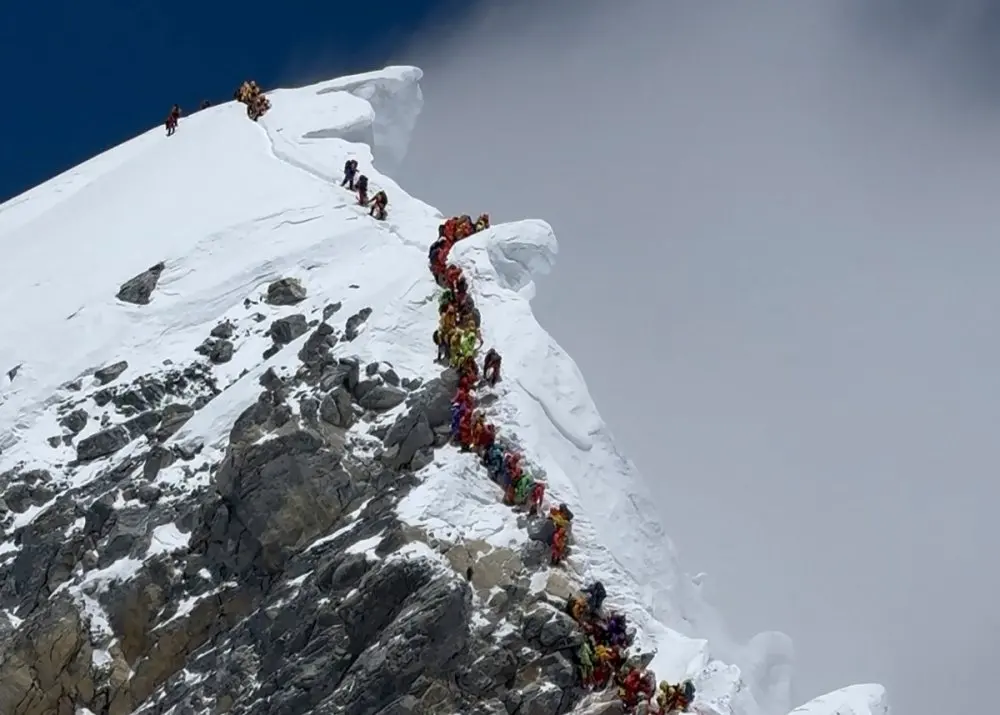
A new Apple TV biopic about Tenzing Norgay Sherpa has arrived with an uncomfortable footnote: the mountain at the centre of the film is visibly changing. Jamling Tenzing Norgay Sherpa, the legendary climber's 61-year-old son, says floods and avalanches driven by global warming are reshaping the Himalayas and making mountaineering more dangerous than at any point since his father's historic 1953 ascent.
The film, released on Apple TV and starring Genden Phuntsok as Tenzing alongside Tom Hiddleston as Edmund Hillary and Willem Dafoe, retells the first confirmed summit of Everest from the Sherpa perspective — a story long told through Western eyes. But for Jamling, who followed his father to the top in 1996, the mountain itself is sending a message.
Nepal is currently dealing with the fallout of a catastrophic flood that has thrown the climate vulnerability of high mountain regions into sharp relief. For Jamling, it is painfully personal. Thame, his father's village at 3,800 metres, was half destroyed two years ago when a glacial lake burst. His explanation is blunt: as glaciers retreat, the lakes behind them swell until they breach. And it's not just remote valleys. Guides are now finding running water at Camp 2 on Everest, around 6,400 metres — somewhere that was always solid ice. Side-by-side photographs show how far the glaciers have shrunk since 1953.
That matters for travellers, not just climbers. Nepal is one of the world's most mountain-dependent countries — half of it is covered in mountains — and the communities downstream of glacial lakes face real flood risk. The mountaineering economy itself is built on Sherpa guides whose income, Jamling notes, comes from necessity: feeding families and educating children. More erratic weather and more frequent avalanches make that livelihood riskier every season.
He also argues the responsibility sits with the world's biggest emitters, pointing out that the effects aren't confined to the Himalayas — Europe and wildfire-prone parts of the US are seeing the same patterns. His conclusion: mountains deserve a more careful, respectful approach than the expedition culture of previous decades, or, as he puts it, there will be a price to pay.
For anyone planning a trek in the Everest region, the takeaway isn't to stay home — it's to go informed. Book with operators who take weather windows and acclimatisation seriously, choose agencies that treat Sherpa staff fairly, and remember that the trails to Thame and other Khumbu villages pass through terrain now actively reshaped by glacial melt. The father's climb made 'Sherpa' a byword for mountain courage; the son's warning is that the mountain his father conquered is no longer the same one.