
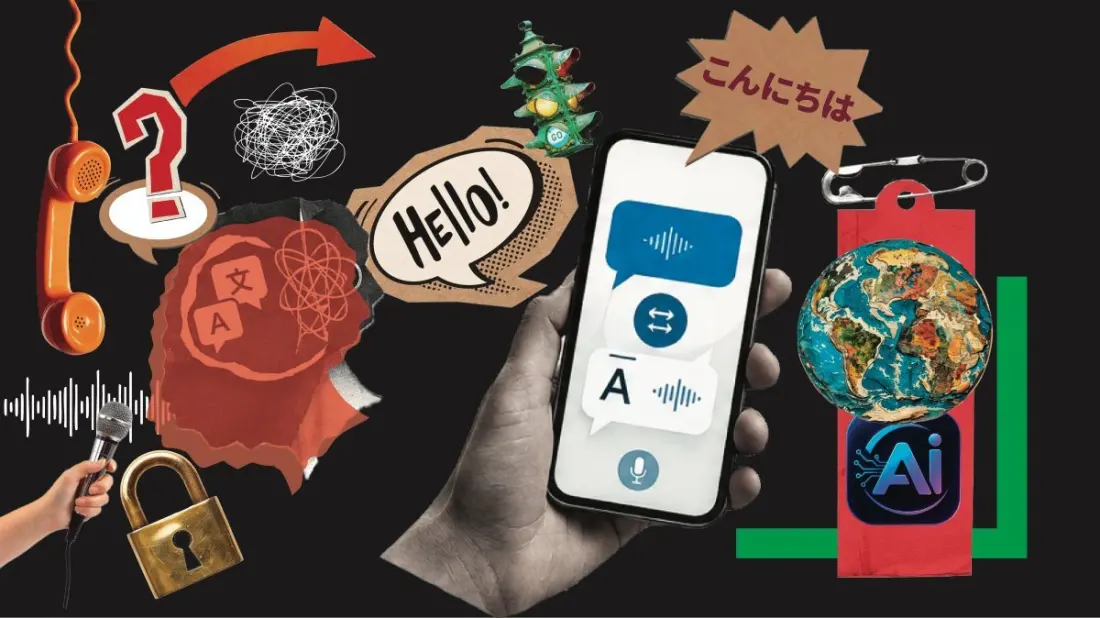
A viral video of a Turkish salon owner in the US chatting with a Spanish-speaking customer through AI translation has struck a chord — and raised an awkward question. If a phone can translate everything instantly, do any of us still need to learn the local language?
Cologne-based DeepL recently launched live speech-to-speech translation, letting two people hold a conversation aloud in different languages with only a few seconds of delay. Written and spoken content can now be converted between languages almost instantly, and accuracy keeps improving. The economic upside is obvious: small businesses that could never afford professional translation suddenly get access to global customers, and travellers can navigate a foreign pharmacy, train station or restaurant without a word of the local tongue.
For migrants — and for anyone spending time abroad — the everyday benefits are real. Booking a doctor's appointment, understanding a rental contract, chatting with a colleague or asking for directions no longer hinges on language proficiency. A few seconds of screen time replaces years of evening classes.
But the author of the piece, a political scientist writing for Daily Sabah, argues there's a catch worth thinking about. Language isn't just a delivery system for information. It carries humour, politeness codes, shared history and a society's whole way of seeing the world. Learning it — mistakes, awkward questions and all — is often what pulls newcomers into a community and creates the small human interactions that turn a foreign place into home. Strip away the need to learn, and you may strip away those moments of contact too.
The result, she suggests, could be a new kind of integration paradox: migrants can handle every practical task in their host country yet remain culturally on the outside, their relationships functional but shallow. AI can translate a sentence perfectly; it can't hand over the cultural meaning packed inside it.
For travellers, there's a genuine takeaway here. Real-time translation is a brilliant tool for logistics — and it removes the panic of being lost in a language you don't speak. But leaning on it entirely means skimming the surface of a place. The fumbled phrase, the patient waiter, the local who laughs and teaches you the right word: that's where the memorable travel happens. Use the tech, sure. Just don't let it do all the work.
The debate the article opens — does removing the language barrier actually help people belong? — matters beyond migration policy. It applies to anyone who lands somewhere new, whether for a fortnight or a lifetime. Understanding each other's words, the piece concludes, is not the same as understanding each other's worlds. That effort still has to be made by hand.