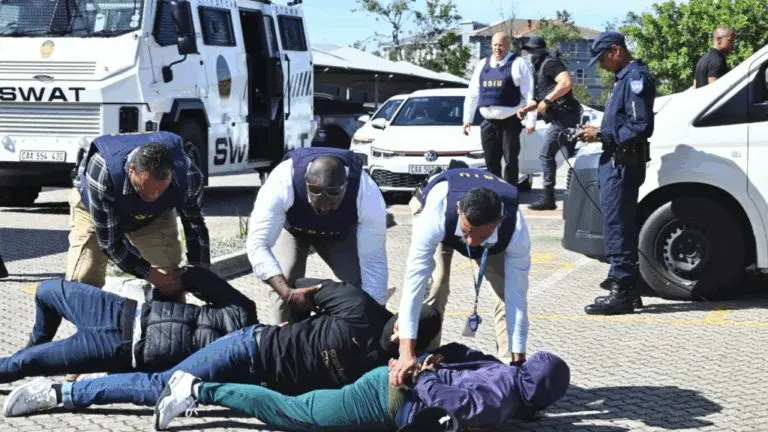
Cape Town has added some serious hardware to its public safety set-up. The city has launched a specialised SWAT unit and a Metro Police Aviation Unit, unveiled by Mayor Geordin Hill-Lewis and safety and security chief JP Smith, with both units set to run out of a new Joint Policing Services Operational Centre that is still being completed.
The SWAT team is built for situations regular patrols can't handle: gang activity and extortion, high-risk arrest warrants, hostage and barricade stand-offs in support of the national police service (SAPS), and security at major events. Officers are equipped with modern firearms, night vision gear and armoured vehicles. The mayor has also been pushing for expanded powers for city officers to go after gang, gun and drug crime, and pointed to a 35% jump in SAPS requests to review the city's surveillance footage as evidence that the technology is already helping secure convictions.
The aviation unit is the more eye-catching half of the announcement. It has certified pilots and several aircraft fitted with thermal and zoom cameras, AI-assisted tracking and laser rangefinders, plus the ability to stream live overhead imagery straight to control centres. Aircraft can talk directly to officers on the ground and carry night spotlights — Smith calls air support a "force multiplier" that widens what officers can see and speeds up safe decisions.
Behind both units sits the Joint Policing Services Operational Centre, a digital hub meant to pull together drones, body-worn cameras, artificial intelligence and other safety tech into one real-time picture of what's happening across the city. Recent results credited to this intelligence-led approach include coordinated arrests across greater Cape Town and smoother handling of crowd incidents.
For travellers, the relevance is straightforward: Cape Town is one of Africa's biggest tourist draws, and visitor-facing areas like the City Bowl, Sea Point, Camps Bay and the Winelands towns depend on the city keeping crime in check. Visible air patrols and a rapid-response tactical unit won't change how you plan a holiday day by day, but they signal that the city is investing heavily in safety — a genuine plus if you're weighing Cape Town against other long-haul options. Usual city sense still applies: use registered taxis or ride-hailing apps after dark, keep valuables out of sight, and ask your accommodation which areas to avoid at night. Source: Getaway South Africa.