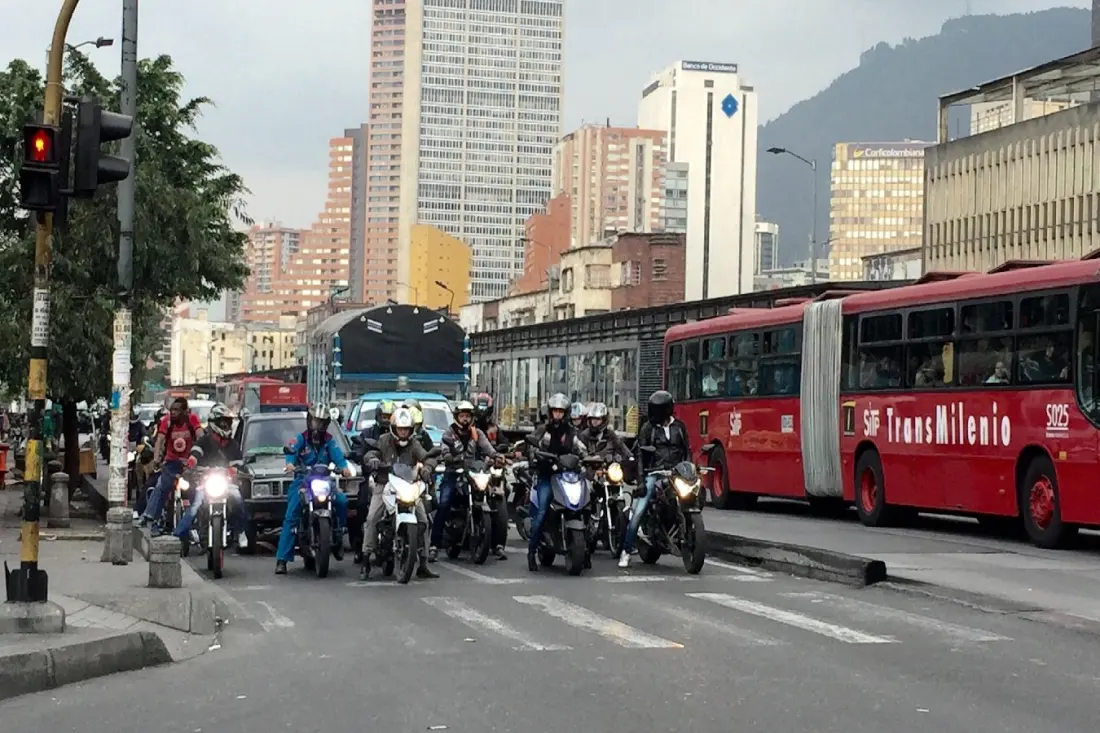
Colombia's roads are getting busier fast. Between January and September 2026, the country sold 1,026,176 motorcycles — up 28.26% from roughly 800,000 over the same stretch of 2025, according to the New Motorcycle Registry run by the Motorcycle Industry Chamber of Andi and Fenalco. That puts Colombia on course to become the world's eighth-largest motorcycle market by year's end.
Ivan Garcia, executive director of the Motorcycle Industry Chamber, told the economic daily La Republica he expects about 1.38 million units sold across the full year, building on 2025's total of more than 1.1 million that already landed Colombia in the global top ten. September alone saw 127,098 new registrations, 23.63% up on September 2025, and July's peak of 131,936 was the biggest month of the year so far.
Bajaj dominates the market with 175,087 units sold through September, ahead of AKT and Suzuki. Small engines rule too: bikes in the 101 cc to 125 cc range make up 44.4% of sales, with larger low-displacement models adding another 30% or more.
Where are all these bikes going? By registrations, the leaders are Sabaneta in Antioquia (653,363), Funza in Cundinamarca (539,284) and Bogota (515,865), followed by Envigado and Giron. Together those three top municipalities account for 1.70 million motorcycles — more than the population of Cartagena.
Why the boom? Three main drivers. Frustration with costly, unreliable city mass transit is pushing commuters onto two wheels. Motorcycles have also become essential work tools in commerce, deliveries and app-based ride platforms. And cheaper prices — helped by exchange rate movements and generous financing — make ownership accessible. For visitors, the practical upshot is clear: Colombia's streets, especially in Antioquia's towns and the capital, buzz with motorcycles in a way few countries can match, shaping everything from traffic patterns to the food-delivery culture travellers will encounter daily.