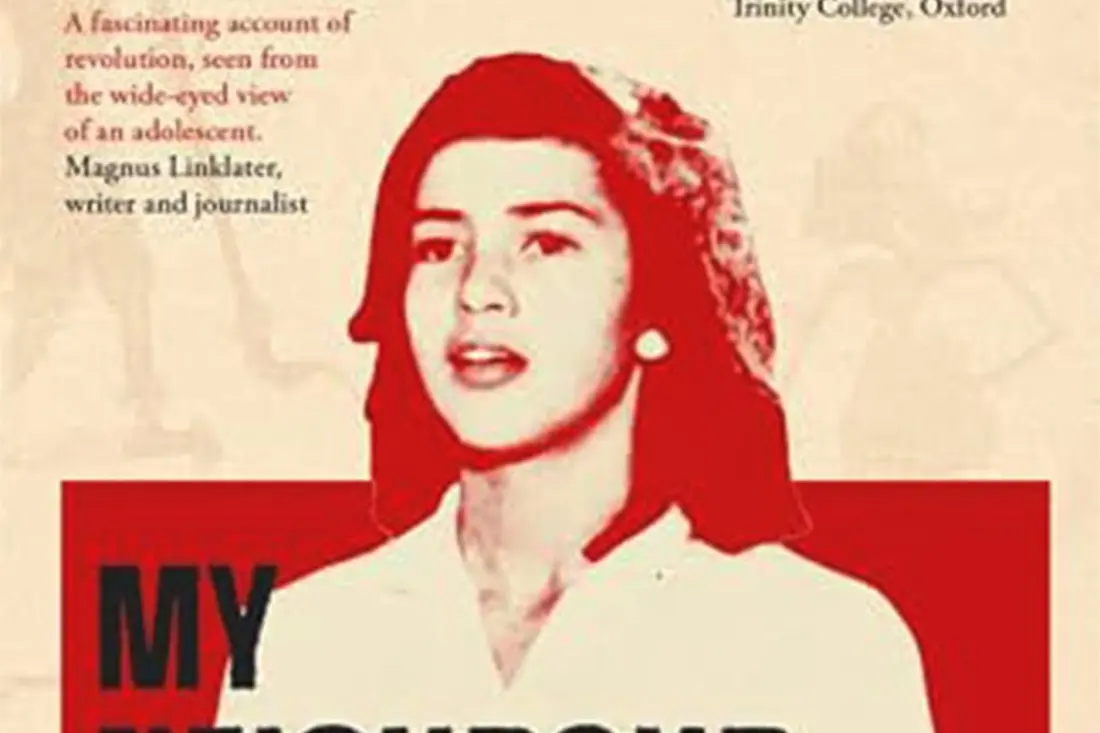
Indonesia's 1965 coup and the anti-communist purge that followed remain one of the least-talked-about chapters of the Cold War, and a new memoir puts a teenager's eyes on it. 'Lagna Taira: Coming of Age in the Shadow of Indonesia's 1965 Military Coup' is the recollection of Tara Ladja, a leftist-leaning 14-year-old living through the months when the army under General Suharto seized power and, over the following years, oversaw the killing of an estimated 1.2 million people accused of communism.
The backstory is heavy but worth knowing for anyone travelling in Indonesia. On 30 September 1965, six army commanders were killed by a secret left-wing group; within days Suharto took control, and the Communist Party (PKI) — then the largest communist party outside China and the USSR, with over three million members — was blamed. Violence spread across the country's ten provinces, and Sukarno, Indonesia's founding president, was sidelined in favour of Suharto's anti-Western, anti-communist 'Guided Democracy'.
Tara's own story is surprisingly entangled with history. Through her leftist youth association (IPPI) she met Haria, her first love, who was imprisoned on Buru island in Central Java for fourteen years. Her other close connection was to Sudarmo, father of both Tara's friend and of Carmel Budiardjo — an Indonesian-educated economist who later became a prominent human rights campaigner in the UK, founding TAPOL, the British campaign for the release of Indonesian political prisoners. Carmel and her husband were themselves arrested without trial in 1968; Sudarmo died in detention, and Tara ended up running a small fabric business to support the imprisoned family, even sitting near their cells during Carmel's detention.
In 1969, Carmel arranged for Tara and her brother Anton to leave for England, where the memoir's author eventually settled in Southend-on-Sea. The book's strength, as the review notes, is its teenage perspective — a life that seemed poetic and chaotic on the surface while the country was unravelling underneath.
For travellers, this is the kind of read that turns a beach holiday into something more considered. Jakarta's Monas and the national history museum touch on this period only glancingly; the official narrative has long been contested, and memoirs like Tara's fill in the human cost. Anyone spending time in Java, or in places like Bali with their own 1965-era scars, will come away with a far richer sense of what the older generation lived through — and why politics still runs hot in Indonesia today.
The book (Moon books, 2026, in the English edition 'My Neighbour the Dictator') is available via Moon books, with thanks to Bangkok Post Life for the original review.