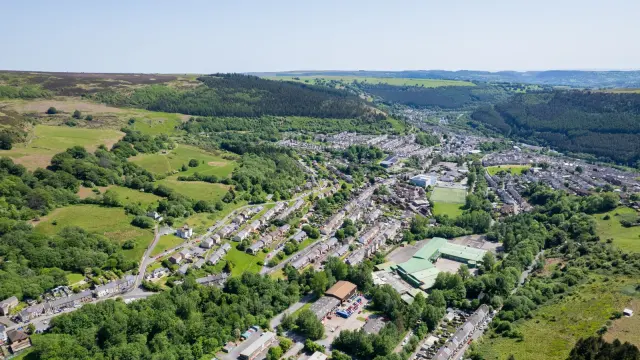

Croatia has signed a €35 million grant agreement to develop geothermal energy, with drilling and exploration underway in four inland cities: Velika Gorica, Osijek, Vinkovci and Zaprešić. If the timeline holds, wells will start operating in 2028 and the systems should be heating homes and public buildings by 2030.
The deal, signed on 11 October 2026 by Economy Minister Ante Šušnjar, Central Agency for Financing and Contracting director Dragan Jelić and Croatian Hydrocarbon Agency board president Marijan Krpan, is the first phase of a two-stage, €86 million programme. The initial €35 million covers the confirmation of geothermal deposits and construction of additional wells, with €30 million of it coming as non-repayable funding from the European Regional Development Fund. A further €50 million has already been secured through the national recovery plan (NRRP) for exploring the country's geothermal potential.
What makes Croatia unusual is the quality of the resource. In the Croatian part of the Pannonian Basin, the geothermal gradient — how quickly temperature rises with depth — runs about 60 percent above the European average, according to minister Šušnjar. That means heat can be extracted from shallower, cheaper wells than in most of the continent. Prime Minister Andrej Plenković framed the push as strategic: geothermal is domestic, renewable and low-carbon, available around the clock regardless of weather, and the surface equipment footprint is small.
The practical payoff lands in everyday buildings. Zaprešić plans to use geothermal heat for sports halls, schools, kindergartens, swimming pools, its municipal utility and a new business zone. Vinkovci is designing a central heating network that would supply roughly 1,700 households plus schools and other public institutions. In Velika Gorica, geothermal is expected to cover the heating needs of more than 60 percent of the population, while Osijek treats the project as strategic for its economy, agriculture and energy independence.
For visitors, this is background news rather than a headline attraction — but it matters if you're planning time in continental Croatia. These are real inland destinations, not just transit points: Velika Gorica sits near Zagreb airport, Zaprešić is a short hop from the capital, and Osijek and Vinkovci anchor the often-overlooked east of the country around the Drava and Sava rivers. Towns that heat their schools and pools with clean underground heat are also towns investing in the kind of year-round infrastructure — heated pools, sports halls, district networks — that makes low-season travel more comfortable. Expect the visible changes from 2028, with systems live by 2030. Total Croatia