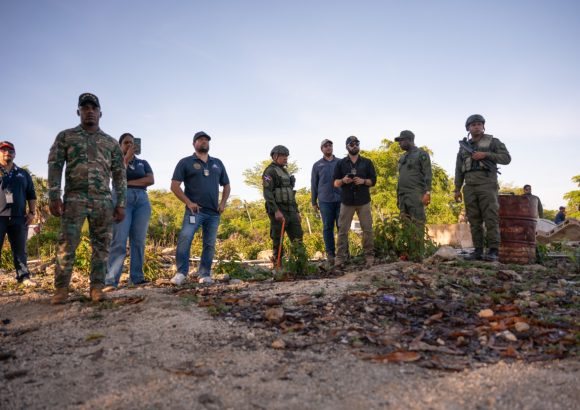
If you've visited or plan to visit the Hoyo Claro Natural Monument near Punta Cana, here's some news that affects what you'll actually see there. The Dominican Ministry of Environment and Natural Resources has carried out a large-scale demolition operation inside the protected area, tearing down 73 illegal structures across four sites in the Verón zone.
This wasn't a token cleanup. The operation brought together the Public Prosecutor's Office, the National Environmental Protection Service (SENPA), the Dominican Republic Army and the General Directorate of Migration, backed by environmental enforcement technicians and legal staff. Among the structures were a finished concrete building and another one still under construction — heavy machinery was brought in to knock them down and clear away the leftover materials.
The timing is telling. Officials said several of the buildings appeared to have been abandoned only shortly before the operation began: cooking pots with food inside were still on site, though no people were found. That suggests those occupying the land got wind of what was coming.
The ministry framed the action as part of a zero-tolerance stance on unauthorised occupation and construction in protected areas, and said it will keep monitoring the sites to stop new encroachment. The operation also falls under Decree 615-26, which classifies the prevention of what the government calls "environmental terrorism" as a matter of high national interest and a national security priority.
Why should travellers care? Hoyo Claro is a freshwater lagoon and cave system in the Punta Cana hinterland, popular with visitors looking for a quieter alternative to the beach resorts — think cenote-style swimming, jungle surroundings and far fewer crowds. Illegal construction in places like this doesn't just degrade the scenery; it threatens the water quality and ecosystems that make the spot worth the trip in the first place. A serious enforcement push, backed by multiple state agencies, signals that the country is treating its protected areas as assets worth defending rather than free land for building.
For visitors, the practical takeaway is straightforward: the area is under active surveillance and enforcement, so stick to authorised entrances and any marked trails, and book any excursions through licensed operators. It's also a good moment to be sceptical of anyone selling land, stays or "private access" inside the monument's boundaries — the legal situation there is clearly in flux. And if you were put off by reports of building work or crowding around the lagoon, the demolition may restore some of the natural character that made the place a draw in the first place.
Punta Cana-bound travellers with a free day should keep Hoyo Claro on the list, ideally paired with nearby Indigenous Eyes Ecological Park for a fuller taste of the region's freshwater lagoons. Just expect an ongoing official presence in the Verón area while the ministry keeps watch for new incursions.