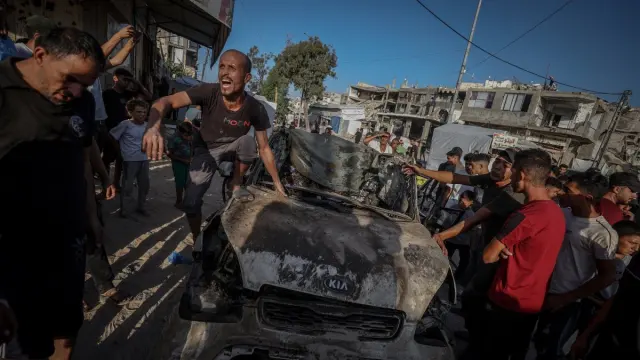
Riyadh's King Khalid International Airport came under missile fire on Thursday, October 8, 2026, and the strike left a Saudia Airbus A320 completely destroyed. It was the second time the airport had been hit in a single week, and the Yemen-based Houthi militia followed the attack with a blunt warning: all airlines flying through Saudi airspace are, in their words, at risk.
The details are disputed. A Houthi spokesperson said the group struck its target with precision using a ballistic missile, while other accounts suggest the aircraft was actually damaged by shrapnel from an intercepted missile. Either way, the picture is grim. The good news is that the plane was believed to be empty of passengers and there were no fatalities — an outcome that could have been catastrophic had it been a fully loaded aircraft. Operations at the airport ground to a halt, and a string of airlines suspended flights in the aftermath.
The context is the reignited civil war in Yemen. The Houthis, aligned with Iran, have been firing missiles at Saudi airspace and oil facilities in response to Saudi Arabia backing Yemen's UN-recognised government. It's another layer of the broader US–Iran tensions spilling across the region.
For travellers, the practical takeaway is simple: Saudi airspace is currently unstable, and that matters even if you're not flying to Saudi Arabia itself. Many long-haul routes between Europe and Asia pass through it, and a reroute around the country can mean longer flight times. Anyone connecting through Riyadh should also think hard right now.
The timing is particularly awkward for the airport's growth plans. Riyadh Air is expanding quickly and chasing connecting traffic through the Saudi capital — a pitch that becomes a much harder sell when a militia is explicitly warning global carriers off Saudi airspace. Meanwhile, Delta was expected to launch a new route from Atlanta to Riyadh later this month, a launch reportedly underwritten by the Saudi government to keep the economics workable despite weak demand. The source expects insurers may now be the ones to force a postponement.
The broader lesson for anyone booking regional travel: security situations in the Gulf can change fast, and a route that looks fine when you book can be suspended or rerouted before departure. Check your airline's advisories, keep an eye on airspace notices, and know your rights around schedule changes before you commit to non-refundable plans. If your itinerary touches the Middle East in the coming weeks, build in flexibility.
Credit: One Mile at a Time