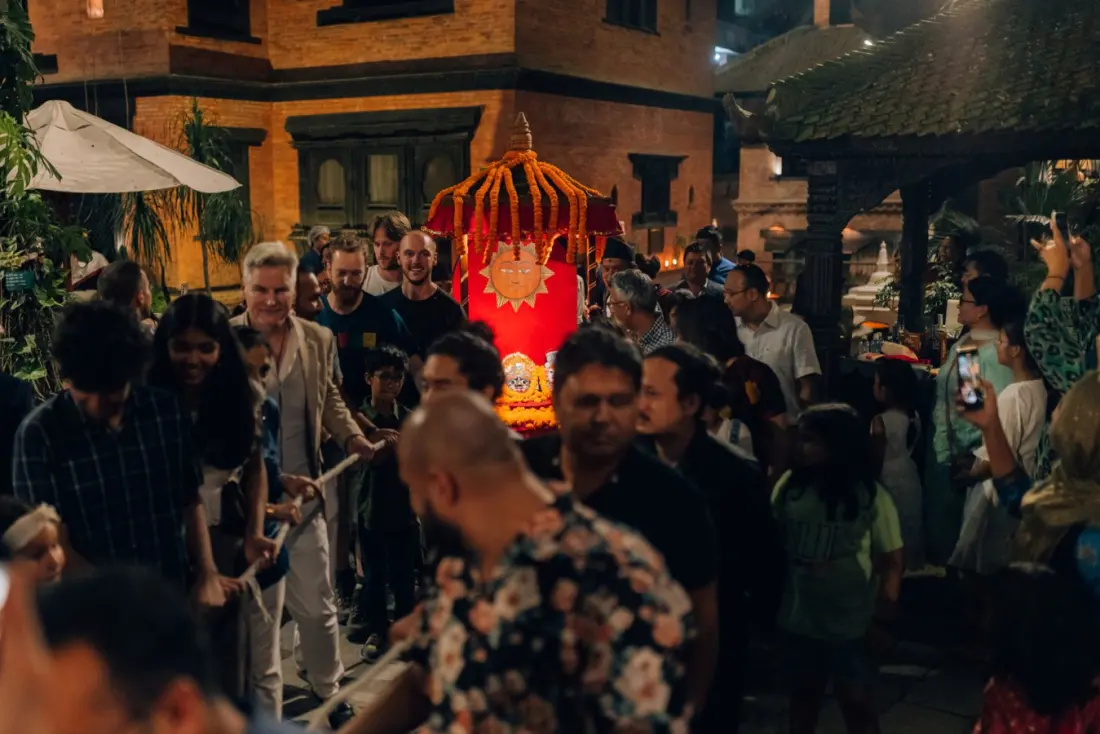
Kathmandu's most atmospheric festival got a hotel-sized staging this year. On 2 October, Dwarika's Hotel — the heritage property known for its carved Newari architecture — hosted its annual Indra Jatra event, complete with a simulated chariot procession, ritual dances, and performances of the Lakhey and Pulukisi, the demon and elephant figures that steal the show at the real festival in Kathmandu Durbar Square. Guests were also treated to Samay Baji, the classic Newa feast of beaten rice, boiled egg, dried fish, black soybeans and pickles that anchors most ceremonial occasions in the Kathmandu Valley.
For travellers who can't time a trip to the actual festival, events like this are a useful shortcut. The real Indra Jatra fills the old city's streets for around eight days, usually in September or October, with masked dances, the raising of the lingo (a ceremonial pole), and the Kumari — the living goddess — carried through the crowds on a towering wooden chariot. It's spectacular but packed: Durbar Square can be shoulder-to-shoulder, and the crowds only intensify in the evenings when the butter lamps and processions come out.
Dwarika's version compresses the highlights into a single curated evening. The hotel, founded on the collection of traditional Newari wood carvings assembled by Dwarika Das Shrestha, is arguably the most fitting venue in the city for it — the property itself is built in the same carved brick-and-timber style you see in the old quarter. Guests there get the dances, the noise and the food without negotiating festival crowds, which makes it a solid option for older travellers, families with small children, or anyone in Kathmandu just outside the festival window.
That said, the curated version isn't a replacement for the real thing. If your dates line up with the festival proper, head to Basantapur Durbar Square and the surrounding lanes of the old city at dusk — you'll see the masks, the chariots and the crowds in their natural habitat, and it costs nothing. The two experiences actually pair well: catch the genuine spectacle in the streets, then eat your way through a proper Samay Baji platter somewhere calmer.
Why it matters: Nepal's festival calendar is a genuine draw for cultural travellers, and Indra Jatra is one of the valley's biggest events. Hotels increasingly staging their own versions means visitors have more ways in — you can now experience Newa ritual culture even if your itinerary doesn't match the lunar calendar. Dwarika's annual event on 2 October is a good example of heritage hospitality done with some authenticity rather than as a generic cultural show.
If you're planning a Kathmandu trip around festival season, aim for late September into October: the weather is post-monsoon clear, Dashain and Tihar follow shortly after, and you can string several festivals into one trip. Book accommodation well ahead — festival weeks are peak season in the valley.
Nepali Times