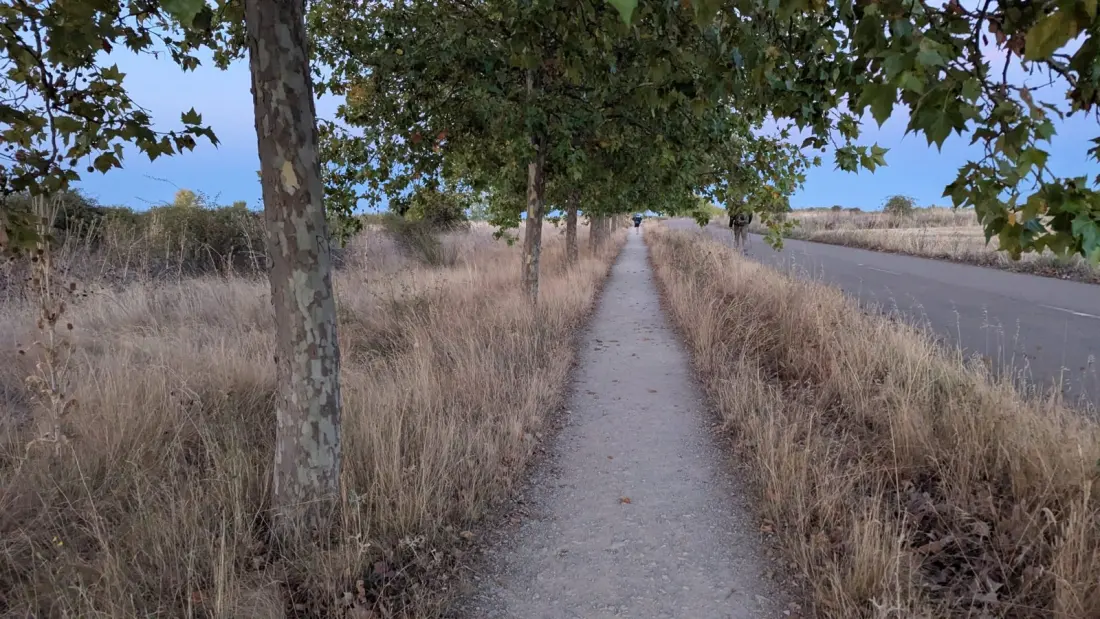
Day seven on the Camino de Santiago brings two unavoidable truths about the Meseta: it's flat, and it's brutal. Walking 12 miles before 11:30 a.m., the writers at The Trek hit mid-90s heat with the next town eight miles away. The obvious move is to stop early at a donativo — a donation-based pilgrim hostel — and wait out the worst of the afternoon.
The hostel occupies a 19th-century adobe homestead, the kind of building that stays cool through the afternoon then holds warmth when night temperatures drop. It's been welcoming pilgrims since the mid-1990s, and old aerial photos on the walls show its previous life as a working farm. Donativos take no reservations, so arriving pilgrims queue their backpacks outside — and yes, some queue-jumping happens, though the prevailing philosophy is that the Camino provides enough beds for everyone.
What makes this hostel different is who runs it. The local town council operates it with volunteer hospitaleros — former pilgrims doing two-week shifts to keep the old spirit of trail hospitality alive. On this day that's Roger and Patti from Australia, aged 78 and 82 respectively, stepping in for another couple whose travel plans fell apart. It's their first time volunteering, and about a week in they've decided it will be their last. Their routine: check passports, stamp pilgrim credentials, assign rooms, hand out bottom bunks where possible (a small luxury; private albergues rarely oblige), clean bathrooms, and repeat tomorrow.
Roger's observations are blunt and funny. Young pilgrims are easy; some older Spanish men are demanding. Patti's advice for would-be hospitaleros: bring rubber gloves, keep an even temperament, sort your priorities, and expect boredom once the doors close at 9 p.m. Her reason for doing it is the best takeaway of the story — as Roger puts it, if you're not rich enough to hand out money, this is something you can still give to other people.
There's also a quiet language lesson here. English is the default in albergues across the route, so a Spanish couple who've walked all the way from St. Jean Pied de Port get their welcome speech in a language they don't understand — and take it in stride. At dinner tables, Germans, Dutch, Austrians and Americans negotiate a shared courtesy: everyone struggles along in English because the Americans don't speak anything else. The moment the native English speakers leave, the table switches back.
Why does this matter to a traveller? Because the Camino is as much about the people staffing it as the miles walked. If you're planning the route, donativos offer an alternative to private albergues: no booking, a small donation, and volunteers who've walked the path themselves. Expect heat on the Meseta even in shoulder season, plan shorter stages when temperatures climb, and consider a pilgrim meal with local red wine once the town's restaurants finally open. And if you ever want to give back, hospitalero volunteering is a well-established way to do it — two weeks of your time, rubber gloves recommended.