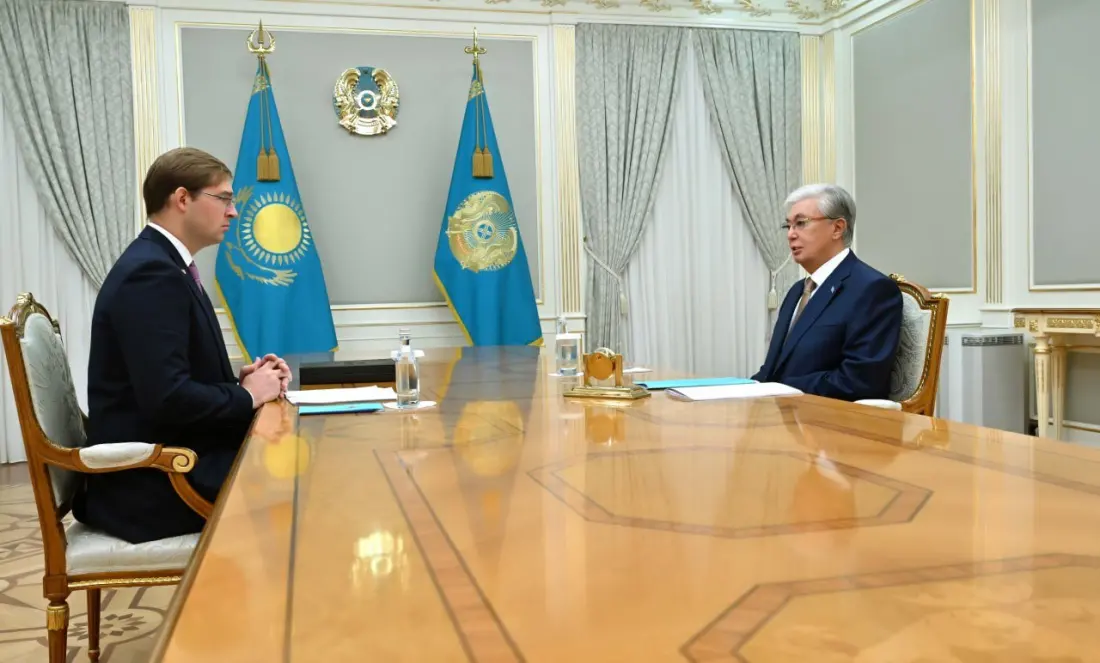
Kazakhstan now has one of its own running world chess. On October 7, President Kassym-Jomart Tokayev met Timur Turlov, the Kazakh-based financier who was elected president of the International Chess Federation (FIDE) on September 26 in Samarkand, Uzbekistan, during the federation's General Assembly at the 46th World Chess Olympiad. Turlov won 110 of 196 votes.
Tokayev framed the result as proof of Kazakhstan's growing weight in the chess world, and there is substance behind the claim. The country has more than 278,000 regular chess players, and its national women's team took silver at the recent Olympiad in Samarkand — the tournament where Turlov's victory was sealed. Turlov has led the Kazakhstan Chess Federation since 2023, a stretch that included hosting the World Chess Championship match and the World Team Rapid and Blitz Championships.
The president used the meeting to lay out what he wants next: better training for the national teams, a proper pipeline for spotting young talent, chess woven into the school curriculum, and more chess facilities outside the big cities. He also pushed for closer work between the national federation and FIDE — coach and arbiter development programmes, joint education projects, and bringing more major international tournaments to Kazakhstan.
Turlov, for his part, briefed Tokayev on his global plans, including new projects with national federations worldwide.
Why should a traveller care? Because tournament hosting tends to follow leadership. With a Kazakh citizen at the top of FIDE and an explicit push to stage elite events in the country, expect Almaty and Astana to appear more often on the chess calendar. A top-level tournament is a surprisingly good excuse to visit a city you might otherwise skip: entry to major events is often free or cheap, the atmosphere is lively, and you get a genuine slice of local life alongside the sightseeing. Kazakhstan itself is an under-visited giant — Almaty sits beneath the snow-capped Trans-Ili Alatau mountains, while the capital Astana (renamed back from Nur-Sultan in 2022) is one of the boldest futuristic-skylines experiments anywhere in Asia.
Even if you never touch a chessboard, the story signals a country investing in visible, international, visitor-friendly events — and quietly building itself into Central Asia's stage for them.