An opinion piece in Daily Sabah makes the case that Mehmed II, the Ottoman sultan who took Constantinople in 1453, deserves to be remembered as something stranger and more interesting than a conqueror alone: a 15th-century ruler who tried to inherit the entire classical world, not erase it.
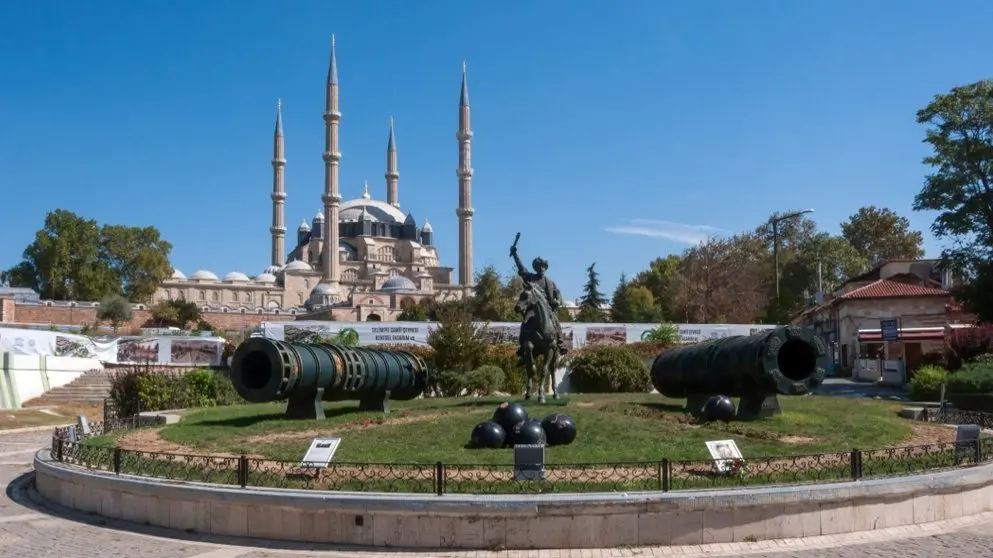
Born in Edirne in 1432, Mehmed was the less-favoured son of Murad II, yet he was given a remarkable education. Sent to Manisa at 11 — a traditional training post for Ottoman princes — he studied under leading Islamic scholars and absorbed Renaissance humanist ideas, reading classical histories and learning about Alexander the Great. As sultan he kept that curiosity alive: he patronised scholars, welcomed Greek intellectuals, commissioned translations of ancient texts, built an enormous library and even sat for a portrait by the Venetian painter Gentile Bellini. The Sufi master Akşemseddin, the article notes, is traditionally credited with steeling the young sultan's resolve during the siege of Constantinople. Mehmed was also driven by a well-known hadith promising that Constantinople would one day be conquered — so the city's fall was, for him, as much a religious fulfilment as a strategic win.
After 1453 he took the title Kayser-i Rum, Caesar of Rome, a direct challenge to the Holy Roman Empire's claim to the Roman legacy. The historian Nicolae Iorga argued a century ago that Rome didn't end at Constantinople; it morphed into the Ottoman Empire. Mehmed's own behaviour supports that: when he visited the ruins of Troy near the Strait of Çanakkale, he went looking for the tomb of the Trojan hero Hector. The 15th-century Greek historian Critoboulos recorded that, finding it, Mehmed declared Troy avenged — a pointed gesture, since the Romans traced their own origins to Trojan refugees.
Beyond conquest, Mehmed built the machinery of the classical Ottoman state: legal and administrative institutions anchored in Islamic law that lasted essentially unchanged until the reforms of Mahmud II in the early 19th century. That, the author argues, is his real legacy — turning a principality-in-empire into a state with universal ambition, blending Islamic, Greek and Roman traditions rather than treating them as rivals.
Why should a traveller care? Because Istanbul and western Turkey are layered with exactly this story. The Hagia Sophia Mehmed converted after the conquest, the Topkapı Palace he established as the imperial seat, the Fatih district named after him, the Troy ruins he personally visited near Çanakkale — all of it reads differently once you know the conqueror saw himself as heir to Rome and Troy alike. Anyone with a day or two in Istanbul can trace his footprint; add a detour to Troy and Edirne, his birthplace and early Ottoman capital, and the whole arc comes together.
For history-minded travellers heading to Turkey, this is the context that turns sightseeing into storytelling.
Daily Sabah Travel