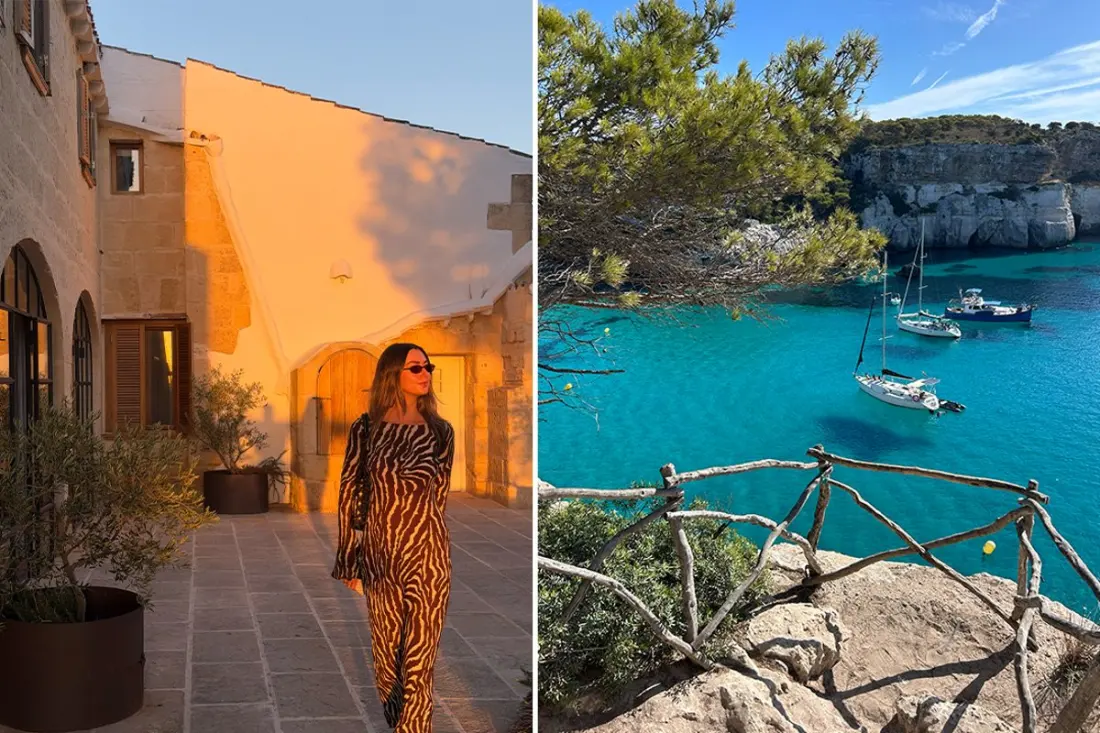
Swimming over shoals of coloured fish in a turquoise bay, with barely another person in sight — and no loungers, no music, no beach bar. That scene isn't the Maldives; it's Menorca, the smallest and quietest of Spain's Balearic islands, and one that still manages to feel like a discovery even as word spreads.
The island is a Unesco Biosphere Reserve, which explains its different character. High-rise development is restricted, resort towns are scarce, and much of the interior is open farmland and pine forest. The numbers tell the story: while Mallorca welcomed 13.5 million visitors in 2025 and Ibiza and Formentera 3.7 million between them, Menorca drew just 1.7 million.
That hasn't stopped serious hoteliers from moving in. The Experimental group opened Menorca Experimental in 2023, a 34-room hotel set in a 19th-century finca with a spa and destination restaurant. Amagatay in the south is a rural farmstead with one of the island's most talked-about restaurants, while Morvedra Nou in the north converts old farm buildings into low-key rooms surrounded by countryside, growing its own olive oil and produce. The Vestige Collection takes the slow-living idea further, rescuing abandoned fincas and manor houses for sustainability-focused luxury hotels — Son Vell, Son Ermità and the newly opened Binidufà — all with farm-to-fork dining.
Food and drink beyond the hotels are worth the trip too. Menorca's olive oil is a local point of pride, but its wine is the quieter story: vines date to Roman times, and nine artisanal wineries now hold protected status (look for PGI on the label), including Bodegas Binifadet, which runs casual tastings and dinners. Restaurants range from the much-photographed Nonna Bazaar to Coral on the north coast, where tables sit above rocky cliffs for the sunset. Even the beach bars are low-key — Bucaneros at Playa de Binibeca occupies a 1960s fishing hut, and family-run Bar Som Sis at Cala Binidalí serves seafood and local beer from a hilltop.
Culture is here too. Ciutadella's preserved medieval streets and palaces reflect Roman, Islamic and Christian chapters in its history, plus a lively food scene and harbour. The capital, Mahón — a former British naval base — has a growing contemporary art scene, including a Hauser & Wirth outpost on Illa del Rei in a restored 18th-century naval hospital.
The best way to see the protected landscape is under your own steam. The Camí de Cavalls is a 185km trail encircling the island, linking beaches and coves you can't reach by car. A walk between Cala en Turqueta and Macarella passes through pine forest with barely another soul around — no high-rise on the horizon, just countryside and clear water.
Getting there is easy: EasyJet, Jet2, Ryanair, British Airways and Tui all fly to Mahón from UK airports from around £38. The airport is 15 minutes from the capital and 44 from Ciutadella, with car rental on site — one writer paid €220 for three days.
Menorca is no longer a genuine secret, and September crowds are proof. But with its empty coves, farmstead hotels and protected coastline, it remains the Balearic island for anyone who wants the Mediterranean without the circus.
Reported by The Independent Travel.