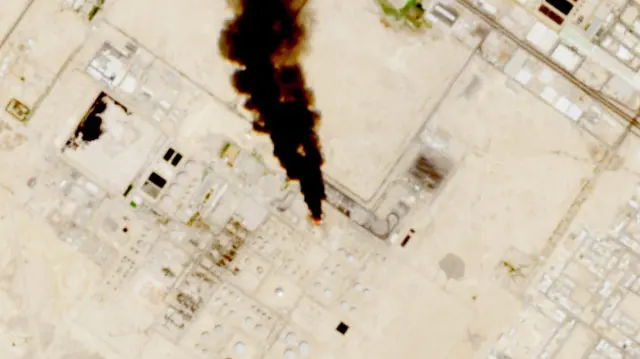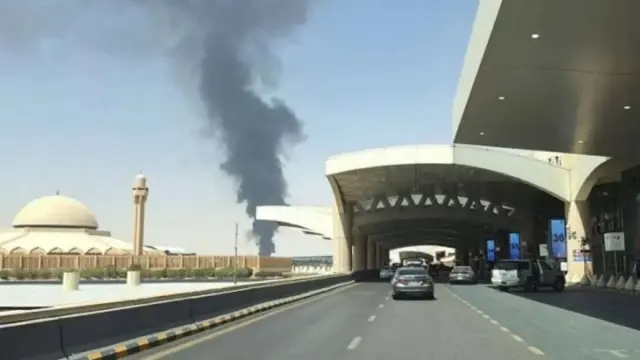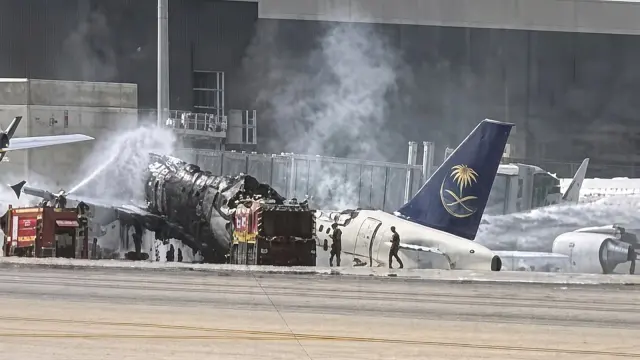
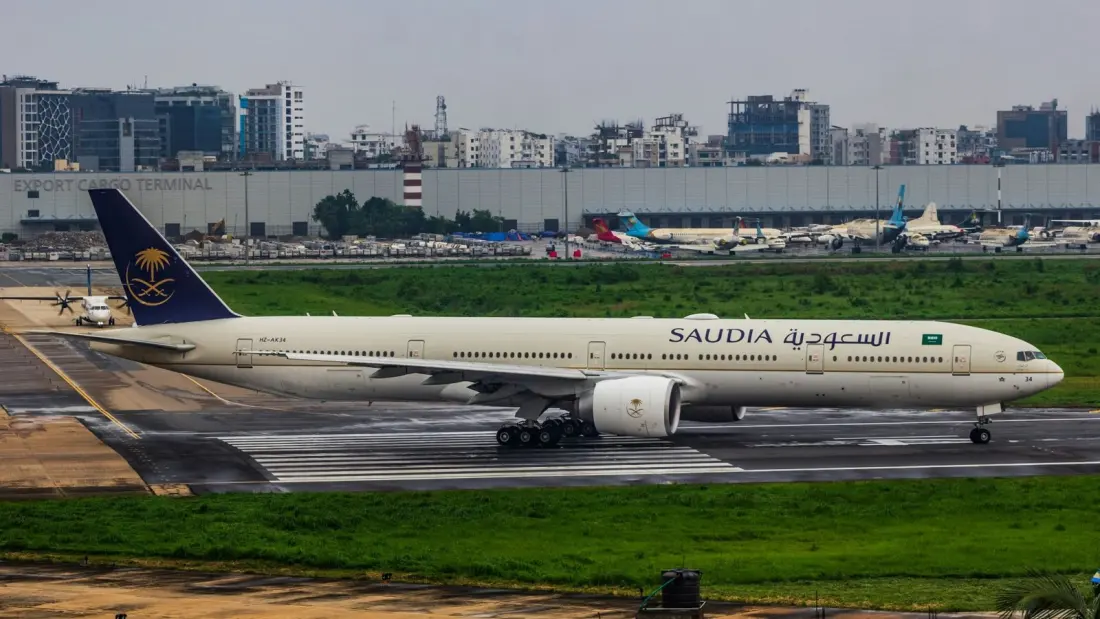
A Saudia passenger plane was left badly damaged by fire at Riyadh's King Khalid International Airport on Thursday 8 October, after attacks on the airport that killed three Saudi nationals and injured several others, some seriously. Saudi Arabia's civil aviation authority, GACA, confirmed two separate attacks hit airport facilities and the national carrier's aircraft.
The plane was parked near a terminal with no passengers believed to be on board when it caught fire. Sources speaking to Reuters suggested it may have been hit by shrapnel from an intercepted missile or other projectile, though the exact cause has not been officially confirmed. Verified footage showed smoke rising over the airport. Saudia has also announced the death of Captain Hamoud Ali Alkalthami following the incident, without clarifying whether he was aboard the damaged aircraft.
Yemen's Iran-aligned Houthi movement claimed responsibility, describing the ballistic missile attack as retaliation for Saudi support of Yemen's internationally recognised government. The group has threatened further strikes on Saudi airports and energy infrastructure. These deaths come on top of earlier attacks on Riyadh and Abha airports, which reportedly killed three people and injured 36.
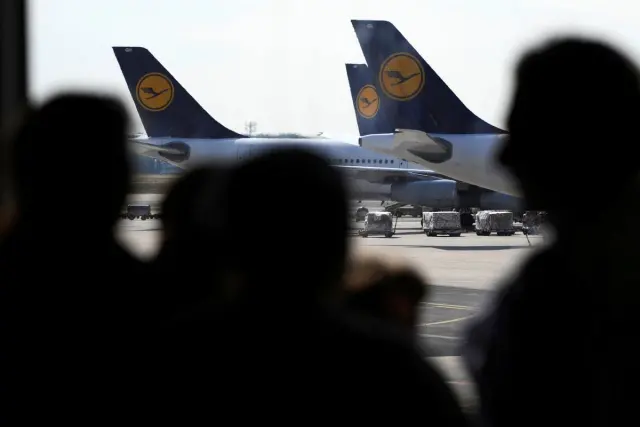
The disruption was immediate and widespread. By mid-afternoon on the Thursday, Cirium data showed nearly half of Riyadh's scheduled departures had been scrapped, and Flightradar24 logged 124 cancellations with the airport briefly closed. Lufthansa Group suspended Riyadh flights through 16 October, Air India and Akasa Air cancelled through 10 October, and IndiGo through 9 October. An Air India flight from Delhi turned back mid-route. By Friday, GACA said air traffic had returned to normal and some Middle Eastern carriers resumed service — though that doesn't guarantee every suspended international route is back.
For travellers, the practical takeaway is simple: if you're booked to or through Riyadh in the coming weeks, check your airline's latest guidance before setting off, keep an eye on rebooking options, and consider flexible or refundable fares while the security situation is fluid. Routes between Europe, India and Saudi Arabia bore the brunt of the suspensions, so connecting itineraries may be rerouted or delayed even after the airport itself is operating normally.