One of Slovenia's last two glaciers is on the verge of disappearing entirely — and researchers say it could be gone within days.
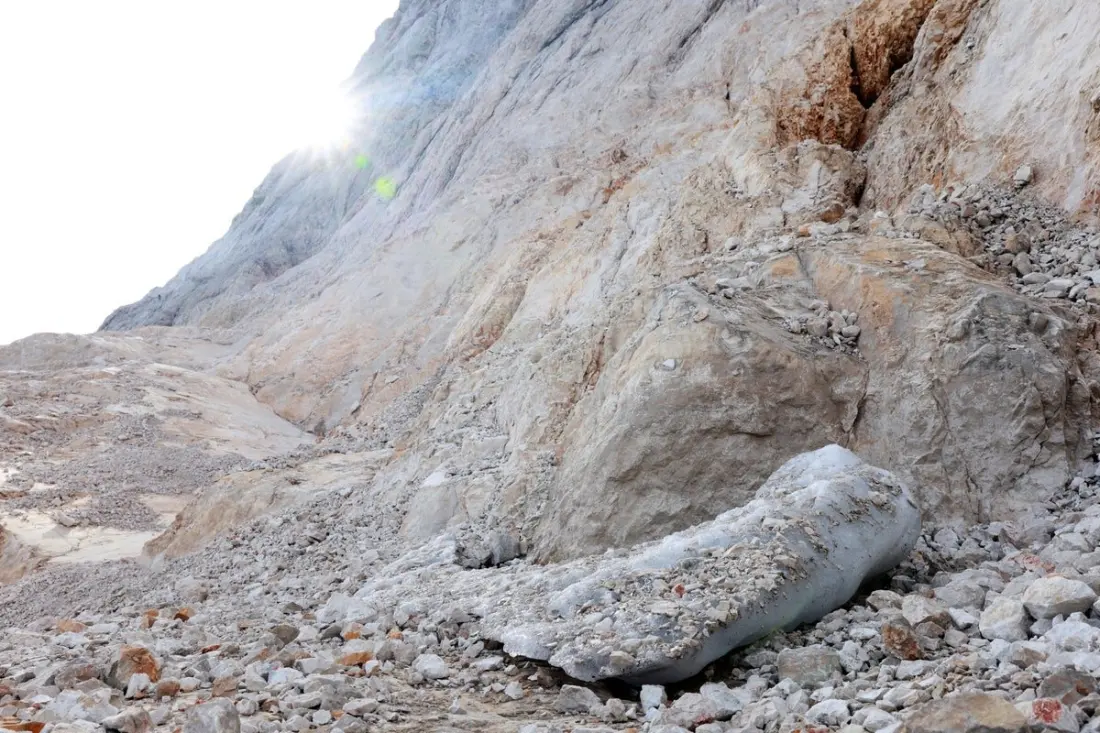
The Triglav glacier sits below the summit of Mount Triglav, the country's highest peak at 2,864 metres and the centrepiece of both the national flag and Triglav National Park. According to Miha Pavšek of the Anton Melik Geographical Institute, who has tracked it for three decades, the final ice fragments are now expected to melt away imminently.
The numbers tell a stark story. At the end of the 1800s the glacier covered more than 40 hectares — big enough that people skied on it in summer. By 1946 it had already shrunk to 14 hectares, and in recent years it stopped functioning as a true glacier altogether, with no new ice forming. A dry winter with below-average snowfall meant the protective blanket melted unusually early this year, leaving the remaining ice exposed to a long stretch of summer heat. Even its shaded, sheltered position on the mountain's northeastern face couldn't save it.
It's not an isolated case. Europe is warming faster than any other continent, and Alpine glaciers are retreating across the region. Pavšek warns that shrinking glaciers in neighbouring Austria could eventually reduce water flows in the Drava and Mura river basins, which irrigate farmland in Slovenia including the Drava and Ptuj fields. Switzerland offers a glimpse of the wider picture: Swiss glaciers lost 5.5 per cent of their ice volume this year alone — the second-biggest annual drop on record — and nearly a fifth over the past five years, according to monitoring service GLAMOS.
For travellers, this is a moment worth registering. Slovenia is one of Europe's quieter alpine destinations — think Julian Alps, Lake Bohinj and the Soča valley — and Mount Triglav is a rite of passage for local hikers. The glacier itself hasn't been a draw in years, but its disappearance marks the end of a landscape feature that shaped the country's alpine identity. If you want to see Europe's remaining glaciers up close, the window is narrowing fast: recent summers show how quickly conditions can change from one year to the next.
Who should care most? Hikers planning a Triglav ascent, skiers weighing long-term prospects for alpine resorts, and anyone drawn to places at a turning point. Slovenia's high peaks remain spectacular regardless — but the ice age on Triglav is officially over.