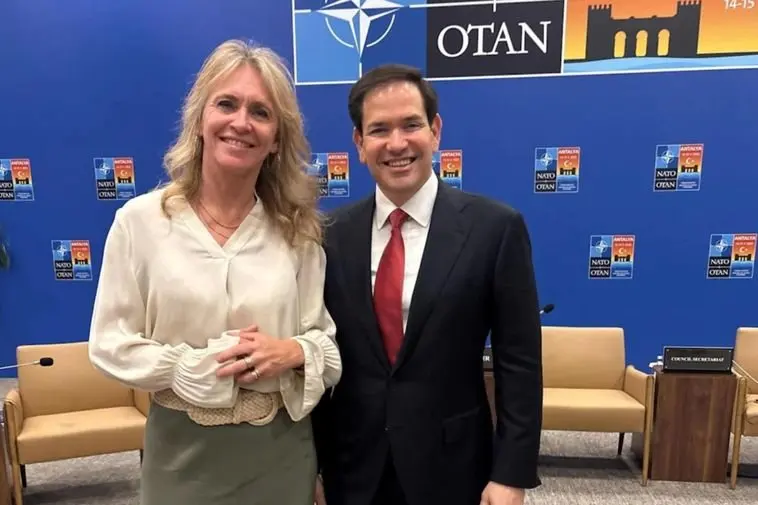
Marco Rubio, the United States Secretary of State, is landing in Iceland today for talks with the government in Reykjavík, following an invitation from Icelandic Foreign Minister Þorgerður Katrín Gunnarsdóttir. Per the U.S. Department of State, the agenda covers economic and security cooperation — and the visit underlines just how strategically significant this small North Atlantic island has become again.
The context matters. With competition over the Arctic heating up, Iceland has reclaimed a seat at the table of high-stakes geopolitics, even though its own defence still leans heavily on the United States. The two countries' relationship is long-standing: Rubio is the first American Secretary of State to visit since Antony Blinken made the trip in 2021. Þorgerður Katrín, who pressed the invitation during meetings in New York, described the visit as proof that cooperation between the two nations "rests on a solid foundation" in her October 1 statement.
Rubio isn't staying long. After Reykjavík, he heads to Athens for talks on regional and energy security, then wraps up his European tour with a short stop in Lisbon. But for anyone with an Iceland trip on the horizon, the flurry of diplomatic activity is a useful reminder of where the country sits: a NATO member, host to key aviation and surveillance infrastructure, and increasingly central to Arctic affairs.
What does that mean for travellers? Practically, not much disruption — this is a single high-profile visit, and Iceland remains one of the easiest Nordic countries to visit. But it's a good moment to look past the usual Golden Circle checklist and engage with the country's unusual position in the world. The Perlan museum in Reykjavík covers Arctic science in accessible style, and the former U.S. naval air station at Keflavík offers a tangible thread of the Iceland–America relationship that this visit highlights. History buffs can also find WWII-era Allied installations scattered around the country, remnants of earlier moments when Iceland's location mattered greatly.
Reykjavík itself handles these events smoothly. Expect occasional road closures or a stronger police presence downtown on the day, and nothing more. For the rest of us, the takeaway is simple: the world's attention on Iceland is growing, visitor infrastructure is maturing accordingly, and there has never been a better range of ways to experience the island — from budget guesthouses along the south coast to design hotels in the capital.
If Rubio's whirlwind schedule proves anything, it's that Iceland is firmly back on the map in more ways than one. The rest of us can visit with rather less protocol — and rather more time to enjoy the hot springs.