
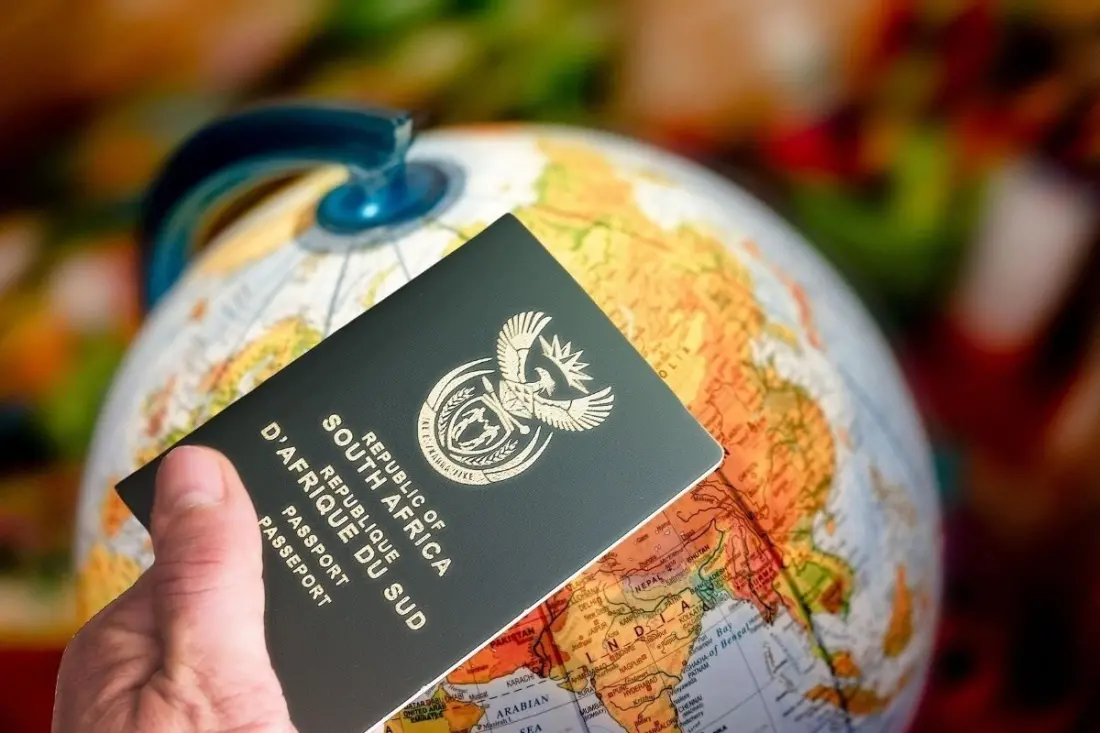
South African travellers have lost a little more freedom of movement. The country's passport has fallen seven places in the latest global rankings, dropping from 79th in 2025 to 86th in 2026, according to data from Passport Reports. Its Mobility Score now sits at 108, down from 110, meaning holders can reach 108 destinations without applying for a traditional visa in advance — though that figure bundles together genuinely visa-free access, visas on arrival and electronic travel authorisations.
It's not all bad news relative to peers. Among the 54 African passports measured, South Africa still ranks third, and it sits fourth among the 11 BRICS nations and 15th within the G20. But the drop reflects a wider truth: passport strength is fluid, and rankings shift as countries sign or scrap visa agreements and tighten entry rules.
The 108 figure breaks down into 59 fully visa-free destinations, 42 offering visas on arrival and seven requiring an ETA before departure. Those categories matter, because 'no traditional visa needed' doesn't always mean 'just show up'. Malaysia, Singapore and Thailand now require ETA clearance plus an arrival card, Seychelles asks tourists to register online, and Côte d'Ivoire demands pre-registration. Cape Verde has its own EASE online pre-registration platform. Stays vary wildly too — up to 360 days in Georgia, 180 days in places like Antigua and Barbuda, Barbados and Peru, and 90 days in many others.
So where can South Africans actually go? In Africa, visa-free options include Kenya, Mauritius, Namibia, Botswana, Zambia, Zimbabwe, Tanzania, Tunisia and Gabon, among others. The Americas are a strong suit — Argentina, Brazil, Chile, Peru, Costa Rica, Ecuador and much of Central America are open without a visa. The Caribbean is almost entirely accessible, from the Bahamas and Jamaica to St Lucia and Trinidad and Tobago. In Asia, it's mainly Hong Kong, Macao and the Philippines visa-free, but popular spots like Indonesia, the Maldives, Cambodia, Nepal, Sri Lanka and Jordan are available with visa on arrival. Georgia and Russia round out the European options.
For South Africans planning a 2026 trip, the practical takeaway is to check entry rules per destination before booking — even 'easy' countries may want an online form or arrival card, and requirements change frequently. On the upside, regional travel remains the passport's strength, with access to 71.7% of the African continent through some form of simplified entry.