Passenger rankings get all the attention, but the air cargo world has its own league table — and it is remarkably top-heavy. Air Council International's final 2025 figures, released in July 2026, show global air freight topping 131 million metric tonnes, up 3.3% on the year before. Just five airports moved nearly 15% of all of it.
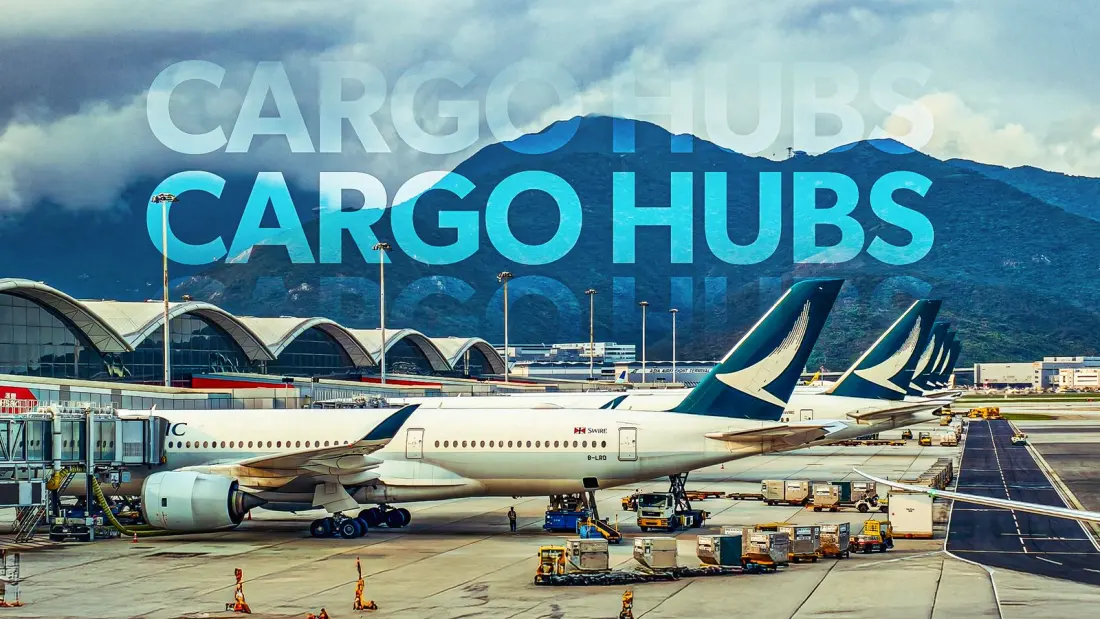
Hong Kong International (HKG) led again with 5,066,345 tonnes, its 15th year at number one since 2010 and its reign as the busiest international cargo airport stretching back to 1996. Cargo now accounts for over 45% of the value of Hong Kong's external trade. Growth of 2.7% looks modest, but big things are coming: the three-runway system commissioned in late 2024 underpins a target of 10 million tonnes a year within a decade, a new UPS hub due in 2028 will add nearly a million tonnes of capacity, and an airside cargo pier for sea-to-air transfers starts phasing in from 2026-2027. A clever Air-Land Fresh Lane, launched in September 2025, now pushes fruit, chilled goods and live seafood across the Hong Kong-Zhuhai-Macao Bridge with mainland customs cleared in about three hours.
Shanghai Pudong (PVG) held second on 4,091,941 tonnes with a punchy 8.3% growth rate, driven by cross-border e-commerce from the Yangtze River Delta manufacturing belt. Swissport opened its first Chinese facility there in June 2026 — a $215 million automated terminal built specifically for e-commerce flows.
The American entries tell different stories. Ted Stevens Anchorage (ANC) took third on 3,854,614 tonnes despite serving a metro area of under 300,000 people. Geography is the whole game: Anchorage sits near the great-circle route between Asia and North America, roughly 9.5 hours from 90% of the industrialised world, and around 80% of transpacific freighters stop there to refuel and swap crews. There's no curfew, so it runs around the clock.
Louisville Muhammad Ali International (SDF), home to UPS Worldport, was fourth with 3,396,437 tonnes, up more than 13%. Worldport processes around two million packages a day and, per a DePaul University study, has now overtaken Memphis as the world's largest express hub. That's the flip side of UPS taking over the US Postal Service air contract from FedEx in September 2024 — a loss that sent Memphis plunging from third to sixth, down 20.9%, the steepest fall in the top 20.
Miami International (MIA) rounded out the five with 3,128,165 tonnes and a sixth straight record year. Roughly 90% of US flower imports by air come through Miami — Customs cleared about 940 million stems for Valentine's Day 2025 alone — alongside around 70% of America's air-imported perishables.
For travellers, this is the hidden machinery behind your holiday: the flowers at the hotel lobby, the overnight parcel, the seafood on the menu. It's also a reminder that the airports you transit for leisure are often freight giants in their own right — Anchorage and Louisville chief among them.