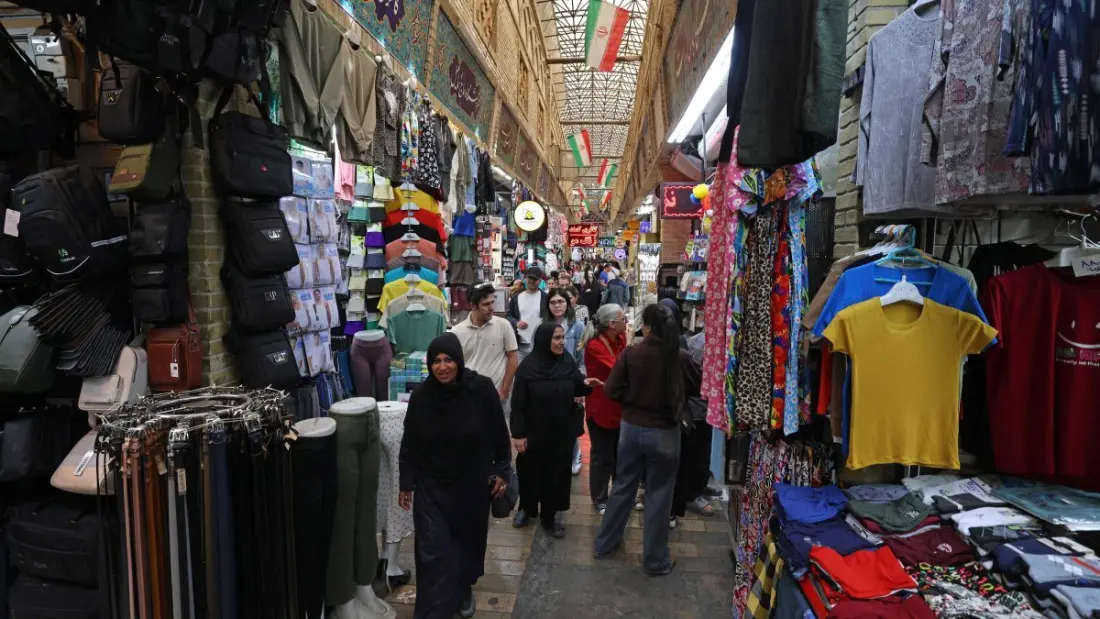
The covered bazaar at Tajrish square in northern Tehran has long been one of the Iranian capital's most atmospheric spots — vaulted lanes perfumed with spices and dried herbs, stalls piled with nuts, saffron sweets, jewellery and traditional garments, buskers drumming on boxes for tips. These days the perfumes and flags are still there, but the crowds are not.
Traders describe a market running on fumes. Nasir, a 61-year-old fruit and nut seller, says customers who once bought two to five kilograms of produce at a time now leave with half a kilo or less. A sportswear retailer, Ali Nowruzi, 36, keeps a few items on display so the shelves don't look empty — his warehouse, he says, already is. A car mechanic working nearby, Mojtaba Rezaei, says his customer base has shrunk to a tenth of what it was. Many visitors now simply browse and leave without buying; one out-of-work woman told reporters she comes just to "watch the shops".
The reason is economic, not seasonal. Iran's economy, already worn down by years of sanctions, has been hit hard by the conflict that began in February with US-Israeli attacks and an American blockade of the country's ports. Inflation ran at nearly 90 percent year-on-year in September according to official figures, and food prices have more than doubled since last year. One shopper's comparison captures it: a kitchen cloth that cost 22 cents a few months ago now sells for $1.10.
The currency has taken the worst of it. On the unofficial market, the rial trades at roughly 2.7 million to the dollar, down from about 1.7 million before the war. The minimum monthly wage, worth around $120 a year ago, now amounts to about $65. Iran's GDP contracted 10.1 percent between late March and late June, and the government has borrowed extra money to keep spending going. The economy minister rejects talk of imminent collapse, blaming hostile foreign actors for stoking anxiety and pushing up exchange rates, but shopkeepers say they have no visibility to plan even weeks ahead. Nasir's ask is simple: stabilise the dollar rate.
For anyone who has visited Tehran, the bazaar's struggles are a sobering marker of how fast daily life can change. Places like Tajrish were the heart of the city's weekend rhythm — families stocking up before the weekend, haggling over pistachios and barberries. That routine is fraying, and Iranians themselves are cutting out restaurant meals, leisure trips and holidays altogether. For travellers, Iran has been effectively off the cards since the conflict began, and this is a reminder of why: the impact of war lands hardest on ordinary markets, shopkeepers and families, the very people who made the country rewarding to visit in the first place.
Story first reported by Daily Sabah Travel.