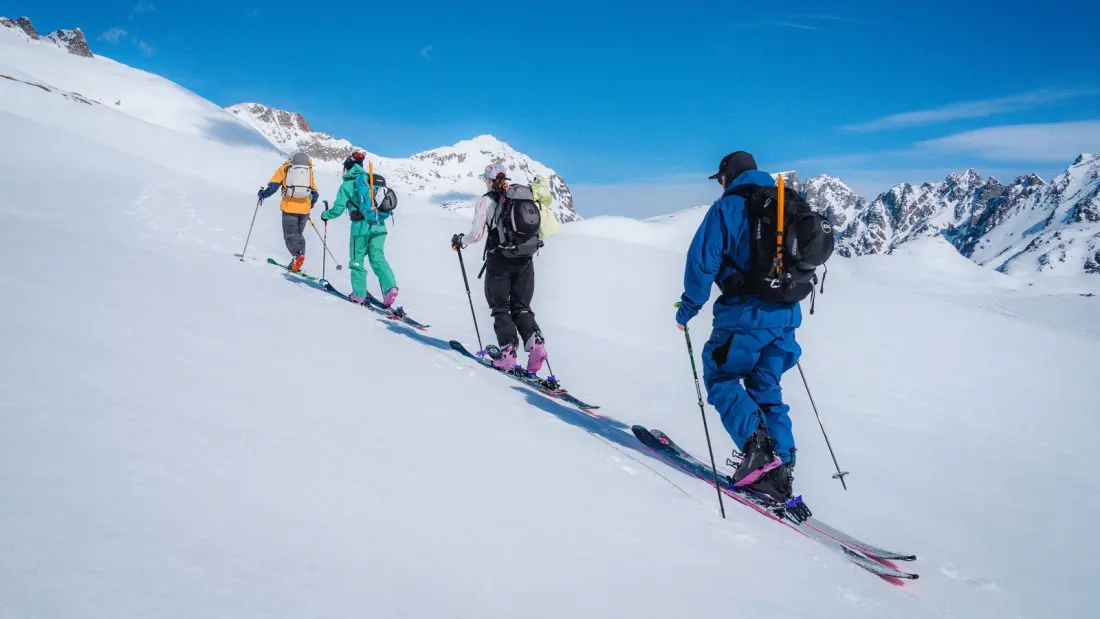
Ski Magazine put 26 backcountry skis through a proper workout last winter: 15 testers skied each pair for at least a month in their home zones, scoring them on flotation, crud performance, stability and more. Test terrain ranged from California's High Sierra to the Tetons, with additional laps in Norway and the Alps. Five models came out on top, and the differences between them say a lot about how you like to tour.
The overall winner is the Armada Locator 112 ($950, 1,575g per ski), which takes Editors' Choice for being floaty, precise and surprisingly approachable. Its 112mm waist and generous tip and tail rocker shine in powder and spring slush, while a 24-meter turning radius keeps it steady at speed — though that same radius makes it less nimble in tight trees. Testers called it stable, light and low on chatter.
If you want one ski for everything, the Salomon QST Echo ($900, 1,700g) is the pick. Updated for 2027 with a skin-clip notch in the tail, it shares its shape with the all-mountain QST 106 but weighs less and turns more easily. The extra weight — the heaviest here — is what makes it so dependable in variable snow, though testers found it a little twitchy at high speeds and suggest a +1.5 mount point.
Powder hounds should look at the Dynastar M-Tour 108 ($850, 1,480g), the top scorer for flotation despite not being the widest ski tested. A Mammoth-based tester reckons it could be a December-to-March daily driver for anyone who lives somewhere snowy. Its weakness is crud: the light build deflects on crunchy snow and gets chattery when you open the throttle.
The Atomic Backland 108 W ($850, 1,310g) is the women's pick, unchanged this year and rated as a genuine one-ski quiver from the Tetons to Little Cottonwood Canyon. One tester skied it at Retallack Lodge in British Columbia and on a January trip to Japan, claiming some of the deepest turns of their life without wanting anything wider. Note it's aimed at confident skiers and pairs best with a sturdy boot rather than an ultralight touring setup.
Two more round out the list. The Blizzard Canvas 100 ($700, 1,800g) is the surprise — a playful, freestyle-leaning ski that's forgiving enough for intermediates and brilliant in tight terrain, but a chore to skin on firm slopes and too narrow for deep days. And the K2 Wayback 98 ($800, 1,390g) is the lightest of the bunch, with a Titanal laminate giving real edge grip for spring corn and firm couloirs — though it gets pushed around in heavy, wet snow.
For anyone planning a hut trip, a spring summit mission or a first touring setup, the takeaway is that matching the ski to your snow — not the marketing — is what makes a day out. A ski built for the Tetons in January will feel very different in refrozen April corn.