Croatia's construction boom means plenty of shiny new apartments, but according to Croatian building expert Saša Perko, the most common quality failures are ones you'll never spot on a viewing. Developers save money on what's invisible: reinforcement, waterproofing, balcony thermal breaks and sound insulation. Together these items cost only a few per cent of the build, yet they decide whether your apartment is damp and patchy five years down the line.
Start with noise. Perko says walls between apartments should be reinforced concrete with a mineral wool and plasterboard lining, and that impact noise — think footsteps above you — demands a floating floor: a 2cm EPS layer under the screed plus perimeter expansion strips along every wall. Skip the strips and the screed touches the wall, funelling noise straight through the building.
Those ugly black streaks on some new facades? Usually a combination of poor vapour permeability and the wrong finish, especially on north-facing sides where moisture lingers and feeds algae and fungi. Perko's company uses vapour-permeable, non-combustible mineral wool throughout rather than EPS foam, accepting a slightly wavy look under certain light for better long-term performance.
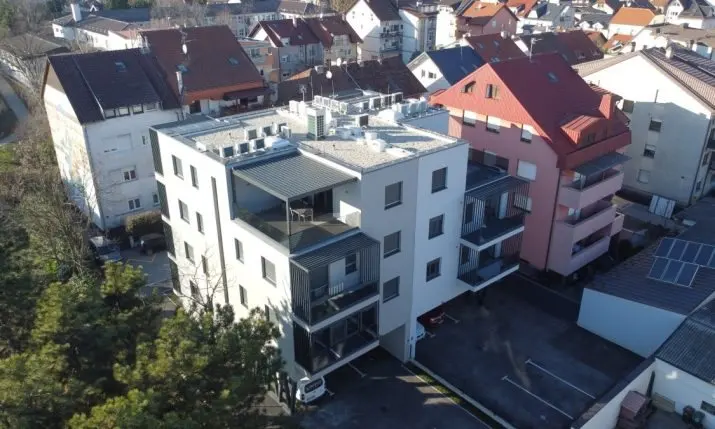
Flat roofs also carry an unfair reputation. The leak-prone failures came from old bituminous felt that cracked under UV; modern TPO membranes with two bitumen layers are far more robust — provided the roof is water-tested before being covered up. As Perko puts it, roofs leak because of bad detailing, not because they're flat.
Windows fail at the joint, not the glass. Insist on RAL installation: a vapour-tight tape inside, vapour-permeable tape outside, insulation between. Foam-only installs look fine until mould appears around the frame after two winters. And check that balcony slabs have thermal bridge breaks — without them, cold concrete creeps indoors and creates a permanent condensation spot.
What should you actually ask for? Paperwork. Request photographic documentation of concealed works, warranty certificates for all installations, proof the roof was water-tested and plumbing pressure-tested, and a maintenance manual. If a building is properly built, Perko says there should be no extraordinary costs in the first decade — the exceptions being minor plasterboard micro-cracks and heating/cooling calibration in early seasons.
The real risk is repairs running into tens of thousands of euros, paid through the building reserve fund — often the result of missing design details and unverified workmanship rather than bad materials, which he calls the smallest problem today. Design decisions matter too: heat pumps with underfloor heating can halve heating bills compared with boilers.
For anyone buying a holiday apartment or relocation home on the Croatian coast, this is the practical checklist that separates a sound investment from an expensive surprise. Credit: Croatia Week.