San José del Guaviare isn't your typical classroom setting. This small city in southeast Colombia sits in a region long marked by armed conflict, yet it's now home to one of the country's most remarkable education stories — one the UN Verification Mission in Colombia has just put in the spotlight.
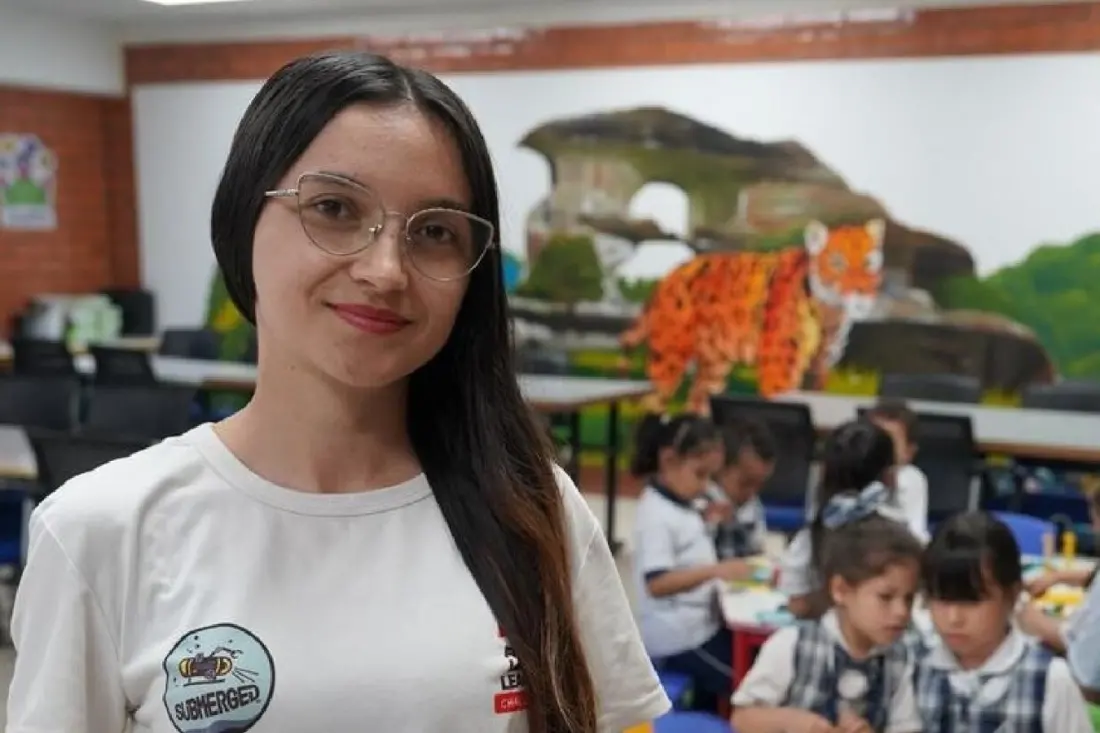
Tatiana Muñoz, a robotics-mad teacher from Bogotá, arrived in Guaviare on holiday in 2020, got stuck when COVID drained her funds, and stayed. She founded Science Bot, the town's first robotics school, which began life inside a battered red Renault 4 packed with second-hand computers. Teachers would unload tables in a neighbourhood, hold class — sometimes literally in the street — then pack it all up again. Five years on, the school has a headquarters, 3D printers, 75 local students, seven teachers, and even online pupils joining from Spain and Australia. More than 6,000 children have passed through its programmes.
The results are striking. Juan Esteban Gómez, Muñoz's first student, now at 16 competes internationally with a robot boat that monitors water quality in San José's wetlands, feeding data to an app that flags contamination affecting indigenous communities. Zully Romero, who once travelled 90 minutes along unpaved roads every Saturday — her fee waived when her family couldn't pay 80,000 pesos — built a prosthetic leg for a dog, won a competition in Mexico, and earned first place during training at NASA's Johnson Space Center through the She Is Foundation. She's now on a mechatronics scholarship in Bogotá.
Muñoz also teaches astronomy to Jiw indigenous children in areas with no internet, and at the Colinas reintegration space, where former FARC combatants live under the 2016 Peace Agreement, her students built smart greenhouses with robotics kits donated alongside the UN Mission. At national competitions, her team's cardboard-and-recycled-material robots have beaten elite schools with cutting-edge metal machines — funded by raffles and donations from local businesses.
Why should travellers care? Because Guaviare is quietly emerging as one of Colombia's most compelling off-the-beaten-path destinations — think pink river dolphins, ancient rock art at Cerro Azul, and the surreal Caño Sabana — and stories like this show a region actively rewriting its future. Visitors who make the journey find a place where tourism and community projects are part of the same recovery effort. Talking with locals like Muñoz's students, or supporting grassroots initiatives, adds real depth to a trip that most guidebooks still overlook.
As Muñoz puts it: in Bogotá offices people discuss peace and conflict as abstractions. In Guaviare, she saw young people carrying weapons in the street. Her school is a practical answer to that reality — and a reason to look beyond Colombia's obvious highlights.
Reported by Colombia One.