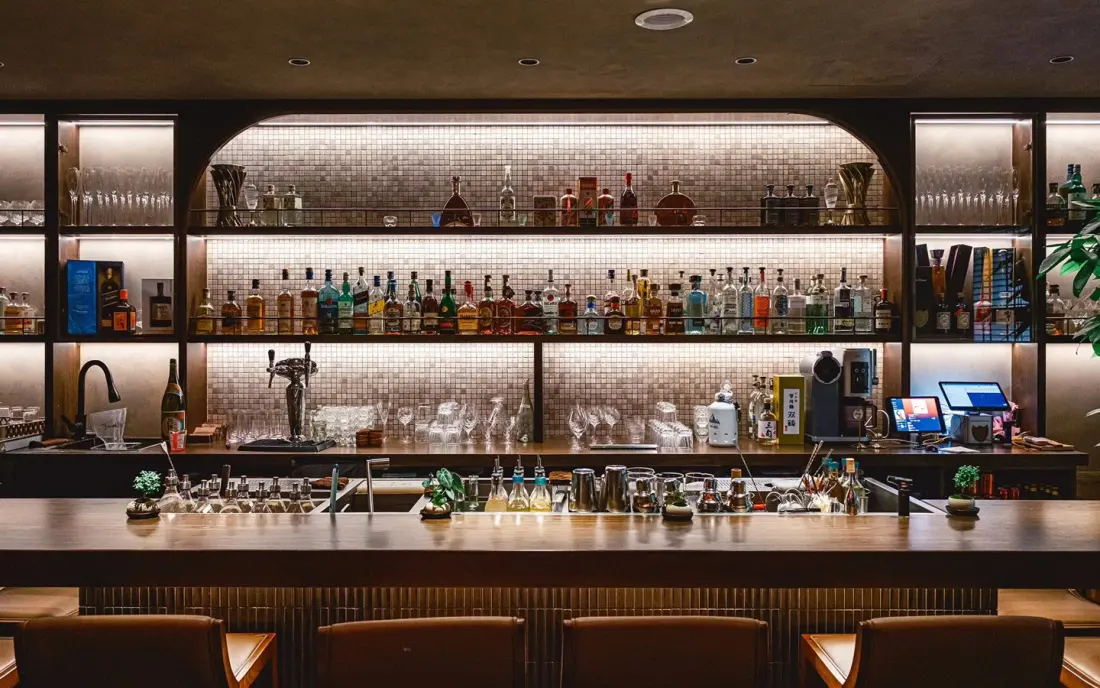
Shanghai's cocktail scene has no shortage of spectacle, but one of its more interesting bars draws its inspiration from a migration story that began hundreds of kilometres to the south. The venue is the work of Allen Fang, the 2022 World Class China Champion, and it takes its cue from his ancestors' journey from Xiamen, in China's Fujian province, to Southeast Asia.
That journey sits at the heart of Peranakan culture — the distinctive blend that emerged between the mid-19th and mid-20th centuries, when waves of migrants from Fujian and Guangdong settled in the Malay world and mixed with local Malay and European colonial influences. The result is a culture still visible today in Malacca, Penang and Singapore: ornate woodcarvings, glazed tiles, pastel shophouses, and a cuisine that fuses Chinese technique with Malay spices.
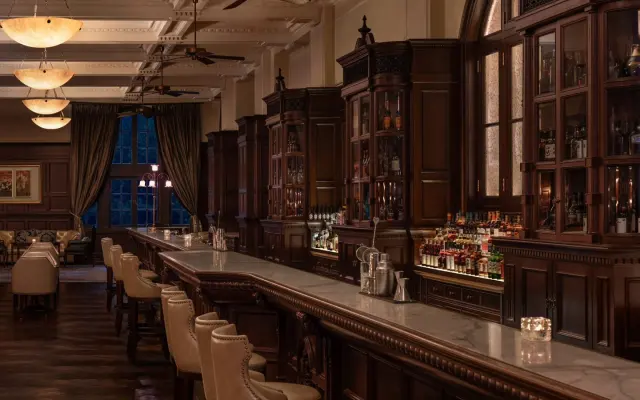
Fang's bar translates that heritage into a physical space. Chinese woodcarvings hang alongside Malay-style shutters, Portuguese tiles cover the walls, and symbolic floral motifs inform both the interiors and the uniforms worn by staff. It is a deliberate patchwork — each element represents one of the cultures that collided along old trade routes.
The drinks menu follows the same logic. Rice koji, the fermented mould used to make sake, miso and soy sauce, runs through the list as a unifying thread, giving drinks a savoury, umami edge you rarely find in Western-style bars. Asian ingredients are paired with Western mixology techniques, so the cocktails feel contemporary rather than like museum pieces.
One standout feature for anyone who likes to stay clear-headed: roughly 65 per cent of the cocktail menu is low-ABV. Lighter drinks are the default rather than an afterthought, with a shorter list of stronger classics for those who want them. For travellers who want a full evening of bar-hopping, or who simply prefer flavour to fireworks, that balance makes this an easy recommendation.
Why should this matter to visitors? Because it's a rare case where a bar tells a genuine story rather than borrowing a theme. Peranakan culture is usually experienced in Penang or Singapore; finding a considered interpretation in Shanghai is unexpected, and it gives context to a chapter of Chinese diaspora history that many travellers have never heard of. Order something koji-based, ask the staff about the tiles and carvings, and you'll leave knowing more about the region than you did when you walked in.
For anyone planning a few days in Shanghai, slot this into an evening along with the city's other cocktail destinations — and if it sparks an interest in Peranakan heritage, Penang's George Town and Malacca are a short flight away, both with shophouse streets and Peranakan mansions you can wander through by day.
SilverKris