
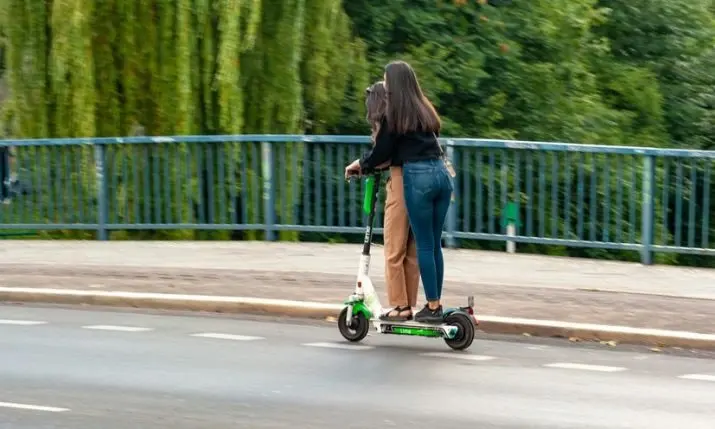
If you've rented an e-scooter to zip around Split's waterfront or Zagreb's old town, expect the rules of the road to change. Croatian traffic experts have proposed introducing registration plates, compulsory insurance and periodic technical inspections for electric scooters, and the government appears to be listening.
The proposals came out of the ninth Congress of Court Experts in Zagreb, where specialists Krunoslav Ormuž and Robert Spudić argued that current legislation hasn't kept up with today's faster, more powerful machines. Interior Minister Davor Božinović has separately confirmed that regulatory changes are being prepared, and amendments are now in public consultation.
The push follows a widely shared accident in Dugo Selo, where two minors riding one scooter were thrown over a car's bonnet after a collision. They escaped with minor injuries, but the footage reignited familiar concerns: two people sharing a single scooter, riders ignoring basic traffic rules, and no way to trace a vehicle after a crash.
The expert proposals would link each scooter to its owner via a registration or identification number on the frame, ending the current anonymity that makes accountability nearly impossible. Compulsory insurance would cover injuries and property damage caused to others, while periodic inspections would check frames, tyres, brakes, lights, batteries, electrical systems and — crucially — any illegal modifications that boost power or speed.
Under Croatia's current rules, scooters in this category are capped at 0.6 kilowatts and 25 km/h. The problem, the experts note, is that far more capable models are freely sold on the market, and owning one doesn't automatically mean you can ride it on public roads. With small wheels, no rider protection and speeds well beyond what the law allows, modified scooters turn minor mishaps into serious injuries.
For holidaymakers, the takeaway is simple: e-scooters are treated as regulated vehicles in Croatia, not toys. Stick to legal rental operators, ride solo, keep under 25 km/h, and expect the rules around identification and insurance to get stricter in the near future. If you hire a scooter privately, be aware that a machine which looks like a standard model may have been modified — and its owner may not legally be allowed to use it on the road at all.