A Croatian military training programme has just posted a record. The 13th cohort of the Croatian Armed Forces' "Marko Babić" Leader Development Centre included 19 personnel from abroad — the largest international contingent in the programme's history — out of 35 officers and non-commissioned officers from six countries: Croatia, Slovenia, Kosovo, Albania, North Macedonia and Montenegro. Everything is run in English.
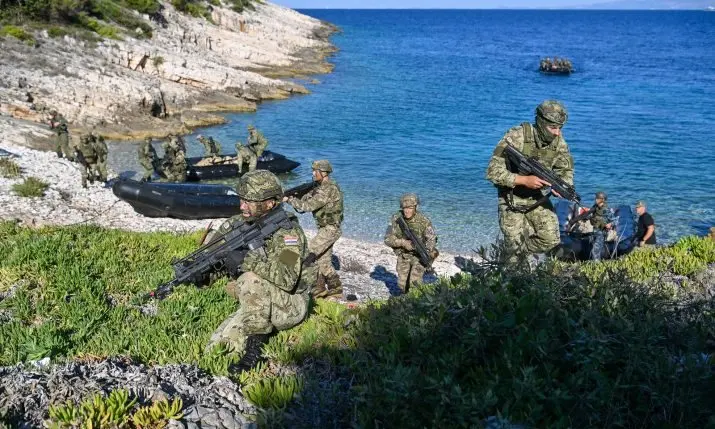
The group has just finished the maritime phase of the course, held on the island of Korčula in the Adriatic. It follows earlier training in Udbina, inland in the Lika region, and is designed to test how well participants can transfer those skills to a completely different environment. In practice that meant water obstacles, rowing sessions and a run of tactical exercises built around teamwork, safety and decision-making under pressure.
The standout exercise sounds suitably unforgiving: instructors deliberately flipped the inflatable boats, then required each crew to organise themselves, right the vessel and account for the safety of every team member and piece of equipment. Instructor Corporal Fabijan Mašina, who headed the maritime phase, said the emphasis falls on teamwork, safety and on future leaders taking responsibility for their teams in unforeseen situations.
The international mix is a big part of the point. Participants trade experience and get exposure to different military practices and working styles. Slovenian corporal Gregor Fištravec said he signed up precisely because of how demanding the course is, describing it as a continuous test of personal limits. Lieutenant Flora Thace of the Kosovo Security Forces is among the first Kosovar participants; coming from a landlocked country, she admitted the sea phase took real adjustment, though she said support from instructors and colleagues made the challenges manageable.
Why does this matter to anyone who isn't wearing a uniform? For one, it's a quiet signal of how Croatia positions itself regionally — as a hub for training and cooperation in the western Balkans, and increasingly visible on the international stage. It also puts a spotlight on two places travellers rarely associate with military headlines. Korčula, the island hosting the maritime phase, is one of the Adriatic's most attractive, with a fortified old town, vineyards and calmer crowds than Hvar or Split in the shoulder season. Udbina, meanwhile, sits in the starkly beautiful Lika hinterland near Plitvice Lakes — inland Croatia that most visitors skip entirely. For travellers, both offer a reminder that the country's appeal stretches well past its famous walls and beaches. And if you're on Korčula in spring or autumn and spot flotillas of inflatable boats being put through their paces, you'll know exactly what's going on.