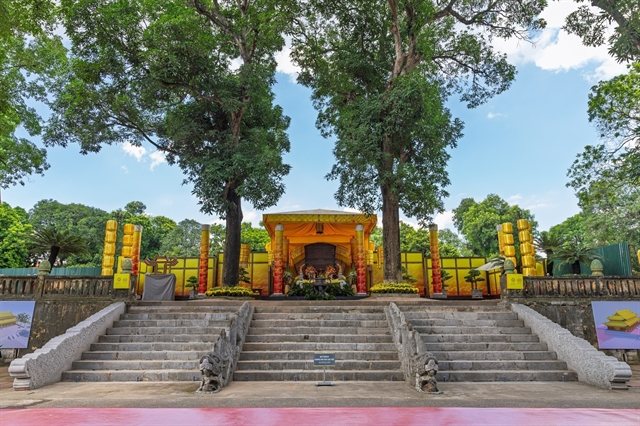
In the middle of Hà Nội, a short walk from Hoàn Kiếm Lake, sits one of Southeast Asia's great historic sites: the Thăng Long Imperial Citadel, the political heart of Vietnam for more than a millennium. In 1010, King Lý Thái Tổ moved the capital here from Hoa Lư and renamed it Thăng Long, or 'ascending dragon'. Successive dynasties — Lý, Trần, Lê, Mạc and Nguyễn — all ruled from this spot, and UNESCO recognised the central sector as a World Heritage Site in 2010.
Little of the medieval palace stands intact today, but the surviving pieces are genuinely worth the visit. There's Đoan Môn, the main gate on the king's route into court; the stone-dragon staircase of Kính Thiên Palace, now a national treasure; the Hà Nội Flag Tower; and the D67 house and bunker, where Vietnam's Ministry of Defence ran the war against the US — a reminder that this isn't just ancient history. The dig at 18 Hoàng Diệu has yielded thousands of artefacts, from dragon-shaped ridge tiles to phoenix decorations, painting a picture of one of medieval Southeast Asia's most prosperous capitals. Visitors can even draw water from a Trần-dynasty well that still runs clear.
The big news is Kính Thiên Palace itself. It was the ceremonial core of the citadel under the Lê dynasty from the 15th century — coronations, court ceremonies, receptions of foreign envoys — until 1816, when King Gia Long replaced it with a royal residence. The French later demolished that building for military purposes. Now Hà Nội has started a project to reconstruct the palace, with conservationists careful not to disturb the archaeological layers below. For anyone who has stared at the ruins and struggled to picture the seat of royal power, that should change the experience considerably.
The citadel has also become one of the city's livelier cultural venues. It hosts the Monsoon Music Festival, the Hà Nội Áo Dài Festival and a Phở Festival, and 3D technology now recreates royal rituals like fan-giving ceremonies. There's a night tour called 'Decoding Thăng Long Imperial Citadel', plus free multilingual audio guides you can run on your own smartphone. Plans are underway to link the site with Cổ Loa, the Temple of Literature, Hoàn Kiếm Lake and the Old Quarter into one connected heritage trail.
For travellers, this is an easy half-day that packs in over a thousand years of history — imperial Vietnam, the colonial era and the American war all on one compact site, right by the Old Quarter's hotels and street food. And if the palace reconstruction comes off, the citadel will only get more impressive. Go now and you can say you saw it before the 'heart' of the citadel was beating again.