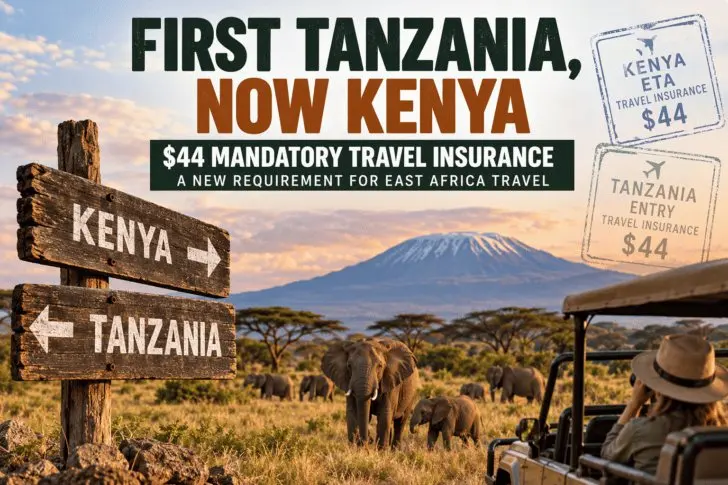
Travellers applying for Kenya's Electronic Travel Authorisation (ETA) are now being required to buy inbound travel health insurance through the government system before their application can be completed. The advertised premium is $44 per person — but with access and payment processing fees, travellers testing the portal have reported being charged closer to $52.
The requirement applies to foreign visitors staying less than 12 months, with East African Community citizens exempt. Since the ETA is required for most international visitors, including Americans, Canadians and Brits, nearly anyone flying into Nairobi for a Maasai Mara safari will hit this step. The policy offered covers roughly three months.
The timing is notable. Tanzania launched its own near-identical $44 mandatory inbound insurance on 1 October, and Kenya's portal began enforcing its version just five days later. Kenya's scheme was reportedly in development before Tanzania's rolled out, but the effect for travellers is the same: anyone combining the Maasai Mara with the Serengeti, Ngorongoro Crater or Zanzibar will now pay both countries' charges — on top of ETA fees, park fees and conservation fees.
The most frustrating part for many safari-goers: having your own comprehensive travel insurance doesn't obviously help. Kenya's system currently offers no straightforward way to upload a foreign-issued policy when it doesn't detect existing coverage, so you may be funnelled into the government product regardless. The same applies in Tanzania.
How it works in practice: you can either buy the insurance when prompted during the ETA application, or purchase it separately in advance through Kenya's eCitizen portal. The eCitizen route ties the policy to your passport, so the ETA system should detect it automatically — no double purchase. If you already hold an approved ETA issued before the rule appeared, the safest move is to buy the policy via eCitizen before departure rather than risk an argument at Nairobi immigration over roughly $50.
One $44 charge won't ruin a safari costing thousands, but the trend of stacking government-mandated fees on visitors is wearing thin, and it's increasingly hard to see these products as anything more than an extra tourism tax. The practical takeaway: budget for both Kenya's and Tanzania's insurance charges if you're doing a two-country trip, keep your own comprehensive policy anyway, and treat the government policy as an entry requirement rather than real cover. And don't let $88 in insurance fees talk you out of one of the world's great wildlife trips.