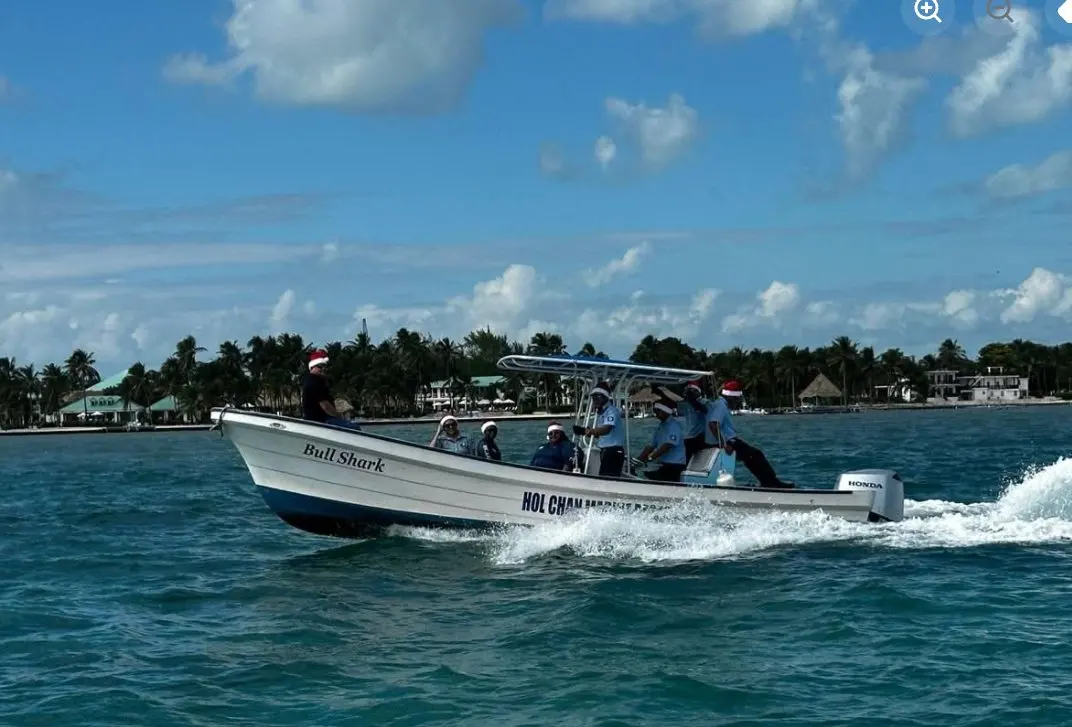
The waters around Ambergris Caye are getting extra scrutiny this conch season. Hol Chan Marine Reserve, working with Belize's Fisheries Department, has ramped up patrols, vessel inspections and even checks on restaurants and stores to keep illegally caught or undersized seafood off plates — good news for anyone planning to dive, snorkel or eat their way around the island.
Hol Chan's Compliance and Enforcement Unit runs day and night operations, including early-morning and late-evening patrols, and its officers hold fisheries authority to stop and search boats. Before the season opened, the reserve's technical team ran stock assessment surveys across the reserve, counting queen conch and measuring shell length and lip thickness to gauge how the population is holding up.
There are strict rules on what can legally be taken: a conch's shell must exceed seven inches, market-clean weight must top three ounces and fillet weight at least 2.75 ounces. The enforcement push isn't hypothetical, either. On September 29th — two days before the season opened — a joint patrol involving the Fisheries Department, the Belize Coast Guard and the Belize Audubon Society seized 1,086 conch packed in two iceboxes at Sandbore Caye in Lighthouse Reef Atoll. One person was charged under the Fisheries Resources Act with possessing conch during the closed season, which runs from July 1st to September 30th to let stocks recover.
Education is part of the mix too. Hol Chan's outreach officer Mariela Archer said the reserve supports enforcement while helping fishers understand the rules, and locals can report suspected illegal activity anonymously.
The reserve has also been protecting the reefs themselves. Its team recently finished mooring buoy maintenance at the nearby Caye Caulker Marine Reserve, installing two new buoys on the fore reef, replacing four damaged ones in the No-Take Area, and repairing or replacing four pickup lines. Mooring buoys let boat captains tie up without dropping anchor onto coral and seagrass — a small change that makes a big difference to reef health. Similar maintenance is planned within Hol Chan itself, and captains are being asked to use the designated buoys and report damaged lines.
For travellers, this matters more than it might seem. Ambergris Caye and Caye Caulker are two of Belize's most popular island stops, drawing snorkellers and divers to sites like the Hol Chan cut and the reef beyond. Healthy conch stocks and intact coral are exactly what make those trips worthwhile — and, on the plate, conch ceviche and fritters are Belizean staples you'll want to be eating legally and sustainably. Patrons can play their part too: choose operators who use mooring buoys, respect no-take zones, and buy seafood from places that follow the size and season rules.
Patrols and outreach will continue through the conch season, with stepped-up efforts if needed — a reminder that Belize's Barrier Reef, a UNESCO World Heritage site, depends on this kind of day-to-day policing as much as on good weather and calm seas.