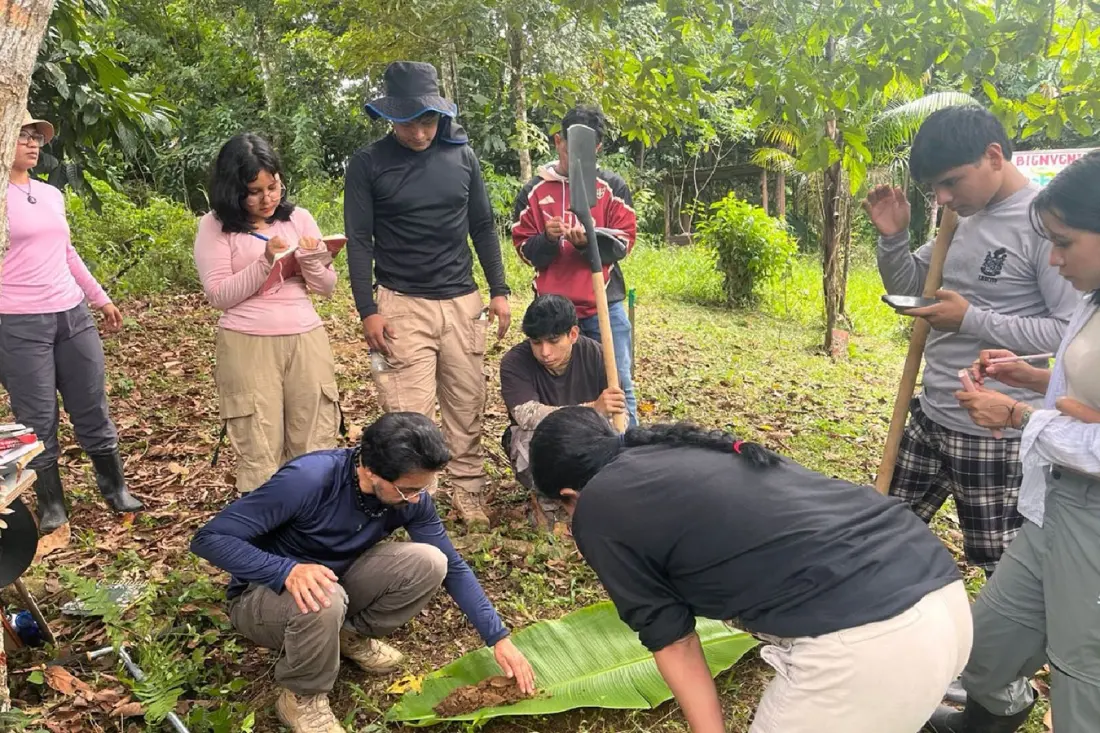
The triple-border town of Leticia — where Colombia, Peru and Brazil meet in the middle of the Amazon — just became home to the region's first archaeology laboratory. Opened by the National University of Colombia (UNAL) at its Amazonia Campus, the facility lets researchers study evidence of human settlement that stretches back some 13,000 years, without shipping material off to labs thousands of kilometres away.
Until now, research in this corner of the northwestern Amazon has depended on facilities outside the region, according to project lead Jeison Lenis Chaparro Cardenas, an anthropologist and archaeologist at UNAL. Working from Leticia changes the scale of the questions scientists can ask: how the first groups arrived and settled here, how they moved through forest and river networks, what trade systems they built, and how they reshaped their surroundings over millennia. The lab's catchment spans a culturally connected territory that today is split across three countries.
What makes the project distinctive is its social archaeology approach. Rather than treating the past as something buried in the ground, researchers will work alongside Indigenous communities whose memories, knowledge and sacred sites are tied to the same landscapes. Chaparro is explicit that the goal isn't only academic: the lab aims to support local initiatives around memory and the recognition of sacred places, and to answer questions raised from within the territory itself. The team's first field project, run with the community of Mocagua and UNAL professor and Indigenous leader Abel Santos, is already underway. Partnerships with the Colombian Institute of Anthropology and History (ICANH) and institutions abroad round out the picture, with the ambition of making Leticia a proper regional research hub.
Students benefit too: anthropology undergraduates at the Amazonia Campus will now train on real materials, in the field and in the lab, without leaving the Amazon.
Why should a traveller care? Leticia is already the gateway to one of South America's most fascinating corners — a tri-national frontier reachable only by plane or boat, ringed by river communities, national parks and protected reserves in all three countries. A resident archaeology programme means richer, community-led storytelling about the deep human history of the forest you're paddling through, and projects like the Mocagua collaboration could shape how visitors engage with local villages and guides. If community-based tourism is your thing, this is a region to watch — and honestly, a 13,000-year-old human story in the middle of the jungle is reason enough to put the triple border on your list.