Ecuador's electricity crisis is getting worse, and the government's attempt to shield households from blackouts is now fraying on two fronts: the business community and the water level at one of the country's key reservoirs.
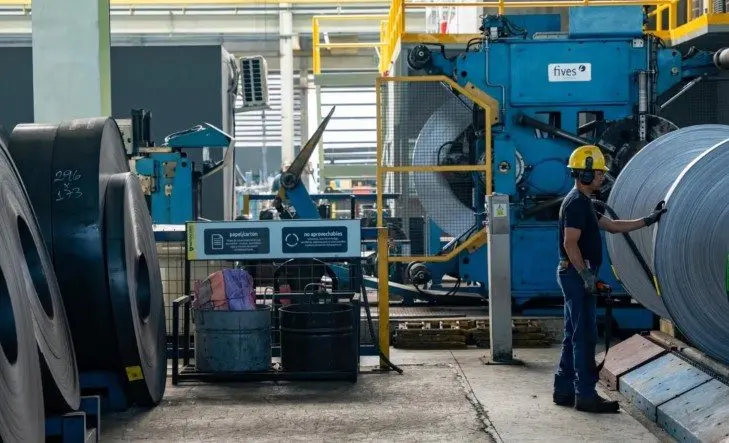
Around 9,000 large electricity users — nearly all of them commercial operations — are facing three days of power disconnections per week, up from a lighter schedule that industry had grudgingly accepted a month earlier. That concession was meant to keep homes powered while drought-hit hydro plants recovered. Instead, business leaders say the strategy now threatens the survival of their companies. Rodrigo Gómez, who heads the Ecuadorian Business Committee, argues that if firms shed workers to cope with three dark days a week, the households the government is trying to protect will lose the incomes that sustain them. He and dozens of business groups — including the Chamber of Industries of Guayaquil, the dairy sector association, the National Chamber of Industries and Production, and the exporters' federation Fedexpor — are pressing President Daniel Noboa to spread blackouts across the whole population rather than concentrate them on commerce.
Frustration boiled over after an unscheduled weekend cut hit businesses with barely any warning, which Gómez called a symptom of poor planning. Fedexpor's complaint is particularly concrete: roughly 75% of the cargo its members export is perishable and needs constant refrigeration, and backup generators can't keep 24-hour operations running indefinitely. Agricultural exports, it warns, are at high risk.
The numbers behind the crisis are stark. Engineer and consultant Juan Carlos Flores says that without heavy mountain rains, general blackouts affecting everyone are days away. The Mazar reservoir, which feeds three generation stations and was the centre of the 2024 crisis, stood at 2,126 metres above sea level in a Sunday bulletin from the National Electricity Operator — falling 1.64 metres in a single day and sitting just 11 metres above its critical threshold. Inflow from the Río Paute is running at 33 cubic metres per second against a normal 141. Worse, the plants were supposed to be rested to conserve water, but demand has been so high that they generated 30% of the country's power on Saturday anyway — which is exactly why the water keeps dropping.
For travellers, the practical takeaway is that Ecuador's blackouts are no longer an inconvenience confined to industry. If the reservoir hits its critical level, cuts will spread to households and, by extension, to hotels, restaurants and tourist services in cities like Cuenca and Guayaquil. Anyone planning a trip in the coming weeks should build flexibility into itineraries, expect possible outages, and check with accommodation about generator backup — especially if you rely on powered medical devices or need reliable connectivity for remote work.