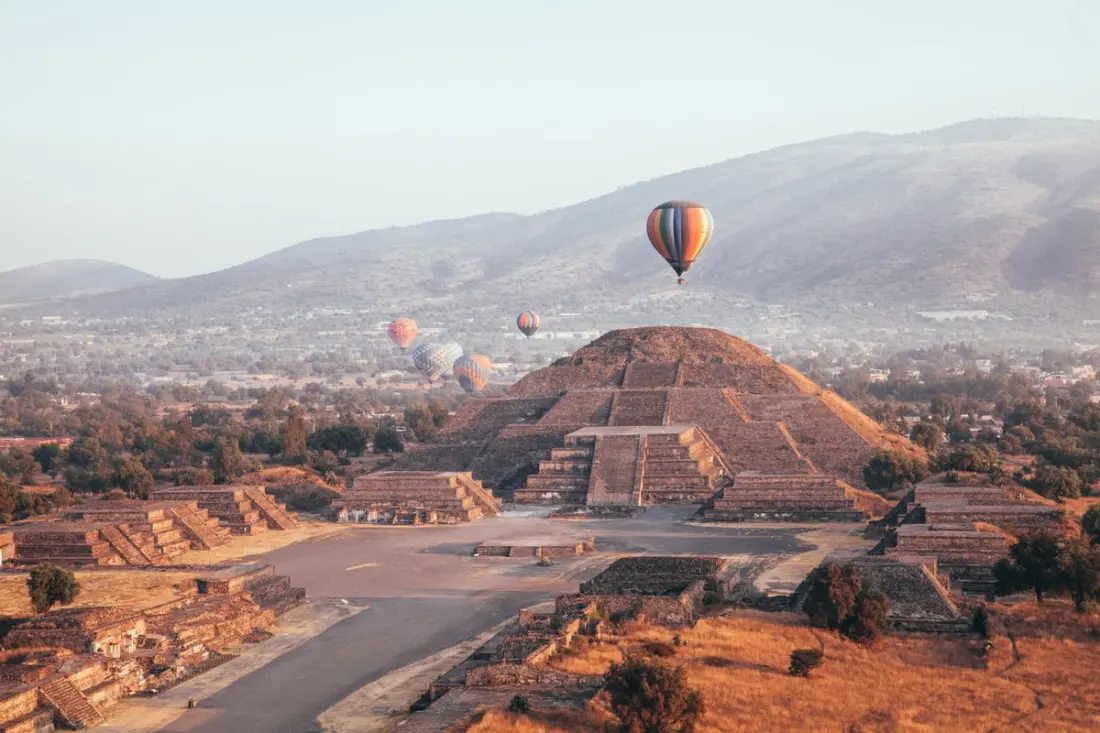
Mexico doesn't really have four seasons — most of the country runs on a two-part rhythm of rain and dry, and from late October or November through to May, the dry side takes over. It's the period most travellers aim for, and understanding how it plays out region by region makes a big difference to where and when you go.
The shift isn't instant. After the rains stop in late fall, the ground stays moist for eight to twelve weeks before the landscape fully turns. Then the change is dramatic: greens give way to yellows, browns and oranges, dust hangs in the air, and that fresh after-rain smell disappears. By late winter, much of the country is dry and dusty, with heat peaking in May just before the rains return in May or June.
How it feels depends heavily on where you are. Northern deserts barely have a rainy season at all — most rain falls July to September, and Baja California stays dry nearly year-round, though hurricanes can hit the peninsula between June and November. The central highlands, home to colonial cities from Zacatecas down to Oaxaca, get very dry and dusty by mid-winter, with the hottest days arriving in May.
On the Pacific and Gulf coasts, temperatures start climbing from February, and by late March the coast is hot and humid until the rains come back around late May or June. The Yucatán is the extreme case: flat, near sea level, and by April and May daytime highs can hit 45-50°C (113-122°F). That's precisely why the dry season — November through April — is high season for Cancún, the Riviera Maya and the 'snowbirds' who winter there: comfortable temperatures, few afternoon storms, no hurricane risk.
Two natural highlights are worth knowing about. Copper Canyon turns yellow, orange and brown from November to July, rivers shrink to their lowest levels, and snow can settle on high ground in winter — most visitors prefer July to November when the rivers run full, but repeat travellers sometimes come in the dry months for the contrast. In Chiapas, rain is rare February to May, and there's a timing trick at Agua Azul waterfalls: the famous turquoise photos are taken in late fall and early winter, when sediment has settled. Once the June rains arrive, the water turns brown.
Even in the dry months, odd localised storms roll through — short, brief showers that can soak one valley while a town a few miles away stays bone dry, a quirk of the way mountain ranges trap weather systems.
Why it matters: if you want beach weather without hurricane risk, comfortable city sightseeing, or the chance to see the Monarch butterflies overwintering in central Mexico, the dry season is your window. Just don't write off the green season entirely — the rains bring colour and landscapes the dry months can't match. For most first-time visitors, November to March hits the sweet spot, especially around Mérida and the Yucatán.