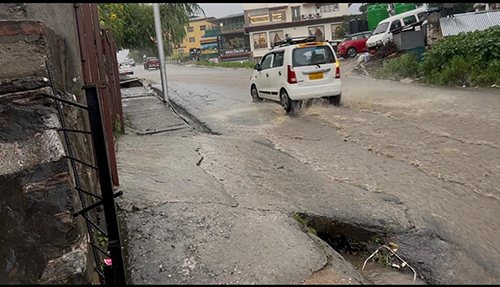
Heavy monsoon rain in Thimphu is exposing a weak spot in the Bhutanese capital's infrastructure. Drains along the busy stretch from Changzamtog school down to the NoNo Furniture shop keep overflowing during downpours, leaving water pooled along the roadside and in low-lying pockets of one of the city's most heavily trafficked areas.
The cause is a familiar urban cocktail. When the rains arrive, surface runoff surges past what the existing drains can handle, and rainwater sweeps soil, leaves and dumped rubbish into the system, clogging points that might otherwise cope. Thimphu Thromde, the city authority, says the network works fine in normal weather — it is the monsoon load, plus illegal waste disposal into drains, that tips it over.
For businesses on the strip, the flooding is more than a nuisance. Shopkeepers who display vegetables outside their premises say passing vehicles splash dirty roadside water onto fresh produce, leaving it unappealing or outright contaminated, with losses to match. Regular cleaning and upgrades to sections with poor flow are the short-term fixes being called for.
The city has a longer-term answer in motion. No major drainage construction has happened in the area in the past three years, but Thimphu Thromde says improvements are planned under the second phase of the Low Emission Transport Master Plan. It has also drawn up a citywide Stormwater Drainage Master Plan that will guide new construction and upgrades, boost drainage capacity and target spots prone to waterlogging as the capital grows.
Why should a traveller care? Changzamtog is a central, everyday corner of Thimphu — the kind of neighbourhood you walk through on the way to markets and shops. If you are visiting between June and September, expect wet pavements, occasional roadside puddles and slower walking around this stretch after heavy rain. Waterproof shoes are worth packing, and street-side produce stalls are best browsed on dry days. The wider lesson for Bhutan trips: the monsoon is real in the Himalayas, and while Thimphu's sights, dzongs and cafés stay very much open, a flexible, rain-tolerant itinerary makes the season far more enjoyable. Travellers who prefer guaranteed dry trails may want to aim for the clearer windows of spring (March–May) or autumn (September–November) instead.