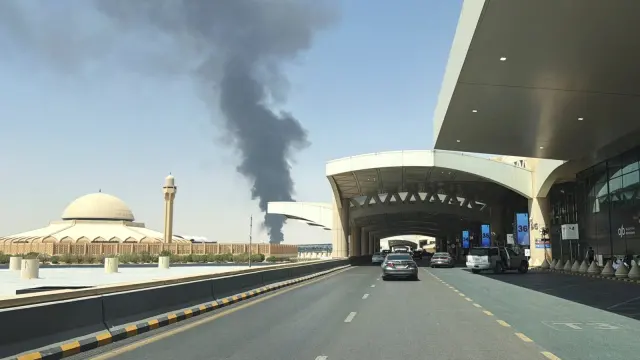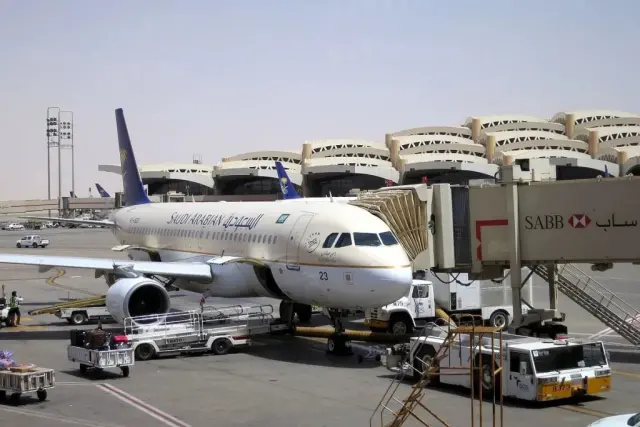
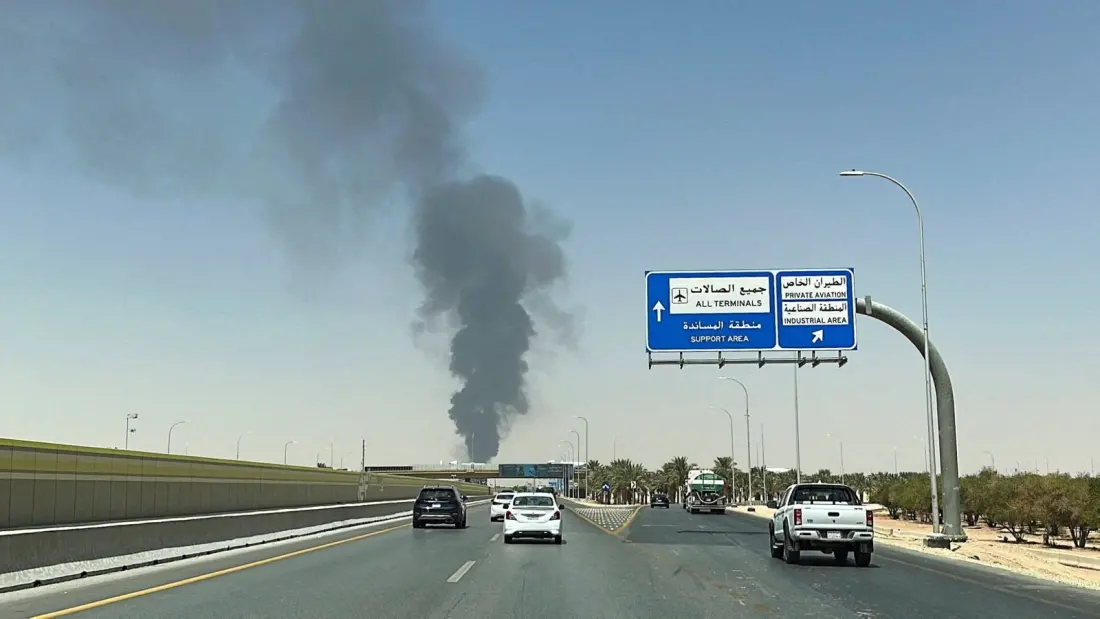
King Khalid International Airport in Riyadh has closed for a second time in as many days after a wave of explosions shook the Saudi capital on Thursday, with flight-tracking services showing hundreds of arrivals and departures cancelled.
Yemen's Iran-backed Houthi rebels claimed the attack, saying they fired ballistic missiles at the airport. Saudi authorities say coalition air defences intercepted two missiles over Riyadh and one more aimed at Khamis Mushait in the southwest, but falling debris damaged a kindergarten and a medical complex. Reports from news agencies suggest at least one aircraft suffered catastrophic damage at the airport, and possibly as many as three. Witnesses described smoke on the airfield and passengers being told to evacuate without their checked bags.
The rebels also say they targeted airports in Najran near the Yemeni border, and the previous day's attacks on Riyadh and Abha airports killed three people — the first fatalities since a Saudi-led offensive against the Houthis began. The Houthis have warned international airlines to stay out of Saudi airspace and told people in the kingdom to keep away from oil facilities, as they press what they call a blockade on the world's top oil exporter.
For anyone booked on flights to Riyadh right now, the practical picture is grim: Air India has suspended flights through Saturday, Lufthansa Group through October 16, and Flightradar24 showed the airport shut on Thursday afternoon with no landings or takeoffs for well over an hour. The US Embassy has issued a security alert warning of possible airspace closures and barred its staff from travelling within 32 kilometres of the Yemeni border.
The wider conflict is clearly spilling into civil aviation. Saudi Arabia and its allies are fighting to retake Red Sea coastal territory the Houthis seized recently, and the fighting around the Bab el-Mandeb Strait — a key shipping route — is adding pressure to an already tense region. Oil prices have jumped, and several countries including the UK, India and the UAE have condemned the attacks on civilian airports. Türkiye and Pakistan say they are considering defensive air-defence and technical assistance for Riyadh under a trilateral agreement, while Washington is already providing intelligence and planning support.
If you have a trip to Saudi Arabia on the horizon, this is a moment to hold off and check with your airline before travelling to the airport. Carriers are suspending routes on short notice, airspace could close with little warning, and government advisories are updating daily. Anyone with flexible tickets may want to rebook for a later date and monitor their foreign ministry's travel advice — several now warn against travel to parts of the kingdom, particularly near the Yemeni border. Travellers already in-country should follow local authority instructions and avoid airports and oil facilities unless flying out.
The situation is developing, and airlines will announce resumption dates as conditions allow — but for now, Riyadh's main gateway is effectively out of action.