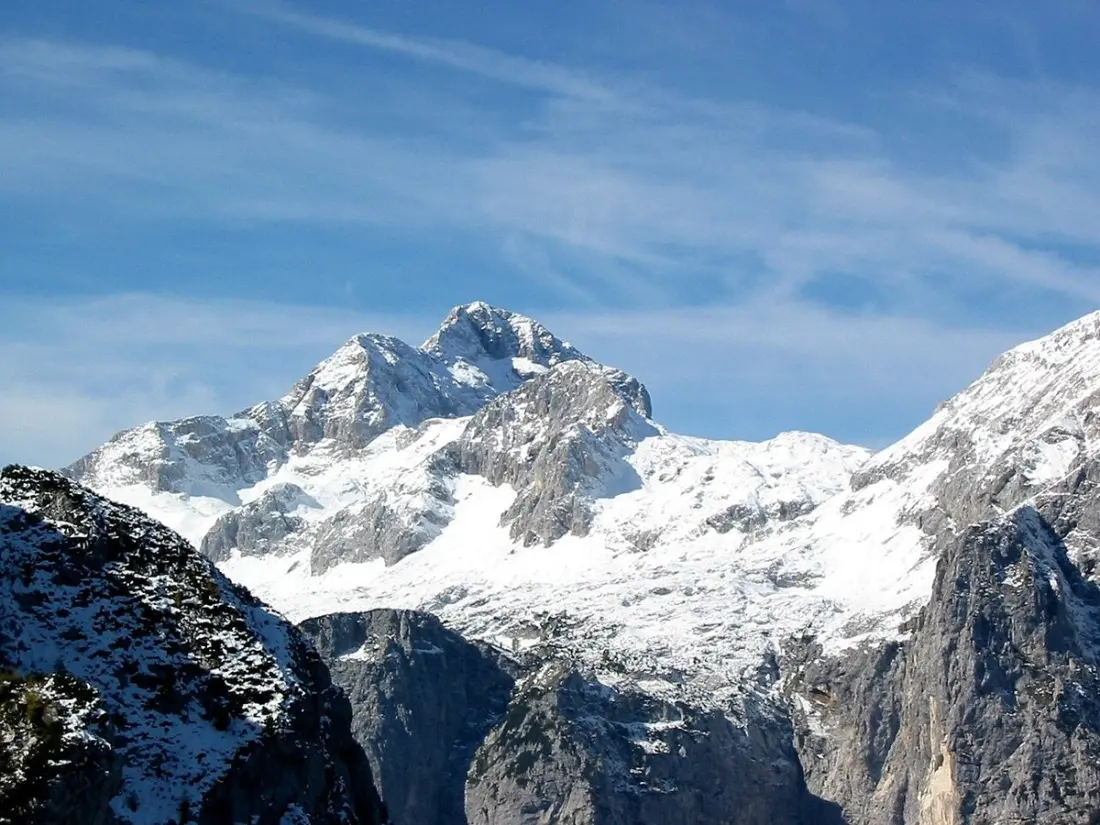
The Triglav glacier is so woven into Slovenian identity that it appears on the national coat of arms, on Slovenian passports, and on the country's 50 cent euro coin. Within days, researchers say, it could be gone for good.
Miha Pavšek, a researcher at the Anton Melik Geographical Institute who has monitored the ice for three decades, says everything points to the final fragments melting within days. The story of the decline is long: the glacier on Mount Triglav's northeastern face covered more than 40 hectares at the end of the 19th century, shrinking to roughly 14 hectares by the mid-20th century — still enough, back then, to support a popular year-round ski area. Scientists have tracked it continuously since 1946, and in recent years no new ice has fed into it at all. Low snowfall last winter left the remaining slivers of ice exposed to punishing summer heat, and Pavšek has declared the glacier dying.
The implications reach well beyond one mountainside. Pavšek warns that glaciers across the border in Austria are also shrinking fast, and their loss could eventually starve the Drava and Mura river basins of water — threatening farmland in the Drava and Ptuj fields and parts of the Mura region. In other words, this isn't just a winter sports problem; it's an agriculture and wine problem for some of Europe's oldest settled regions.
The wider Alpine picture is bleak. Swiss glacier monitoring service GLAMOS and the Swiss Academy of Sciences have stated that Alpine glaciers have no realistic chance of long-term survival under current conditions, and Swiss glaciers alone have lost around 20% of their volume in just five years. Some ski resorts in the EU have already shut down, while others are pivoting to spring and summer hiking to keep their visitor economies alive.
For travellers, the loss of the Triglav glacier is a reason to see Slovenia's high Alps now, in their current form — and to appreciate how quickly they're changing. Triglav National Park in northwestern Slovenia, covering more than 800 square kilometres (about 4% of the country), remains one of the most striking protected areas in Europe even as its ice disappears. Hikers climbing Mount Triglav this summer may be among the last to see what remains of the glacier that gave the country its symbol.