If you're budgeting a trip to Belize, the latest numbers from the Statistical Institute of Belize are worth a glance. Consumer prices in August 2026 ran 4.4% higher than a year earlier, with transport costs leading the charge at an 11.7% increase. Diesel jumped 26.9% to $15.02 per gallon and regular petrol rose 19.8% to $14.16 — figures that filter directly into taxi fares, water taxi tickets and domestic flights.
It's not just fuel. Housing and utilities climbed 4.4%, and the cost of a standard 225 kilowatt-hour electricity consumption rose from $84.25 to $94.90, a reminder that air-conditioned island accommodation carries rising running costs. Food and non-alcoholic drinks were up a gentler 2.5%, with sugar, poultry, instant coffee and bakery items among the pricier items.
Where you travel in Belize matters for local prices too. San Pedro, the gateway to Ambergris Caye and the country's tourism heartland, saw inflation of 3.5% year on year — roughly in line with the national picture. San Ignacio/Santa Elena in the Cayo district recorded the sharpest rise at 6.4%, while Punta Gorda in the far south was the cheapest spot at 2.7%. Year to date, the first eight months of 2026 saw inflation of 2.9%.
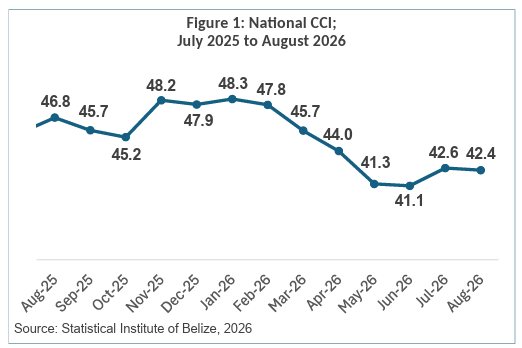
The mood on the street is also worth noting. The Consumer Confidence Index slipped from 42.6 to 42.4 in August, staying well below the 50 mark that separates optimism from pessimism. The picture was uneven, though: sentiment in Stann Creek improved markedly, while the northern districts of Orange Walk and Corozal turned gloomier. Confidence among men fell 7.5% during the month, while women's rose 5.5%.
For travellers, the practical takeaway is simple: Belize remains affordable by regional standards, but transport-heavy itineraries will cost more in 2026 than last year. If you're planning to island-hop between the cayes, take local buses rather than private transfers where you can, and book mainland-to-island travel early before fuel surcharges filter through. On the flip side, restaurants and grocery prices have risen only modestly, so eating local — rice and beans, stewed chicken, fry jacks — remains good value. And a softer consumer mood often means hotels and tour operators are more open to negotiation, especially outside the December-to-April high season. Worth haggling politely, particularly in quieter spots like Punta Gorda, where living costs have barely moved.