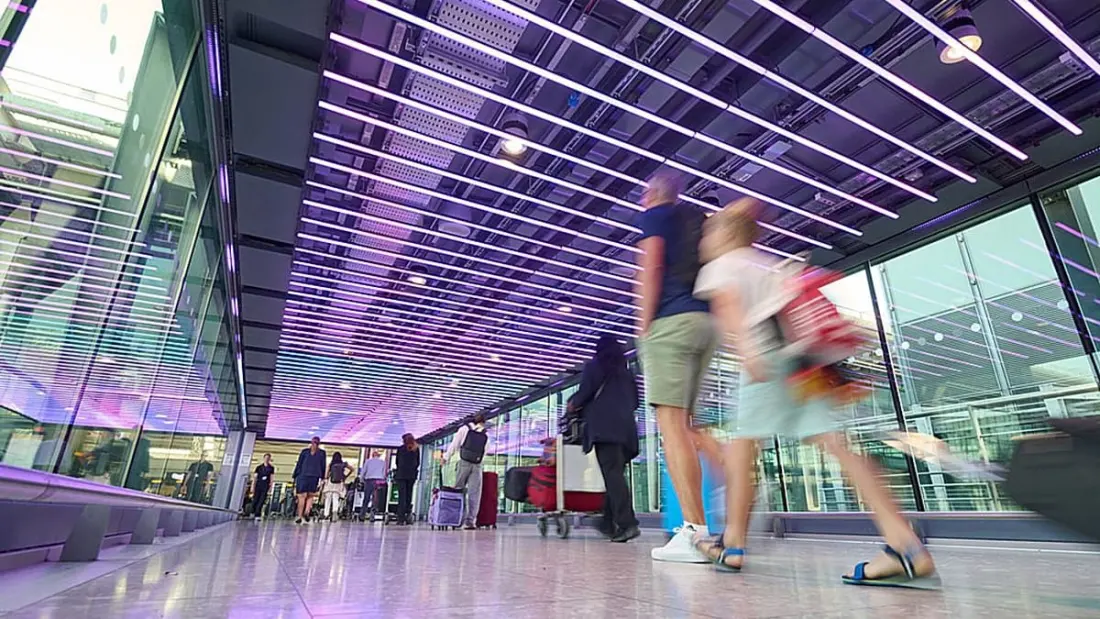
Showing your passport at UK arrivals could soon be a thing of the past. The country's first contactless e-gates have gone live at East Midlands Airport, letting eligible travellers walk through the border without digging out a physical document.
The technology works with facial recognition. You approach the gate, a camera takes your photo, and the system matches that live image against your verified immigration and travel records. If everything checks out, the barrier opens and you're through. If the system wants a closer look, you'll be asked to place your passport on a reader or speak to a Border Force officer. Trials suggest the contactless process is up to 25% faster than the traditional passport-in-slot method.
For now, the contactless gates are limited to a handful of lanes at East Midlands and are only open to British citizens. But the government plans to upgrade every e-gate in the country by early 2027 and open the technology up to more nationalities. That's a significant scale-up: the UK already runs more than 290 standard e-gates across 15 air and rail ports, currently usable by UK and Irish citizens plus anyone holding an Electronic Travel Authorisation (ETA) — the digital travel permit introduced in February 2024 that screens visitors before they fly.
East Midlands is the first stop in a phased rollout that will eventually cover most major UK gateways, including Heathrow, Gatwick, Manchester, Edinburgh, Birmingham, Glasgow, Bristol, Cardiff, London City, Luton, Newcastle and Stansted. Border Force has also been widening access to the existing e-gates, extending use to children aged eight and up over the summer — a change officials say should ease the squeeze for family groups arriving together.
A few caveats are worth noting. Travellers should still carry their passport at all times, since manual checks can still happen. Dual British nationals are advised to arrive on a valid British passport, or hold a Certificate of Entitlement, to avoid holdups at the border. And while officers won't be standing at every lane, they will be monitoring the gates and on hand if anything goes wrong.
For anyone who flies into the UK regularly, this is one of the more tangible improvements to the arrival experience in years — less fumbling for documents, shorter queues, and a border that increasingly works off your face rather than your passport. If you're an ETA-eligible traveller, expect the convenience to reach your nationality as the rollout widens through 2026 and into 2027. Until then, keep that passport handy.
Reported by Euronews Travel.