
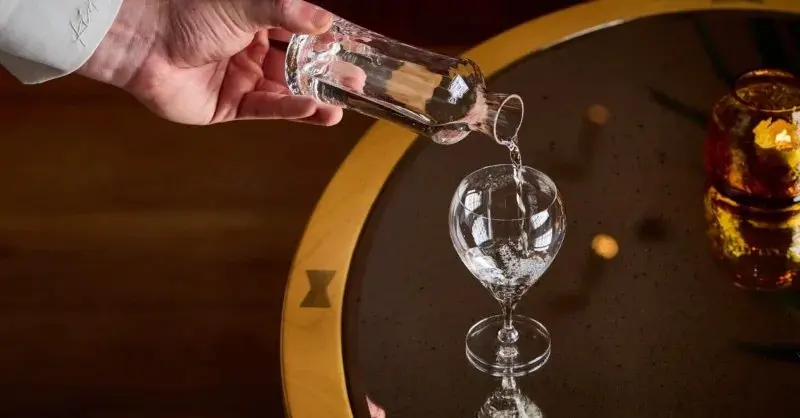
Most of us met sake the same way: a small ceramic cup, warmed up, next to a plate of sushi. But sommeliers who specialise in the drink say that's only one narrow corner of what it can do. Brewed from rice, water, koji and yeast, sake shifts dramatically with temperature, glassware and what's on your plate — and a few simple rules can transform how you drink it.
Start with temperature. New York-based sake sommelier Fayee Wong often pours the same bottle twice, once slightly chilled and once gently warmed, to show how aroma, texture and perceived sweetness change with just a few degrees. There's a seasonal logic too: Francisco Afonso, general manager of London sake bar Moto, serves junmai ginjo and daiginjo well chilled in summer, then moves to warming richer, savourier styles like yamahai and kimoto once the weather turns. If you're heating a bottle, Honey Spencer, sake sommelier at London restaurant Sune, suggests an aged sake or one with pronounced umami — delicate, floral styles can be overwhelmed by heat.
Glassware matters more than you might think. The traditional ochoko — a small cup in ceramic, porcelain or wood — carries real ritual appeal, but Spencer and Sandia Chang, sommelier at Kitchen Table in London, both pour sake into wine glasses. The extra aeration lets aromatic, ginjo-style sakes show the kind of detail you'd normally expect from a fine white wine.
The food-pairing case is even stronger. Andrea García, sommelier at Nobu Hotel Madrid, points to sake's lower acidity (mainly malic acid) and total absence of tannins, plus naturally present umami, as reasons it's exceptionally food-friendly. And it travels far beyond Japanese cuisine. Chang drinks it with Chinese and Thai food; García matches light, dry styles with salads and tartars and fuller styles with gyoza, soups and cooked fish. Spencer reaches for coarsely filtered nigori in autumn, its texture and umami landing perfectly with mushrooms, root vegetables and seaweeds. Jenifer Wagoner, global head of wine and sake at Zuma, pairs rustic kimoto and yamahai with burgers, fried chicken and seared salmon — the zippy acidity acting as a palate cleanser. There's even support for sake with rich pasta, and the most unanimous endorsement of all: cheese. According to Anthony Yukio Takamoto, head sake sommelier at Kioku Sake Bar, you wouldn't believe how well it works.
Why should a traveller care? Because any decent Japanese restaurant, izakaya or sake bar you visit is likely offering styles far beyond the warm jug you remember. Ask for a chilled ginjo in a wine glass, or a warm yamahai with something hearty, and you've essentially doubled the menu. For anyone planning a trip to Japan — or simply a better dinner closer to home — this is an easy, low-cost upgrade.
Original reporting by Elite Traveler.