When a ferry leaves Honiara for another Solomon Island, or a village in Tuvalu hears a warning before a swell hits, someone at a meteorological service made that call possible. New country reports from the Pacific Meteorological Council show how much the region's weather services now underpin everyday life — from shipping schedules to malaria planning — and where the gaps still lie.
In Solomon Islands, forecasts decide when cargo ships load and travel between provinces, help the Ministry of Health prepare for malaria season, and guide agricultural planning. The maritime regulator issues formal advisories to ship operators, and 80 per cent of the country's observation systems now feed a shared national database, with satellite data streamed in from Japan's Himawari and NOAA/ASCAT platforms.
Tonga leans on familiar channels: morning radio briefings in both English and Tongan, plus television and phone-based weather products, all feeding into the national disaster office's warnings for cyclones, severe storms, tsunamis and longer-term climate outlooks. It's a reminder that in the Pacific, the message matters as much as the forecast itself.
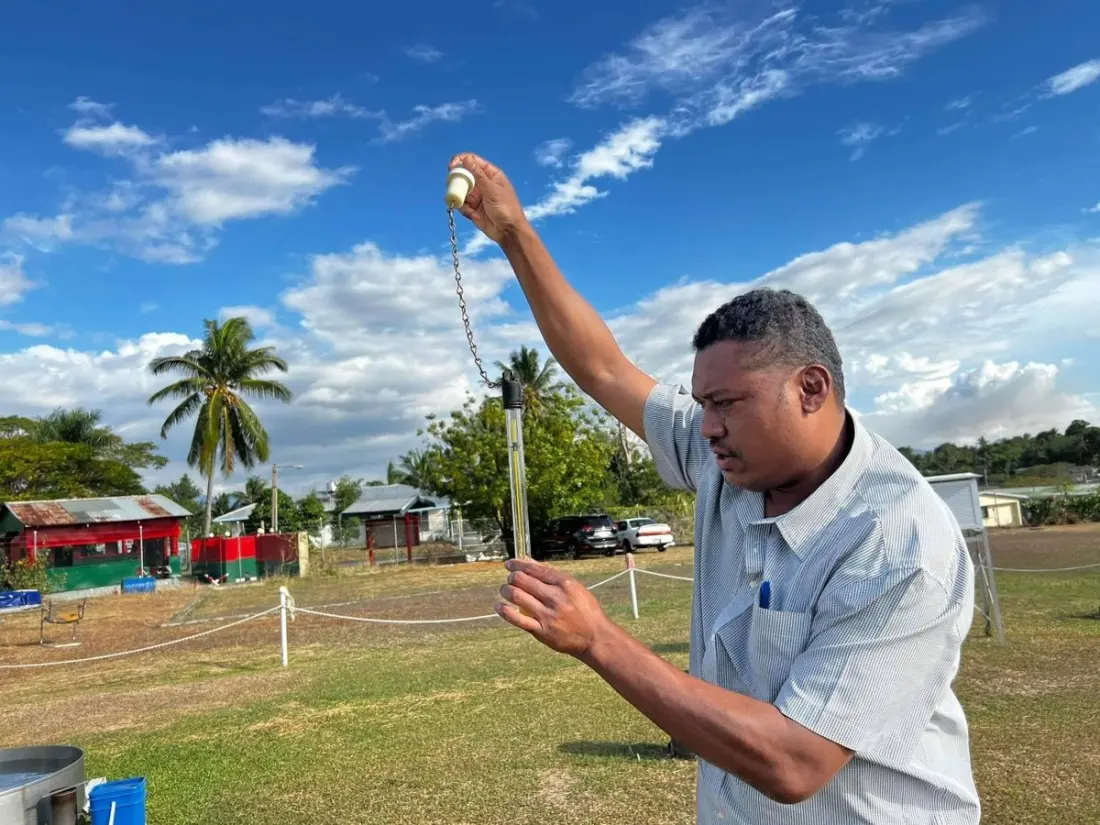
Tuvalu has arguably moved fastest. The service operates from a brand-new meteorological building, runs on upgraded internet including Starlink and fibre, has folded artificial intelligence into daily forecasting, and now runs an upgraded coastal inundation model. New kit includes an Automated Weather Observing System, four automatic weather stations and three wave buoys. Crucially for the scattered outer islands, warnings travel over HF radio, email and community channels, not just the web. Drought outlooks now feed directly into the country's water-security decisions. The remaining priority: training and retaining skilled staff.
Tokelau's service covers coastal hazards, swell, drought and heavy rain, aimed at fishers, water managers and the general public — with women in business explicitly named as a key audience. The to-do list is practical: deploy more automatic weather stations, build staff capacity, strengthen the early warning chain. Vanuatu's report, meanwhile, frames the whole effort as connectivity and partnership — national capability tied into regional and global networks, sustained by people and institutions rather than one-off equipment drops.
Australia's contribution to the report pushes the bigger idea: Pacific weather services need long-term, aligned investment — bilateral, regional and multilateral — built around the Pacific Islands Meteorological Strategy rather than piecemeal projects.
Why should a traveller care? Because in the Pacific, weather information is the backbone of safe travel. Ferry crossings, inter-island flights, dive conditions, village stays and even malaria risk all hang on these forecasts. A region that's investing in AI-assisted forecasting, wave buoys and multilingual radio briefings is a region where you'll get a genuine warning before things turn — whether that's a cyclone, a swell, or a drought-driven water shortage. If you're planning island-hopping anywhere from Honiara to Funafuti, the growing reliability of these services is quietly one of the best travel upgrades in the Pacific. Just keep in mind that outer-island coverage still depends on staffing and infrastructure, so build buffer days into remote itineraries.