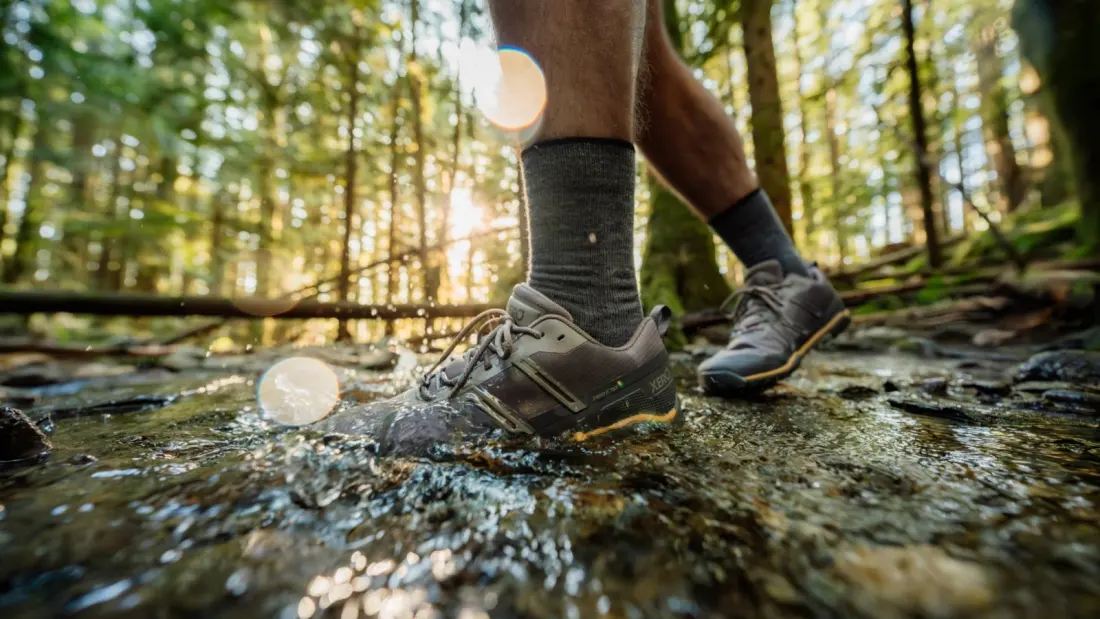
Barefoot hiking boots are having a moment, and Xero Shoes has just leaned in with a full collection aimed at hikers who want groundfeel without giving up grip or protection. The new Scrambler series includes four styles, from a light low-cut shoe to a premium waterproof boot, all built around zero-drop platforms, wide toe boxes and flexible soles that let your feet work the way they would unshod.
The lineup splits into two pairs. The Trail Low WP (9.8 oz men's, 8.4 oz women's) and Trail Mid WP (11.6 oz / 9.7 oz) use a proprietary XeroTex waterproof membrane, gusseted tongues and lugged outsoles — the low for quick day hikes, the mid for backpacking, sloppy or snowy trails, and anyone who wants extra ankle coverage. Step up a tier and you get Michelin rubber outsoles: the Xcursion Fusion adds eVent VIO waterproofing (notably PFAS-free) plus a moisture-wicking liner at 12.2 oz / 10 oz, while the flexible, speed-oriented Mesa Trail acts as the trail runner of the bunch at a feathery 9.2 oz / 7.4 oz. All four use abrasion-resistant mesh uppers with welded overlays instead of heavy stitching.
Why go minimal at all? The pitch is better proprioception — your feet sense the terrain and the tendons, joints and ligaments stabilise naturally over roots and rock. Trainer and mountain guide Mikey Bell points out that calves work harder in minimalist shoes, and research from Dr. Sarah Ridge suggests walking in them for six weeks can strengthen feet as much as a dedicated foot exercise programme. A tester who tried the Trail Low WP on short hikes reported feeling noticeably more grounded, with foot and lower-leg muscles firing in a way that seemed to benefit hips and back too.
The catch, and it's a real one: you can't just lace these up and crank out 15 miles. The advice is to treat the transition like training — wear them around the house, then on neighbourhood walks, then short hikes, building up over weeks so your feet and ankles adapt. Anyone planning a walking holiday or thru-hike who's curious about the barefoot trend has time to break a pair in before a big trip, and the mid and premium options look suited to wet, rocky or long-distance routes where a true barefoot shoe would be too exposed.