
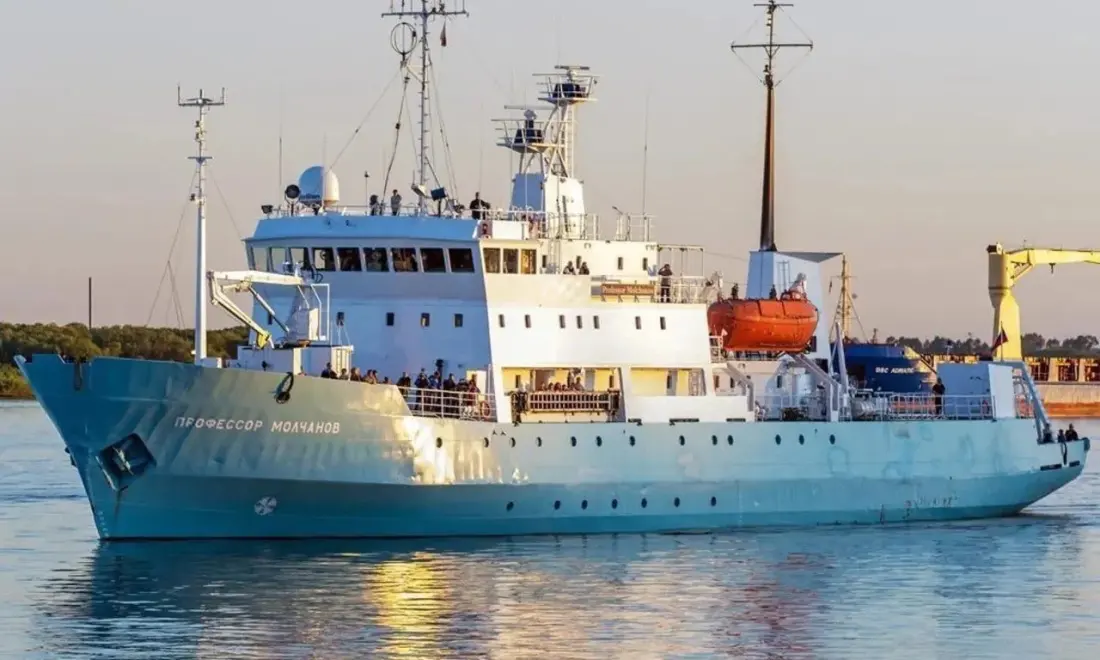
The Professor Molchanov, a Russian state-owned vessel that has long carried paying passengers on Arctic expedition cruises, is currently under arrest at the port of Barentsburg in Svalbard. Norwegian authorities detained the ship on 2 September after Ukraine's state energy company, Naftogaz, obtained an order from the Nord-Troms and Senja District Court. Naftogaz is chasing a USD 4.22 billion arbitration award against Russia over assets expropriated in Crimea after 2014 — an award already recognised as enforceable in Norway.
For anyone booking polar cruises, the case is a reminder of how unusual the expedition-cruise market is. Many ships plying the Svalbard routes, including ex-research vessels like the Molchanov, trace back to state or quasi-state owners, and this one is now caught between geopolitics and maritime law. Naftogaz argues the ship's main use is commercial — expedition voyages including trips to Svalbard — which is precisely what stripped it of state immunity. Under international rules, state property used for commercial purposes can be seized to enforce judgments; a vessel on sovereign government duty could not be.
Location mattered too. Svalbard sits under Norway's 'full and absolute sovereignty' despite the 1920 treaty giving signatory states, including Russia, equal rights to operate there. Barentsburg, the main Russian settlement, is still Norwegian territory, so Norwegian courts and the Governor of Svalbard have the final say. Because the ship was docked in port — Norway's internal waters — rather than merely passing through its waters, the arrest was legally straightforward once immunity fell away.
Could the same happen elsewhere in the Baltic? Legal analysts say only in narrow circumstances: a Russian state vessel would need to enter a port or internal waters, and the claim would need domestic recognition. A ship simply transiting an exclusive economic zone can't be grabbed to settle unrelated debts.
Practically, travellers should know that Arctic expedition cruising remains fully operational with Norwegian and international operators out of Longyearbyen, but ships with Russian state ties are now a legal risk — for their owners, if not their passengers. Anyone holding bookings on Russian-flagged or state-owned vessels in the region would be wise to check operator credentials and insurance. The wider takeaway: Svalbard is Norwegian law territory, full stop, and that has real consequences for who can sail there and what can happen when they dock. The story was first reported in detail by Estonian World.