Squeezed between Switzerland and Austria, Liechtenstein covers just 160.5 square kilometres and counts barely 41,000 residents — yet its per-capita income ranks among the highest in Europe. The IMF credits it with low unemployment, a fiscal surplus and virtually no public debt, which is quite the scorecard for a country you can drive across in about half an hour.
One oddity explains a lot: more people work there than actually live there. At the end of 2025, around 43,275 jobs existed in the principality, and 57.2% of workers were cross-border commuters flooding in from Switzerland and Austria each day. That inflates the classic GDP-per-capita picture, which is why statisticians prefer per-worker measures for comparisons.
The economy is more varied than you might expect for a famous money hub. Yes, finance matters — financial services accounted for 36.5% of corporate income tax revenue in 2024, and the princely family owns LGT Group, an international private bank. But roughly a quarter of resident workers are in industry, making precision goods, manufacturing and technology. Corporate tax sits at 12.5%, though a 15% global minimum tax has applied to large multinationals since 2024, so the "tax-free haven" shorthand oversimplifies things. There's no national currency either: Liechtenstein uses the Swiss franc under a treaty with its much larger neighbour.
Then there's the royal family, which wields more political power than most European monarchies. Prince Hans-Adam II has reigned since 1989, though his son Alois has been regent since 2004 and handles most day-to-day duties. Swiss publication BILANZ estimated the family's fortune at around 10.5 billion Swiss francs in 2024 — spanning LGT, investments, property and a centuries-old art collection of real European significance. Some rankings put Hans-Adam II ahead of King Charles III in personal wealth, though comparing royal fortunes is a fuzzy science.
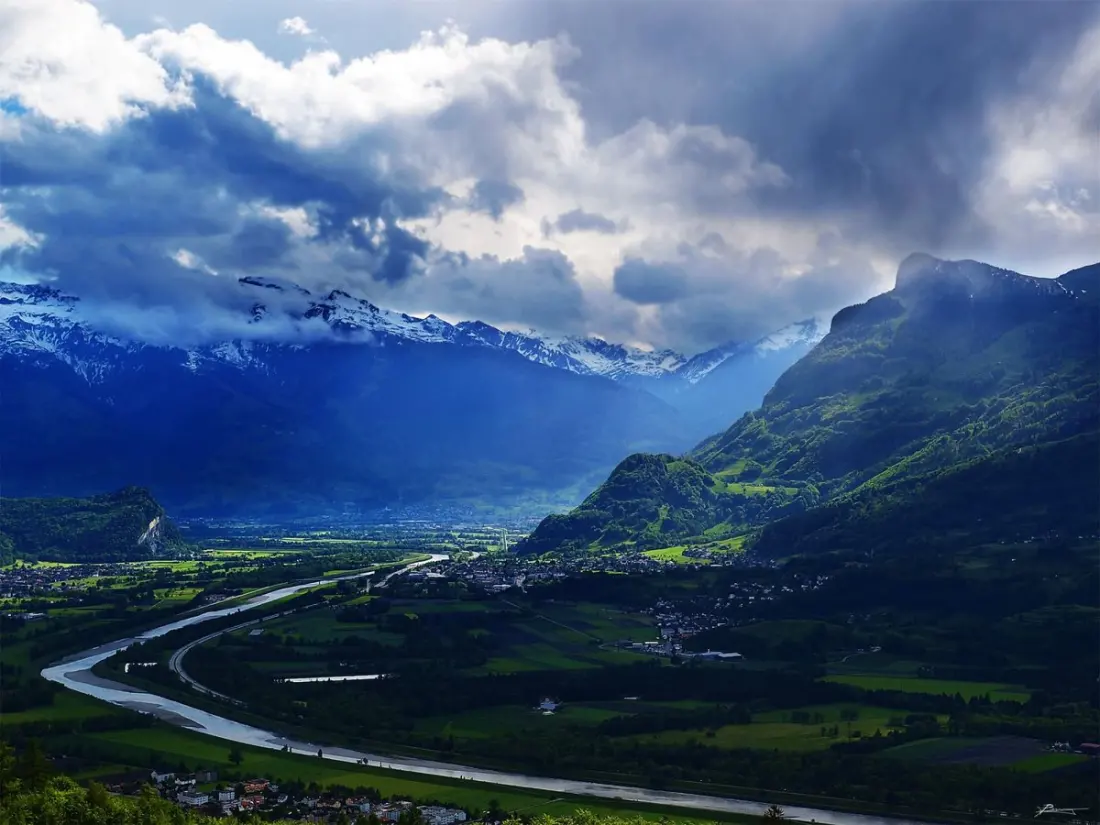
For visitors, all this translates into a strangely calm place. Vaduz, the capital, is visually anchored by the castle where the princely family lives, and its scale is more large-town than city: a few government buildings, museums, shops and Alpine scenery. Crime is low — the prison held 11 people in early 2025, and some sentences get served across the border in Austria or Switzerland. Police did report upticks in violent and drug offences in 2025, but property and financial crimes fell.
Why should a traveller care? Because Liechtenstein works beautifully as a low-effort add-on to a Switzerland or Austria trip: Alpine hiking, a stamp-loving tourism office, the Vaduz castle views and the princely art collection, all within a country you can genuinely "collect" in a day or two. It's for anyone who loves quirky microstates, castle backdrops and mountain air without the crowds of bigger Alpine resorts.
Reported by Colombia One.