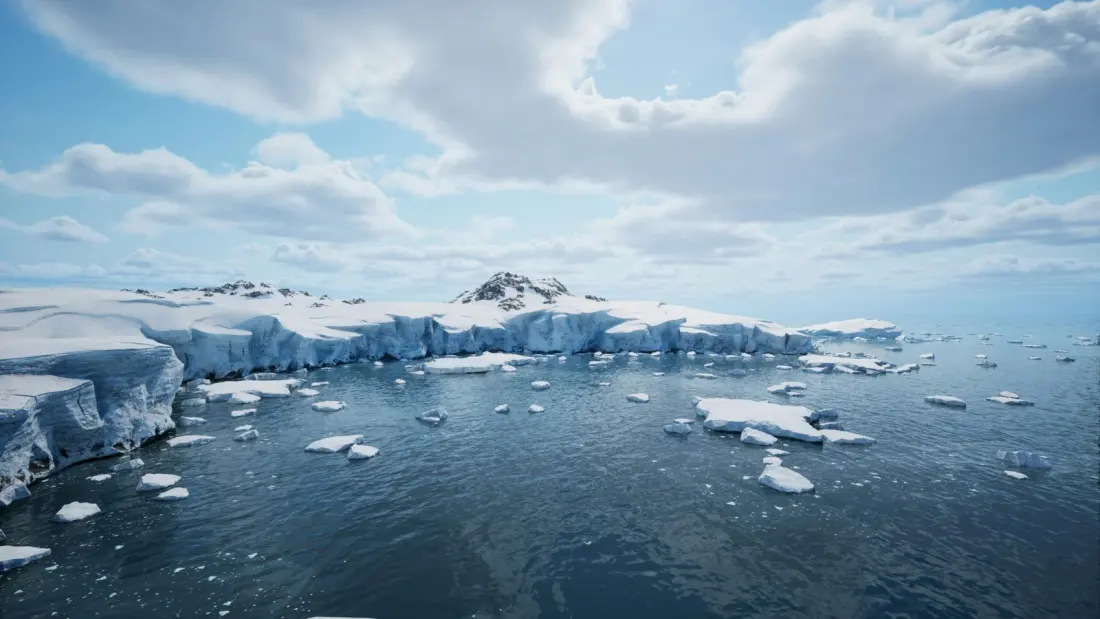
Antarctica's winter sea ice has peaked at its third-lowest maximum ever measured, and that's the optimistic part of the news. It's the fourth consecutive year that the continent's winter ice cover has logged a record or near-record low — a run scientists now say points to a genuine shift, not bad luck.
As of 14 September, the ice was about a million square kilometres short of the long-term average maximum recorded since satellite tracking began in 1979. Picture an area of missing ice roughly twice the size of Spain. This September the ice topped out near 17 million square kilometres; in recent summers it has been shrinking to under two million before rebuilding.
Researchers say the pattern is what concerns them most. Dr Ariaan Purich, a Southern Ocean specialist at Monash University in Melbourne, put it bluntly: this is no longer a one-off event, and the sea ice appears to be behaving differently because the climate has warmed. "This is not a future problem. It's a now problem," she said. Her colleague Dr Will Hobbs of the University of Tasmania admitted the system is "changing faster than we are understanding it."
Several factors fed into this winter's low. A heatwave pushed Antarctic temperatures 20°C above seasonal norms over the summer, large patches of open water lingered where ice should have been forming in August, and winds tied to the El Niño cycle helped churn warmer water into the ice zone. The Arctic, meanwhile, tied its 10th-lowest summer minimum — so both poles are flashing warning lights at once.
The knock-on effects reach well beyond the ice itself. Sea ice underpins the Southern Ocean food web: krill and algae that live around it feed penguins, whales and much else. Ice shelves also act as brakes on glaciers that, in the worst scenarios, hold back enough frozen water to raise global sea levels dramatically. An international modelling effort, ISMIP6, projects Antarctica will lose more ice than it gains this century even if warming stays under 1.5°C — and under a high-emissions path, permanent flooding could displace around 10 million people in coastal areas by 2100.
For anyone dreaming of an expedition cruise to the Antarctic Peninsula, the takeaways are practical as much as philosophical. Trips run in the austral summer (roughly November to March), and travellers should expect guides and operators to adapt itineraries as landing sites and wildlife patterns shift. Seeing Antarctica now — with credible operators who follow IAATO environmental rules — also tends to turn passengers into some of the continent's most effective advocates. The window for viewing it in something like its historical state is narrowing, and the science suggests it's narrowing fast.
Story via Travel Tomorrow.