Kathmandu's art scene has rallied behind families hit by the Bhote Kosi-Trisuli flood with a charity sale that doubles as one of the most accessible art-buying opportunities Nepal has seen in years.
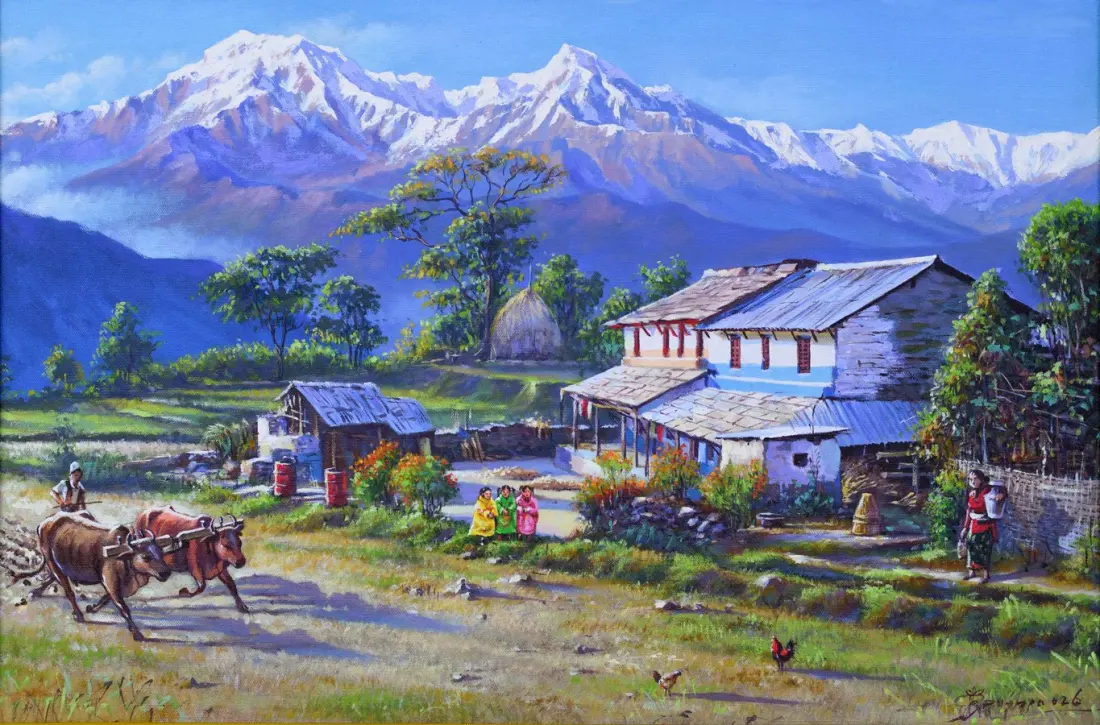
Arts for Humanity runs from 5 to 15 October at the Nepal Academy of Fine Arts (NAFA) in Naxal. Paintings, photographs, sculptures and mixed-media pieces by some of the country's most respected names — Thakur Prasad Mainali, Sharada Chitrakar, Mukti Simha Thapa and Vatsa Gopal Vaidya among them — hang alongside works by younger artists such as Ishan Pariyar, Krishna Lama, Suman Thapa and Prakash Mijar.
The twist that should get collectors' attention: every work is capped at Rs20,000. Many of these pieces would ordinarily sell for hundreds of thousands of rupees, so the exhibition offers a genuine chance to pick up an original by a master at a fraction of its market value.
The money flows in a transparent split: 70% of each sale goes straight to the Prime Minister's Disaster Relief Fund, 10% to NAFA's artists' welfare fund, and 20% to the artist who made the work. Plenty of participating artists have waived their share entirely, meaning some works sold send 100% of the value to relief efforts. "Buyers will not only be taking home a piece of art, they will be helping families rebuild their lives," says NAFA's Erina Tamrakar.
The exhibition continues a tradition of Nepal's creative community stepping up in national emergencies — a pattern familiar from the 2015 earthquake, when artists auctioned work for rebuilding across the country. This time the medium spans documentary photography of the flood zone, contemporary canvases and traditional sculpture, so the show doubles as a snapshot of Nepal's current art scene.
Why should a traveller care? If you're in Kathmandu in early or mid-October, this is a smart way to bring home something authentic — original Nepali art at a hard price ceiling — while your money goes where it's actually needed. Even if you're not buying, the exhibition is free to visit, sits a short taxi ride from central Kathmandu, and gives you a look at work by artists whose gallery prices you might never otherwise encounter. It's a rare alignment of culture, collecting and charity, and a more meaningful souvenir than anything in a Thamel souvenir shop.