
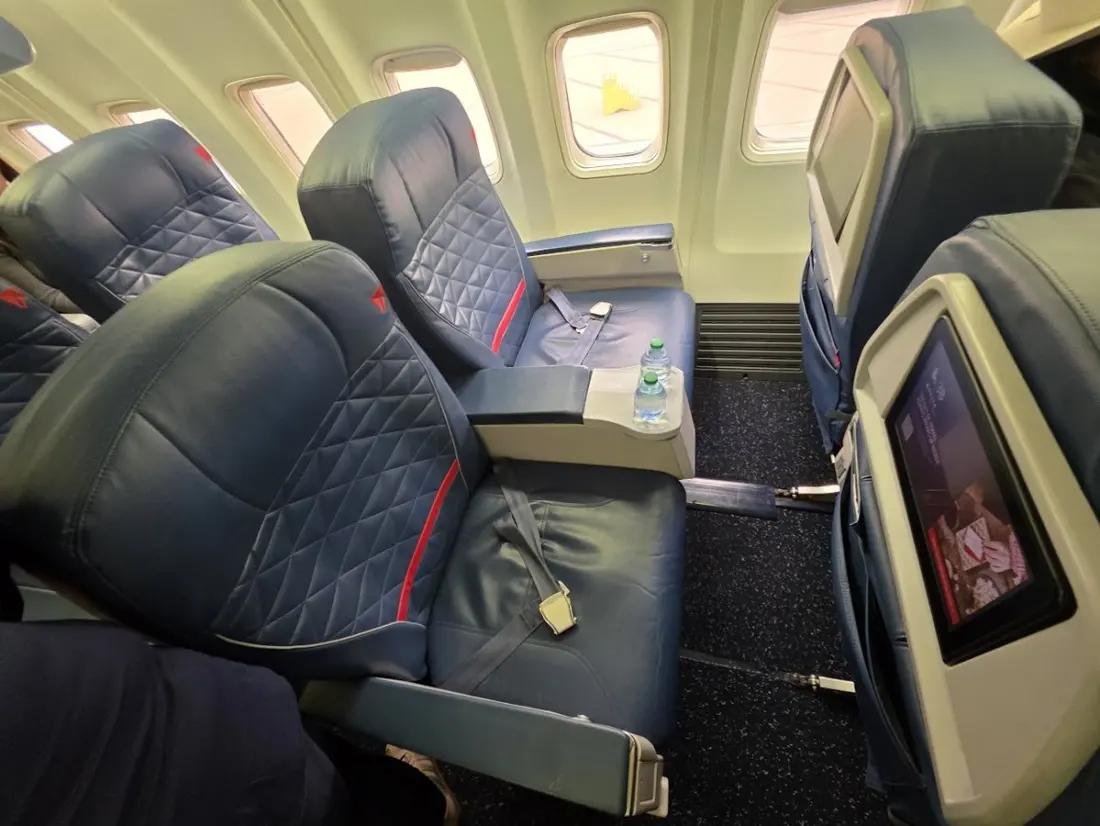
Buying domestic first class on a US airline is quietly getting worse. United, Delta and JetBlue have all introduced stripped-down 'basic' versions of their premium cabins — the recliner seat stays, but much of what made the ticket feel worth the money disappears.
Delta's First Basic has been on sale in some domestic and short-haul Latin American markets since 8 July. Its restrictions are extensive: seats are assigned at check-in (advance selection costs extra in some cases), the second free checked bag is gone, and changes or cancellations from the US or Canada trigger a $300 fee. Even elites lose same-day confirmed changes and standby. Mileage earning drops from 5 miles per dollar to 2.
United's version, rolling out this autumn, goes further in places: no voluntary changes at all, seat selection costs extra, one checked bag instead of two, and heavily reduced mileage earning — a regular member without a co-branded card earns no redeemable miles at all on a first class ticket. United is extending the same Base concept to short-haul international business class. JetBlue has published similar restrictions for BlueFirst Base, which hasn't even launched: your seat gets assigned to you, changes and cancellations cost money, and points earning is cut by two-thirds.
The context is telling. Budget carriers have been moving upmarket — Spirit's Big Front Seat pioneered the cheap recliner, Breeze sells its first class seat separately from bags, and Frontier and Allegiant are adding big-seat cabins too. Now the big three US airlines are converging from the other direction, importing ultra-low-cost-carrier-style restrictions into their premium cabins. The idea is classic price discrimination: charge a lower headline fare to fill empty front-cabin seats without giving away the full product to everyone.
The catch, as the analysis argues, is that first class has never really been about the chair. A domestic recliner is a domestic recliner — and the real appeal is the frictionless experience: pick your seat, check your bags, change your plans without penalty. Unbundle that, and passengers start comparing the cabin on its own merits. Suddenly a $300 change fee on a first class ticket looks worse than the flexibility of a regular coach fare costing far less. If you mainly want width, buying the middle seat next to you in economy can be cheaper.
Gulf carriers like Qatar and Emirates have experimented with their own 'lite' business fares and survived, but they're selling flat beds and decades of brand equity. A US domestic recliner with tight pitch and inconsistent service has less goodwill to spare.
That leaves American Airlines with an opening the author doubts it will take: simply keep first class all-inclusive — seat choice, bags and changes included — and market it as the ticket that ends the hassle. For now, though, travellers should assume the trend is heading the other way, and read the fare rules carefully before paying extra for the front of the plane.
View from the Wing