The wife and daughter of one of Ecuador's most feared gang bosses have been arrested in a small Colombian town, in the first big joint operation since the two Andean neighbours reset their relationship under new conservative leadership.
Colombian police, working with the FBI and Ecuadorian investigators, raided a home in Sabana de Torres, a rural municipality in Santander department more than 600 miles from the Ecuadorian border. There they found Inda Mariela Peñarrieta Tuarez and Michelle Macias Peñarrieta — the wife and daughter of José Adolfo Macías, alias 'Fito', former head of the Los Choneros syndicate, who is now imprisoned in the US. His daughter had been living under the fake name Paola Zapata. The arrests executed an Interpol red notice tied to a $25 million money laundering probe, and both women were deported back to Ecuador within days.
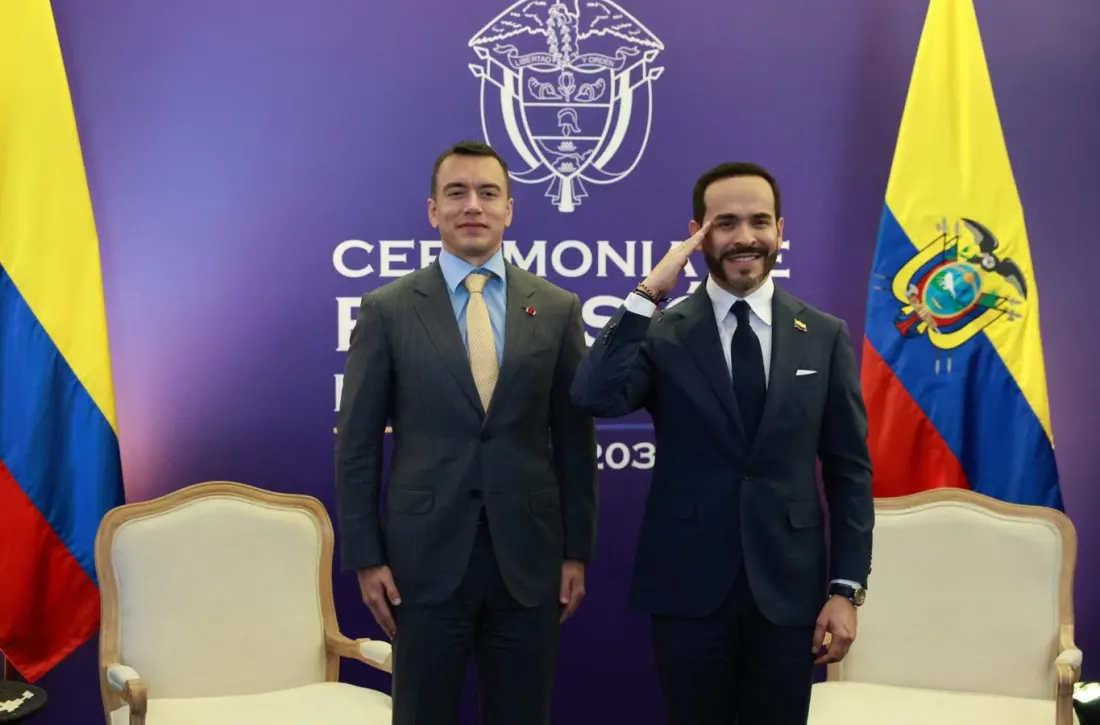
The operation marks a thaw between Ecuador's Daniel Noboa and Colombia's new president De la Espriella, after years of friction with former leftist leader Gustavo Petro, whom Quito openly accused of harbouring fugitives. It also fits a pattern: Los Choneros' current boss, 'Fede', was caught in Medellín in October 2025 after bribing his way out of an Ecuadorian prison disguised as a soldier; Fito's brother was picked up in Bogotá months earlier; and Los Lobos leader 'Pipo' faked his own death and built a new life in Medellín under a false Venezuelan identity before being arrested in Spain.
Washington is deeply invested. Both countries have joined the US-led 'Shield of the Americas' anti-narcotics coalition, and US Southern Command chief Gen. Francis Donovan visited Colombia in late August to restore defence ties frayed under Petro. Priorities include the Pacific coast — new radar in Tumaco to track semi-submersibles — and the porous Ecuadorian border, where a binational military base has been floated. US Defence Secretary Pete Hegseth has even claimed Colombia approved joint military operations on its own soil. Meanwhile, the Trump administration's maritime interdiction campaign has launched 68 strikes on suspected smuggling vessels in the Pacific and Caribbean over the past year, killing 227 people — operations human rights groups have condemned as extrajudicial killings.
Why should travellers care? Colombia has long been a place where cartel figures quietly settled, and the gangs involved — Los Choneros is now a US-designated foreign terrorist organisation — have been forging alliances with the Clan del Golfo and FARC dissidents. The crackdown is a positive signal for safety in border and Pacific regions, but it also means heightened military and police activity in areas like Tumaco and the southern borderlands. Tourists sticking to established routes are unlikely to notice much beyond a heavier security presence; anyone venturing into border departments should keep an eye on local advisories.