
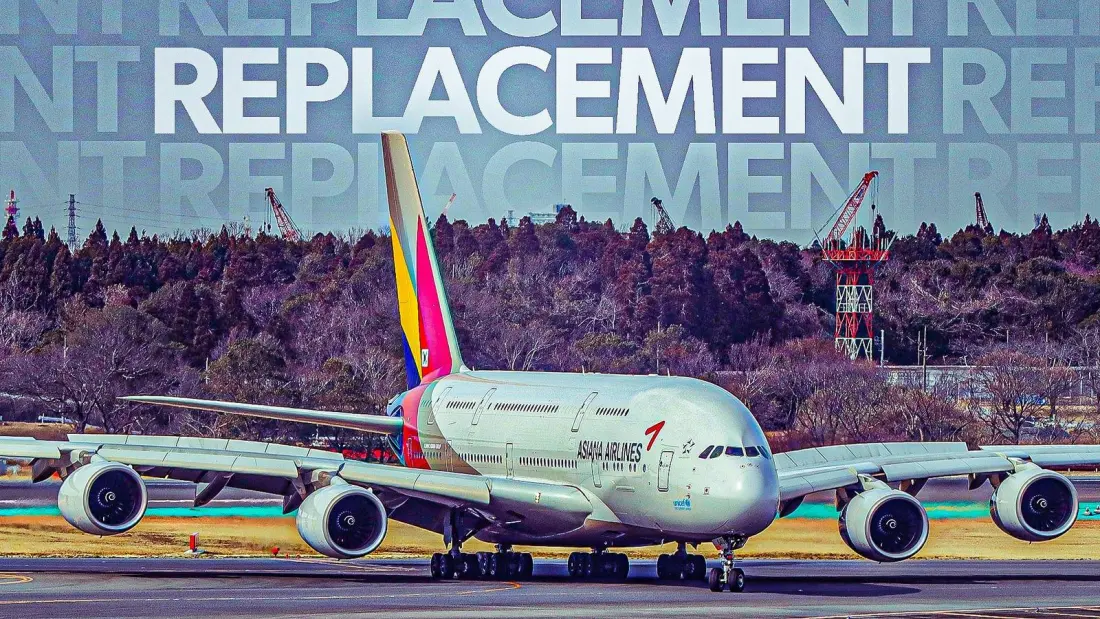
The Airbus A380, the biggest passenger plane ever built, is slowly heading for retirement, and the aircraft lining up to take its place look very different. Where the double-deck, four-engine giant carried around 525 people, the next generation of long-haul flying belongs to smaller, twin-engine jets that burn less fuel and open up more routes.
The A380 itself was born into a shifting market. The Boeing 747 had ruled high-capacity long-haul routes since 1970, but Airbus launched its own superjumbo in 2007 with Singapore Airlines, offering more seats and longer range. Emirates embraced it wholeheartedly, becoming the largest operator and pioneering first-class extras like onboard shower suites. Yet the timing was off: airlines were already moving away from hub-and-spoke flying towards point-to-point routes, and new twin-engine widebodies were making four engines look like an expensive relic. British Airways, for one, swapped its daily A380 between London Heathrow and New York JFK for several smaller twin-engine flights, betting passengers prefer flexibility over sheer size.
Airbus's answer is the A350, in service since 2013 and now the darling of ultra-long-haul flying. The A350-900 seats roughly 315 people but flies about 8,500 nautical miles — further than the A380 — on far less fuel, with only two engines to maintain instead of four. Qantas has picked the upcoming A350-1000ULR for its Project Sunrise nonstops from Australia's east coast to New York and London, expected around 2027. Airlines ordered 157 A350s through November 2025 alone.
Boeing's reply comes in two parts. The 787 Dreamliner, flying since 2011 with an airframe that's about half composite material by weight, has become a workhorse for everything from short hops to long international routes — United operates 80 with 141 more on order, and 321 were ordered through October 2025. Its low cabin altitude makes it a comfortable ride, too. The closer match to the A380 in size, though, is the 777X, with folding wingtips and GE9X engines, the most powerful ever fitted to a commercial airliner. Boeing claims 20% lower fuel use for the 777-9, which seats around 426 — but repeated programme delays mean most airlines are planning around the A350 and 787 instead.
For travellers, this reshapes how you'll fly long-haul in the coming decade: expect more nonstop options between secondary cities, more frequent flights on slimmer widebodies, and fewer chances to tick the A380 off your aviation bucket list — so fly it with Emirates or Singapore Airlines while you still can.