
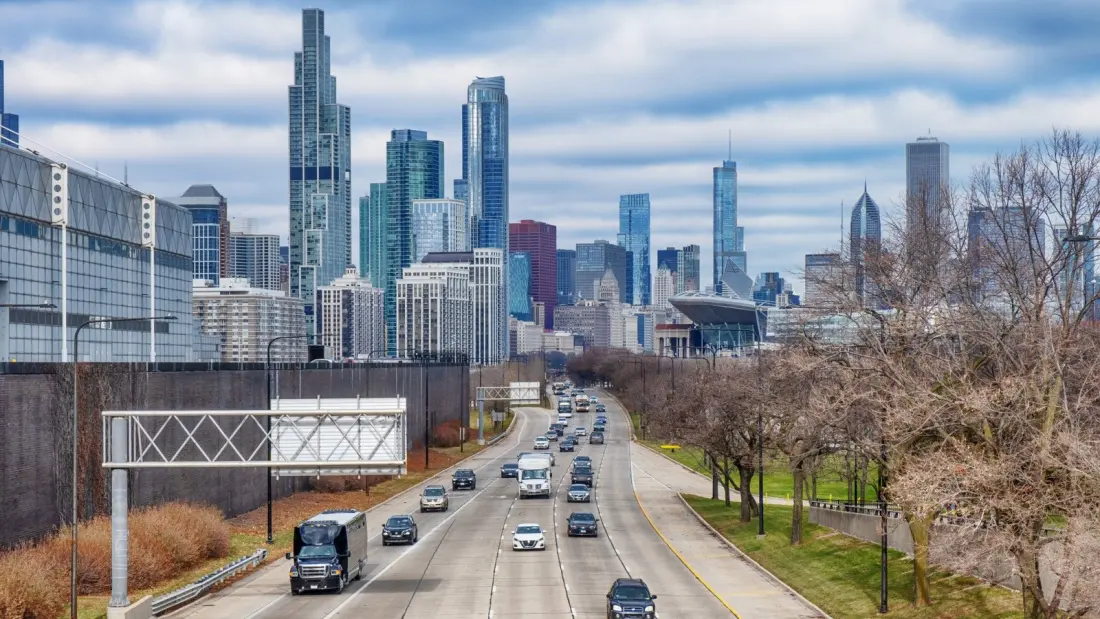
Renting a car in Chicago comes with an unexpected hazard that has nothing to do with traffic: one of the most aggressive automated speed enforcement systems in the United States. The city now has more than 200 speed cameras, and with 50 more added in 2025, it is issuing a speeding ticket roughly every 48 seconds — a 26% jump on the previous year, according to Illinois Policy.
The cameras catch drivers going just 6 mph over the limit in designated zones. Fines start at $35 for speeds 6-10 mph above the limit, rising to $100 at 11 mph or more. The default city speed limit is 30 mph unless signs say otherwise. Crucially, cameras can only legally be placed in "children's safety zones" — within one-eighth of a mile of a school or park — but in practice they're spread across the city, including busy areas like Lincoln Park, Beverly, Jefferson Park, Edgewater and Washington Park. The North Side has the most cameras, while the Southeast and Southwest Sides see very heavy ticketing.
There's real debate about whether this is about safety or revenue. A University of Illinois Chicago study found the cameras cut accidents by around 12% between 2017 and 2019, but also noted "little relationship" between the number of tickets issued and any safety benefit. Critics, including Mayor Brandon Johnson — who once called the cameras "regressive taxation" during his 2023 campaign, before using their revenue to help balance the city budget — point out that Black drivers receive 2.5 times as many tickets as white drivers, and Hispanic drivers twice as many.
For visitors, the practical details matter. Tickets apply to rental cars too, so an offence can follow you home via the rental company. They're civil penalties, not moving violations, so no points hit your licence — but late payment doubles the fine, and you only get 21 days to pay or contest. New cameras come with a 30-day warning-only grace period.
If you do get a ticket, it may be worth fighting. In 2021 thousands of fines were issued where speed limit signs were misprinted. Check whether signs near the camera were visible and accurate, and review the photo and video evidence: if your plate or vehicle model isn't clearly identifiable, or the car is vaguely listed as "other" when it's plainly visible, that can be grounds for contesting.
Avoiding a fine in the first place is easier. Use voice-guided navigation so your eyes stay on the road, consider an app that flags upcoming speed zones, and keep speeds honest near schools and parks — that's where nearly every camera sits.