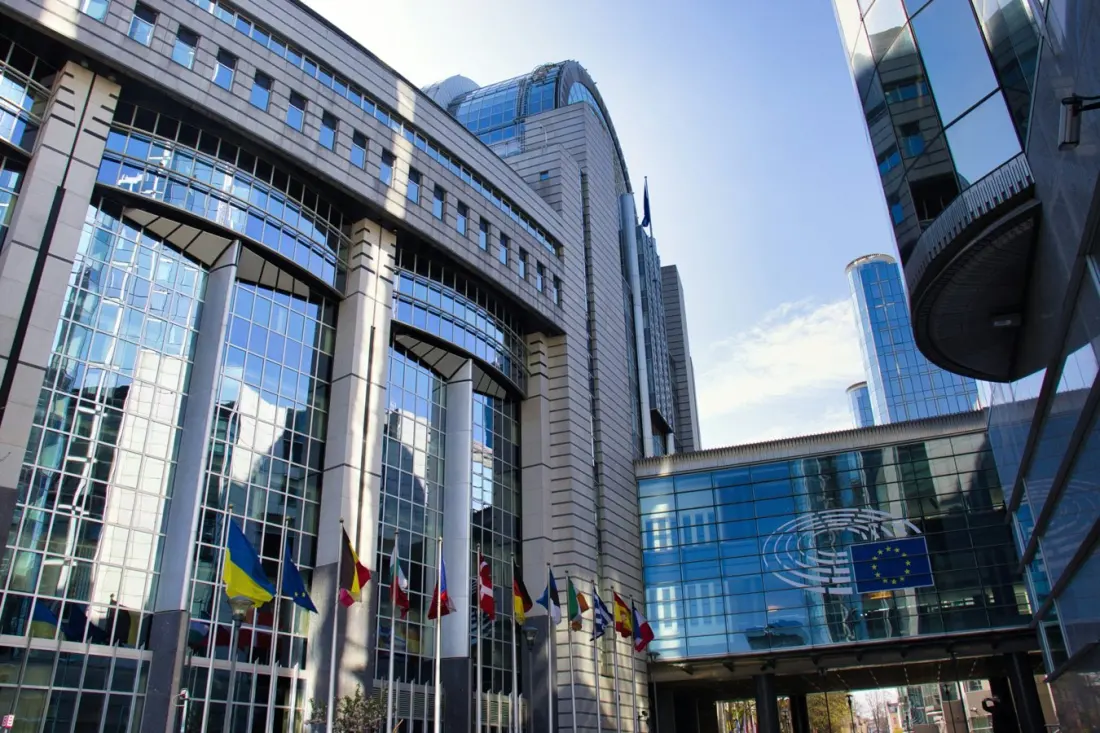
Europe's high-speed rail ambitions just got a louder voice in Brussels. The European Parliament's Transport and Tourism Committee has voted for a set of recommendations calling on the EU to speed up expansion of its high-speed network, back it with serious money, and — crucially for anyone who has ever wrestled with cross-border train bookings — make tickets more affordable and easier to buy.
The vote on 5 October passed comfortably: 34 in favour, none against, seven abstentions. It builds on the European Commission's High-Speed Rail Action Plan, published in November 2025, which sets a 2040 target for a faster, better-connected network across the continent. This isn't law yet — the non-binding resolution heads to a full Parliament plenary later in October — but it signals where political pressure is heading.
One of the more interesting threads is the push for a "network-first" approach. MEPs don't just want glitzy capital-to-capital trains; they want high-speed services knitted into regional rail, city transport, cycling routes and major hubs, with better links for peripheral and less-developed regions. They're also asking for missing and underserved cross-border connections to be identified and fixed, alongside completing the broader TEN-T trans-European network.
Money is the other big theme. Rail has already received over €100 billion in EU funding since 2014, and the committee wants that to continue with dedicated funding in the EU's next long-term budget covering 2028–2034, plus a strengthened Connecting Europe Facility. Big-ticket projects like Europe's major rail tunnels show both the scale of ambition and the delivery headaches involved.
For travellers, the fares section may matter most. The committee wants governments and operators to offer accessible pricing, reduced-fare schemes and subscriptions, alongside more transparent ticket pricing. It also backs ongoing work on the Commission's Passenger Package, which aims to make European ticketing systems compatible — a nod to the long-running push for unified international rail booking. If you've ever tried booking a train from, say, Lisbon to Madrid across two national systems, you'll know why that's a big deal.
The Commission's plan could already transform five major routes, including Berlin–Copenhagen and Lisbon–Madrid, so the pieces are moving even before any new money lands.
Why should a holidaymaker care? Because rail is quietly becoming the default way to see Europe: no airport hassle, city-centre arrivals, and a far smaller carbon footprint than flying. Faster cross-border lines and genuinely affordable fares would open up multi-country trips — a Portugal-to-Spain hop, or a German-Scandinavian summer route — that currently feel impractical. Nothing here is guaranteed, and the timeline stretches to 2040, but the direction of travel (pun intended) is clear. Watch the full Parliament vote and the 2028–2034 budget negotiations; that's where the promise either gets funded or stalls.